





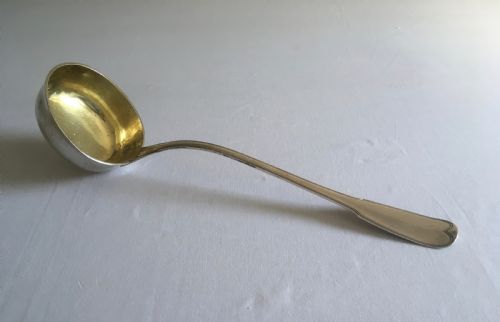
Gilt Bowl Silver Spoons
These gilt bowl silver spoons bring together gold washed surfaces and silver vessels across Georgian and Victorian periods.
Gilt Bowl Silver Spoons
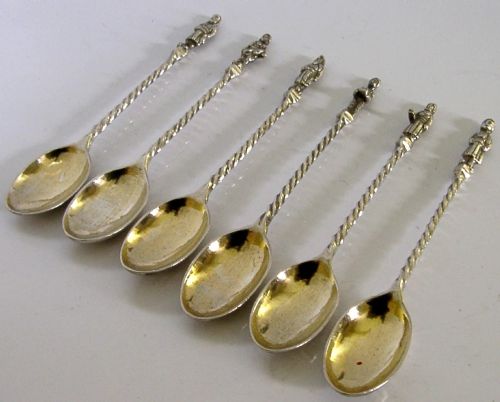
When you search for gilt bowl silver spoons, you are looking at items that combine polished silver with the warm contrast of a gold wash, often found alongside matching bowls and vessels. These pieces range from Georgian berry and caddy spoons to Victorian cased sugar sets and serving utensils, spanning the nineteenth century.
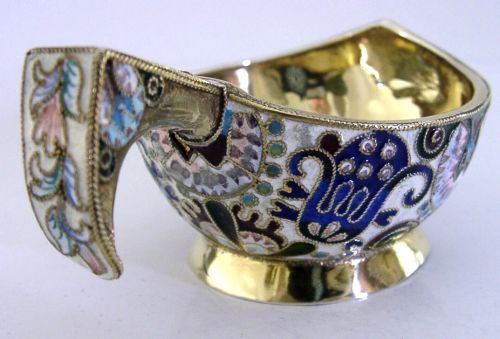
You are most likely to meet Victorian cased sets containing sugar bowls and sifter spoons alongside Georgian sterling silver berry spoons. The selection also reaches into Ottoman, Russian, and continental origins, showing varied regional forms such as kovsh cups and figural spoons.
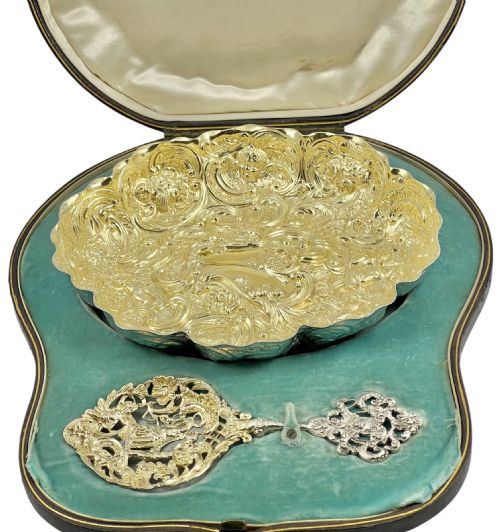
Many examples arrive complete with their original velvet or leather fitted boxes, housing spoons and bowls together as matching table sets. The grouping includes serving spoons, fruit serving sets, and salt bowls with accompanying spoons.
Judging the standard of workmanship
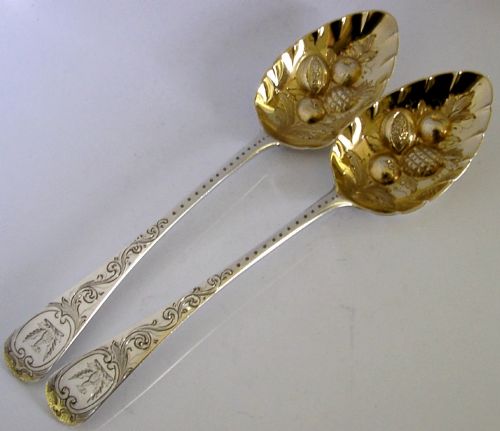
Quality depends on the crispness of the chasing and engraving on the bowl surfaces and handle stems. Deep, well defined fruit and leaf motifs on berry spoons show superior hand tooling compared to shallow stamping.
The preservation of the gold wash across the bowl interior indicates the level of original application and subsequent use. Substantial metal weight and balanced proportions in the hand separate standard utility pieces from finer presentation items.
Napoleon crests and Fenwick family crests hide within these handles, turning afternoon tea into a subtle heraldic inspection.
William Chawner II·Fenwick Family
The Gilt Bowl Silver Spoons Glossary
- Silver-gilt
- Sterling or solid silver that has been coated with a thin layer of gold. This technique provides the warm interior colouring seen in these bowls and spoons.
- Berry spoon
- A serving spoon, typically Georgian, with fruit embossed or chased into the bowl later or during manufacture. These often feature decorative fruit and foliage designs.
- Caddy spoon
- A small spoon designed for measuring dry tea leaves from a caddy. They frequently appear in Georgian silver with short handles and broad bowls.
- Sifter spoon
- A spoon with a pierced or perforated bowl used for sprinkling sugar over fruit or desserts. They are commonly found paired with sugar bowls in Victorian fitted cases.
- Kovsh
- A traditional Russian vessel shape with a boat-like body and a single flat handle. These pieces often incorporate enamel and solid silver gilt.
Gilt Bowl Silver Spoons: Frequently Asked Questions
What are gilt bowl silver spoons?
These items are silver spoons featuring a gold wash applied to the bowl interior, often accompanied by matching sugar bowls, salt bowls, or serving vessels.
They date primarily from the Georgian and Victorian periods, reflecting shifting domestic dining habits and tea service traditions throughout the nineteenth century.
How were cased spoon sets used?
Cased sets containing sugar bowls and sifter spoons were utilised for serving refined sugars at the dining table or during formal tea services.
Fitted presentation boxes made of leather and velvet protected the matching pieces when not in active use on the sideboard.
How do I identify Georgian pieces?
Georgian examples often display hand engraved crests, chased fruit motifs, and distinct maker marks associated with early nineteenth century silversmiths.
The weight of the sterling silver and the specific style of handle engraving help separate these items from later Victorian productions.
Are these pieces made of solid silver?
The listings include sterling silver, solid silver, and silver-gilt items alongside silver plated fruit serving sets.
Material composition is indicated in the specific descriptions, referencing continental standards like Russian 84 silver or Ottoman Turkish silver.
How do I care for silver gilt?
Silver gilt requires gentle cleaning with non abrasive cloths to preserve the delicate gold layer resting on top of the silver base.
Avoiding harsh chemical dips ensures the original gilding on the bowl interiors remains intact over time.