



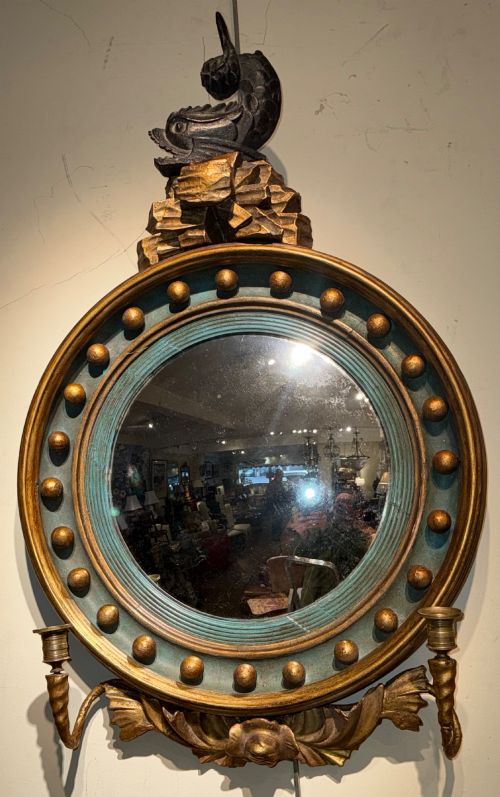
Gilt Ball Mirror
A gilt ball mirror gathers the whole room into its curved glass, and these pieces bring period presence to any wall.
Gilt Ball Mirror
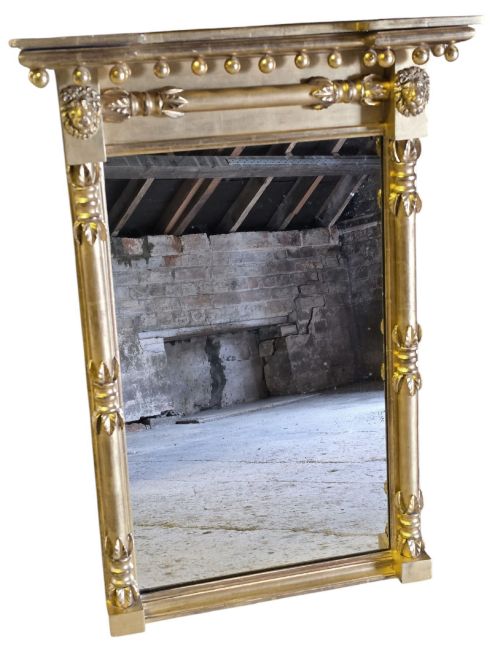
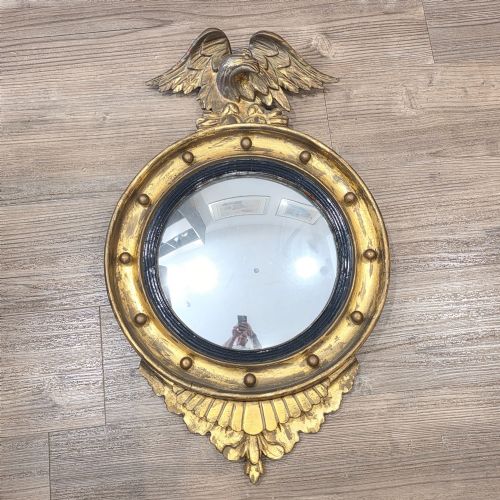
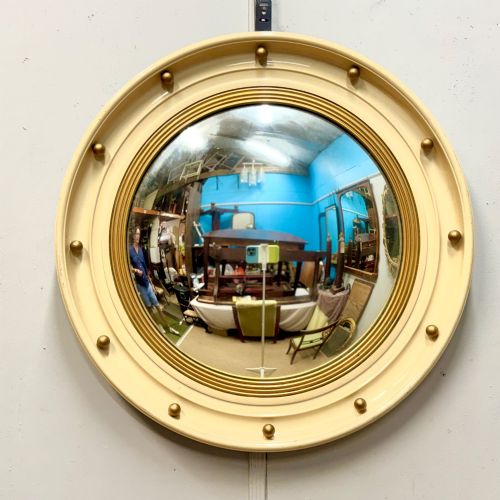
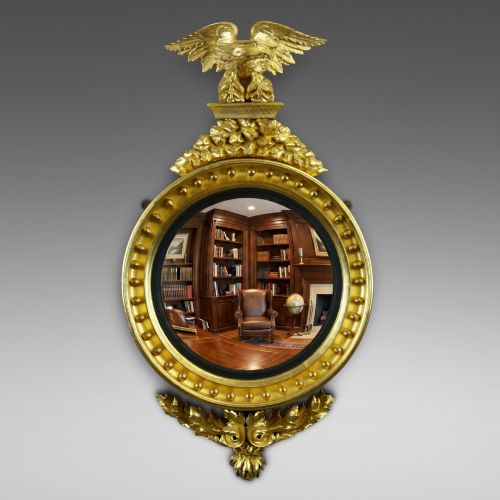
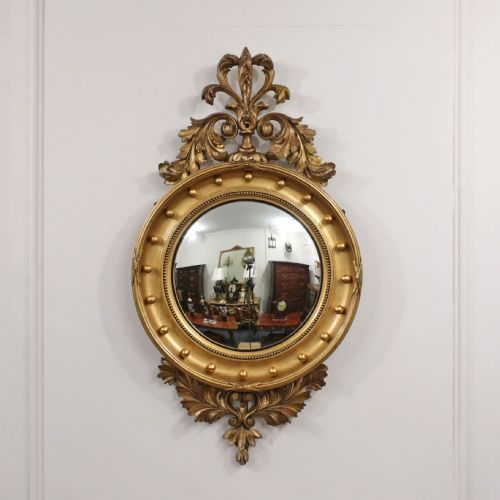
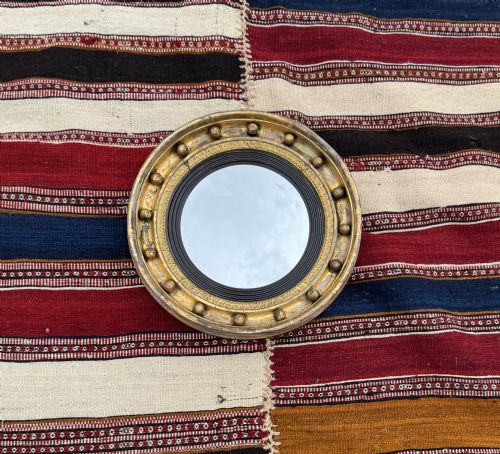
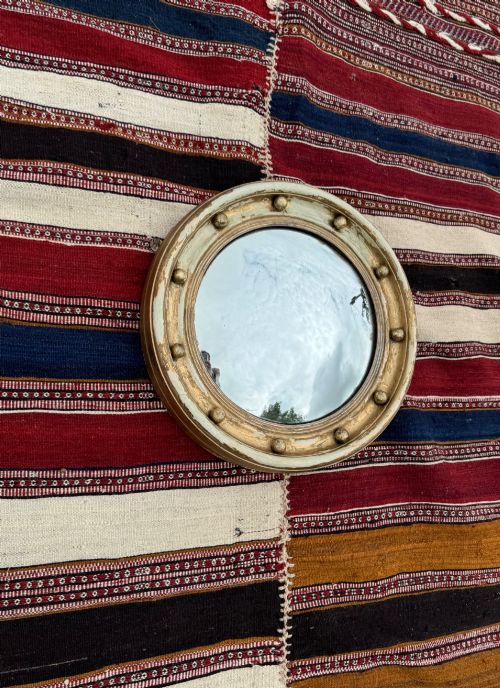
When you search for a gilt ball mirror, you are looking at circular convex wall mirrors whose frames are encircled by spherical ornaments or balls, alongside related overmantel and pier forms. These pieces appear most frequently from the Regency and nineteenth century, though Edwardian and later revival pieces also occur on this page. They function both as optical curiosities that shrink and reflect an entire interior and as striking decorative focal points.
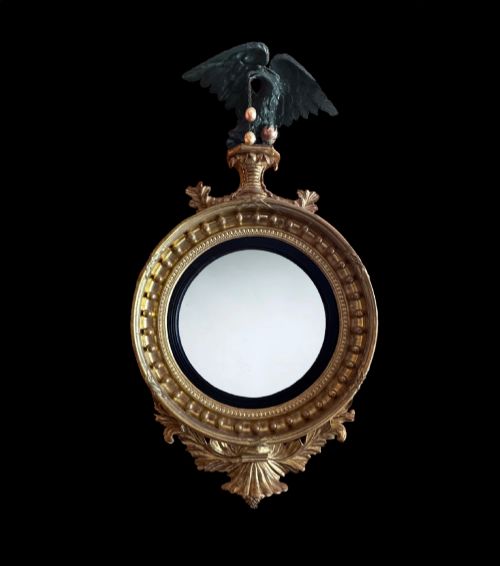
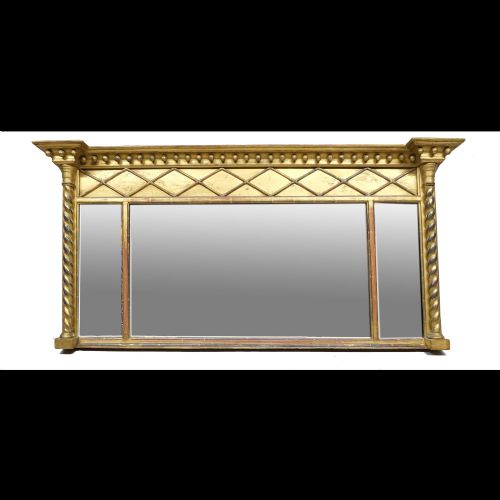
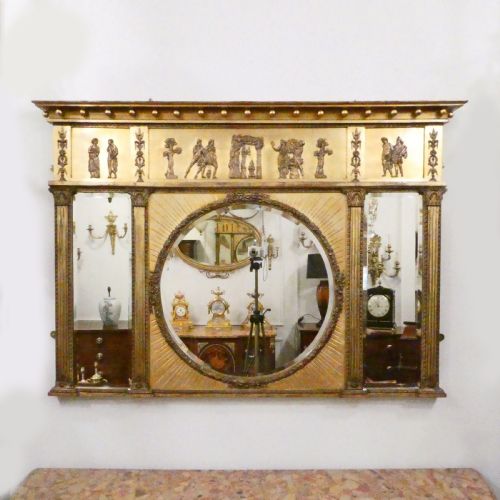
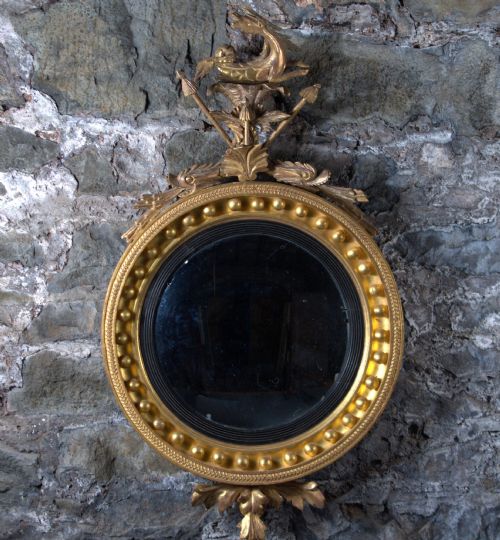
The selection ranges from compact round butler's mirrors to substantial overmantel mirrors spanning entire mantelpieces. Many adopt the classic convex format, sometimes known as a porthole mirror, while others incorporate eagles, ebonised slips, or verre eglomise panels. Stylistically, the Regency period and its later revivals dominate, bringing classical proportions and bold gilding to domestic spaces.
How they were made
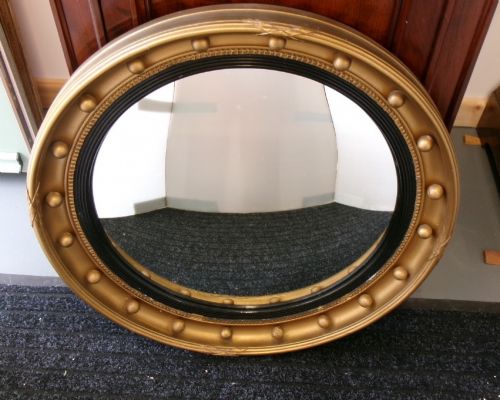
Carved wood and gesso form the structural foundation of these frames, providing the crisp surface detail necessary for complex mouldings and individual ball ornaments. Artisans applied gold leaf or paint over the gesso ground, creating the characteristic metallic sheen that defines the giltwood appearance. Ebonised wood slips frequently appear on the inner edge of the frame to provide tonal contrast against the gold exterior.
Convex mirror glass provides the distinctive curved reflection, often held within a rebate behind the wooden frame. Specialised techniques such as verre eglomise decorate specific glass panels with reverse-painted designs, adding layered visual depth to the upper sections of grander overmantel mirrors.
What varies in quality
The crispness of the carved ornamentation and the depth of the gilding set the finest examples apart from standard production. A well-preserved gilt surface shows the subtle interaction of gold leaf over gesso without heavy modern overpainting or loss of underlying detail. The proportion between the frame, the ball decorations, and the central mirror glass determines the visual balance of the piece.
Structural integrity of the heavy wooden frame and the clarity of the original convex glass influence desirability. Pieces featuring elaborate crests, such as carved eagles or distinct ebonised slips, demonstrate superior craftsmanship compared to simpler utilitarian variants.
The Gilt Ball Mirror Glossary
- Convex glass
- Curved mirror glass that bulges outward to provide a wide-angle reflection of the surrounding room. This form was traditionally utilised by butlers to survey staff across a dining space.
- Giltwood
- Timber that has been coated with thin sheets of gold leaf or metallic powder over a prepared gesso ground. It provides a warm, reflective surface that catches natural light.
- Gesso
- A plaster-like mixture applied to wood frames to create a smooth surface for carving and gilding. It allows for intricate, sharp relief details on the frame moulding.
- Verre eglomise
- The technique of cold painting and gilding on the reverse side of glass panels. It creates a mirrored, opaque background for decorative motifs.
- Ebonised
- Wood treated with a chemical stain or dark finish to imitate ebony. This dark detail often appears as a narrow slip surrounding the mirror glass.
Gilt Ball Mirror: Frequently Asked Questions
What is a convex mirror?
A convex mirror uses curved glass that bulges outward rather than sitting flat. This shape captures a wide, fish-eye reflection of the entire interior.
Historically, these mirrors allowed overseers to monitor large rooms from a single vantage point.
How do I date a gilt mirror?
Dating relies on examining the construction materials, frame style, and backing boards. Regency examples show distinct classical proportions and specific gesso layering.
Revival pieces from later decades often imitate these earlier stylistic traits while utilising slightly different joinery methods.
Where should I hang an overmantel mirror?
An overmantel mirror traditionally hangs directly above a fireplace mantelpiece. Its wide proportions balance the horizontal line of the hearth below.
Secure wall fixings are essential due to the substantial weight of the timber and glass construction.
What is a butler's mirror?
A butler's mirror is a round convex wall mirror with a ball-decorated frame. Domestic staff used them in dining rooms to keep watch over multiple tables.
Today, they serve as decorative wall hangings that bounce light into darker hallways.