


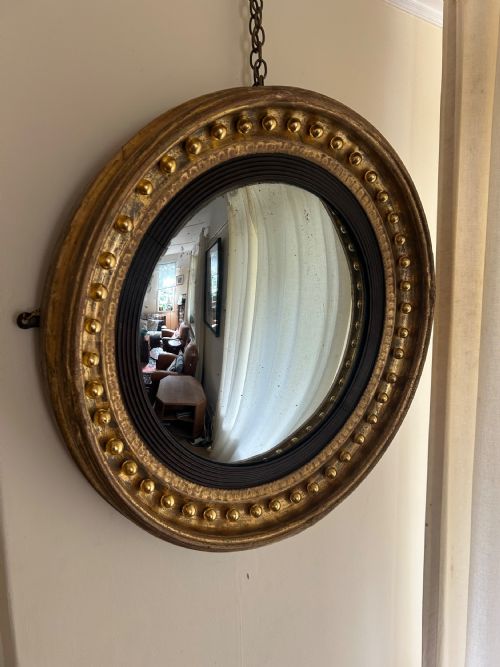

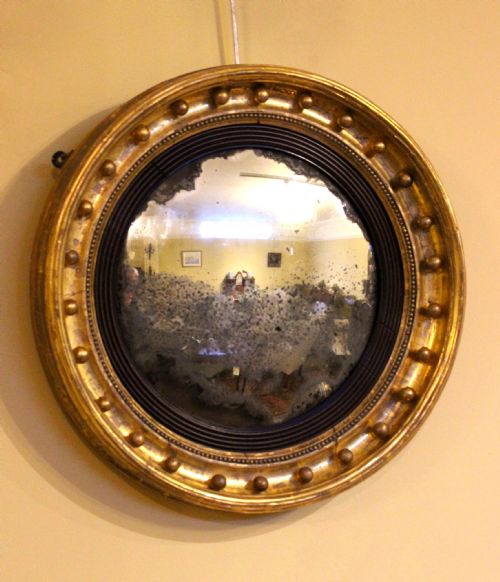


Regency Spherical Mirror
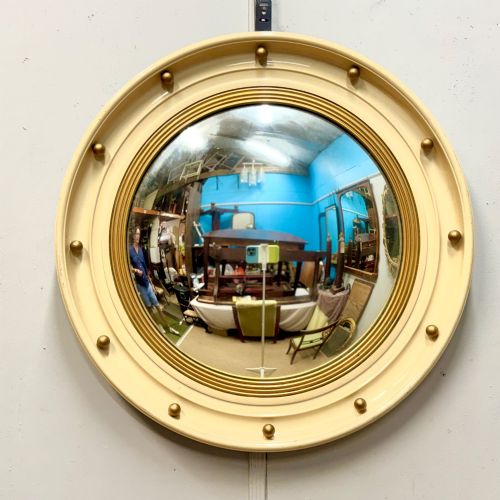
Regency spherical mirror pieces are convex wall mirrors designed to draw light into a room, offering a distorted panoramic view that collectors prize.
Regency Spherical Mirror
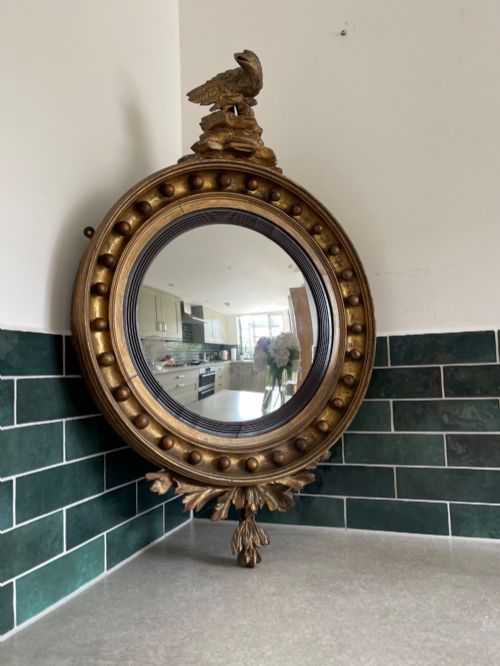
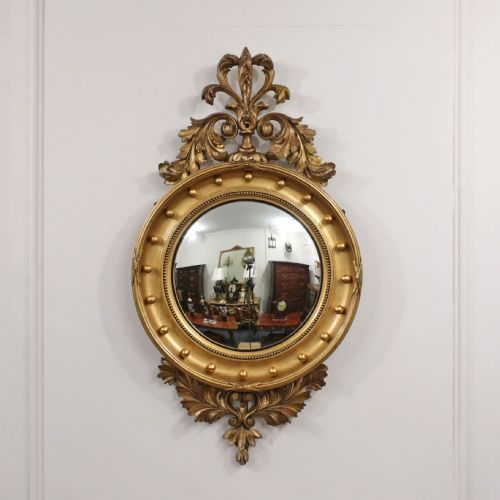
A regency spherical mirror takes the form of a circular wall mirror featuring a convex glass plate that curves outward to reflect the entire interior space. These pieces appear across the Regency, Georgian, Victorian, and nineteenth century periods, with later revivals also represented in the listings.
The primary form is the round wall mirror, frequently referred to as a butler's mirror or a sorcerer type mirror. Such items typically hang in reception rooms and hallways, serving both a decorative and a practical function in domestic interiors.
How they were made
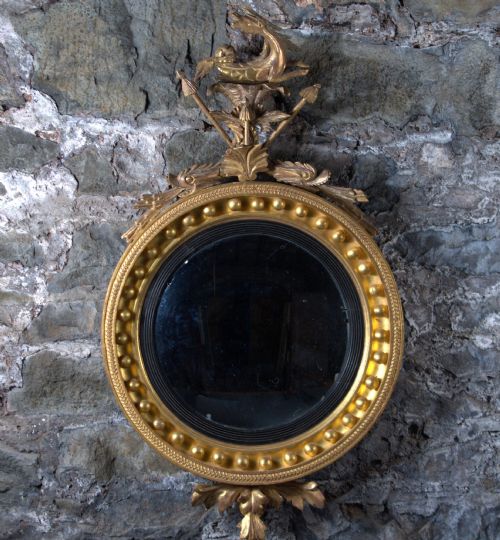
Makers constructed the frames from giltwood, gesso, painted wood, mahogany, and ebonised wood, applying gold leaf or paint over carved timber bases. The distinctive spherical glass gives a wide-angle reflection while demanding precise framing to secure the curved plate safely.
Decoration often includes specific carved motifs such as an eagle or a dragon surmounting the circular frame. These details combine wood, gilt, and glass to create balanced wall ornaments.
Some frames feature carved dragons peering into the glass, ready to guard the room's reflection.
What varies in quality
The distinction between standard examples and finer pieces lies in the crispness of the wood carving on elements like eagles and dragons, alongside the depth and integrity of the original giltwood or ebonised finish. Earlier period items display hand-carved nuances that differ from later revival pieces.
The quality of the convex glass plate itself influences the reflection, with older glass showing subtle distortions and silvering characteristics that separate authentic nineteenth century pieces from twentieth century interpretations.
The Regency Spherical Mirror Glossary
- Convex glass
- A curved glass plate that bulges outward towards the viewer. This shape creates a wide-angle reflection of the surrounding room.
- Giltwood
- Timber coated with a thin layer of gold leaf. This material defines the bright appearance of many traditional frames.
- Ebonised wood
- Timber treated to resemble ebony through staining or painting. It provides a dark contrast against gilt details.
- Gesso
- A plaster-like mixture applied to wood surfaces as a base for gilding. It allows craftsmen to model intricate frame details.
- Butler's mirror
- A traditional alternative name for a convex wall mirror. These were often placed in service areas or reception rooms.
Regency Spherical Mirror: Frequently Asked Questions
Where should I hang a convex mirror?
These mirrors suit principal reception rooms, hallways, and dining spaces where they capture and distribute ambient light effectively.
Because the curved glass shrinks the reflection to encompass the whole room, hanging them at eye level opposite a window yields the best visual result.
How do I identify a Regency period mirror?
Authentic Regency pieces exhibit specific timber construction, period gilding techniques, and traditional hand-carved frame ornaments like eagles.
Comparing the construction methods and the wear on the giltwood against known nineteenth century examples helps confirm the period.
Why are they called sorcerer mirrors?
The alternative name stems from folklore and historical associations where the distorted, wide-angle view resembled a divining crystal.
Collectors adopted the term to describe convex mirrors with mystical or unusual decorative frames.
How do I clean the glass safely?
Cleaning requires a soft, dry cloth applied gently to the convex surface to avoid disturbing antique silvering or fragile frame finishes.
Moisture should be kept away from the edges where the glass meets the gesso and giltwood frame.