

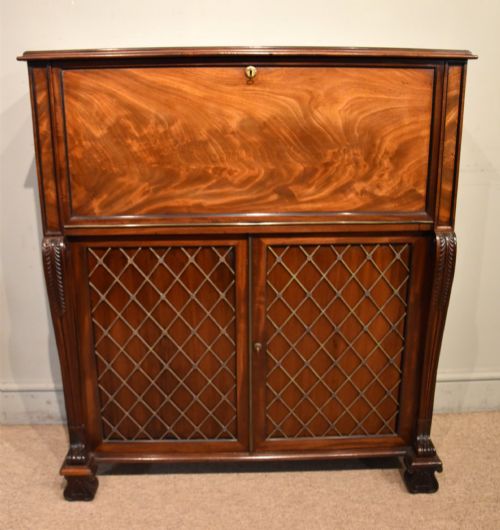


Gillows Secretaire Bookcase
A gillows secretaire bookcase combines refined cabinet-making with a practical fitted writing drawer, offering both a library display and a private desk.
Gillows Secretaire Bookcase
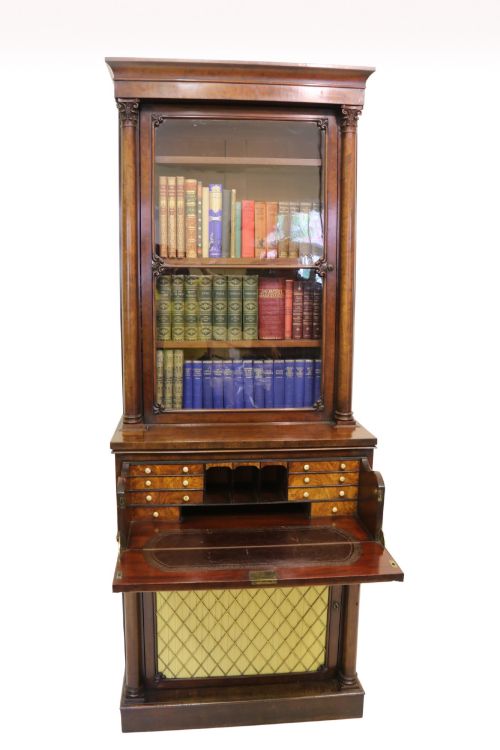
A gillows secretaire bookcase brings together upper display shelving and a drop-down writing drawer concealed within the cabinetry. These items serve as functional dual-purpose furniture for domestic studies and libraries.
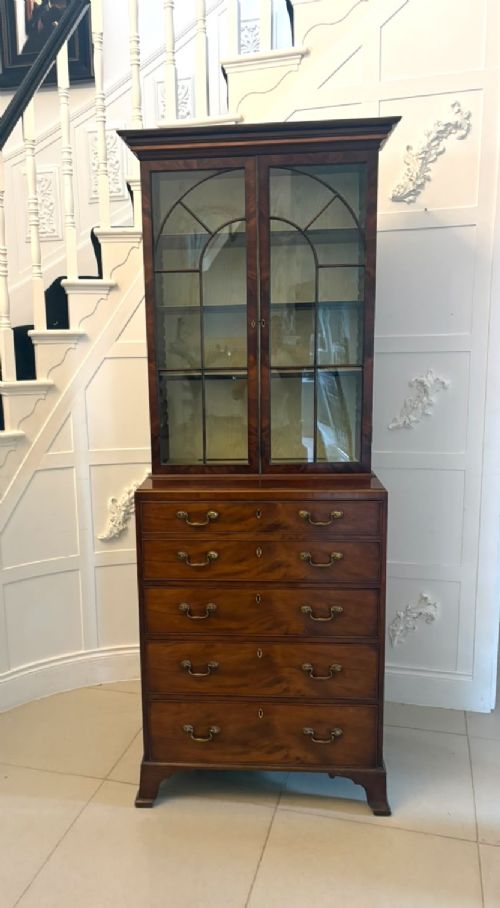
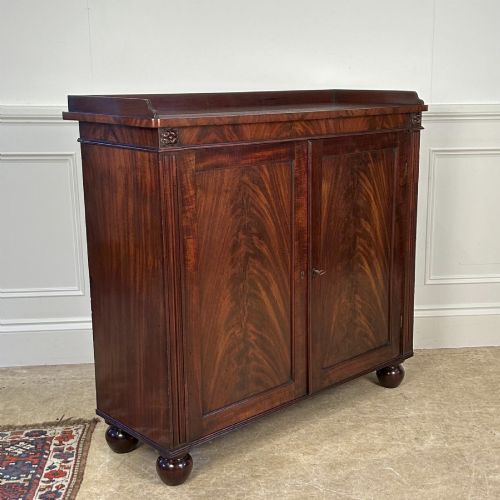
Buyers frequently encounter variations spanning the Georgian and Victorian eras, alongside Regency examples and later pieces from around nineteen hundred. Common forms range from tall library cabinets with astragal glazed doors down to dwarf cabinets, low press cupboards, and compact writing desks.
The firm of Gillows stamped its reputation on functional elegance, producing pieces in mahogany, flame mahogany veneer, satinwood, burr walnut, and oak. Surviving examples often display refined secondary elements such as brass hardware, leather writing surfaces, and glass-fronted upper sections.
How they were made
Cabinet-makers selected dense timbers like mahogany and satinwood, often applying figured veneers over solid secondary woods to create rich grain patterns on the principal surfaces. Construction relied on traditional joinery techniques, ensuring sturdy carcass frames that housed internal drawers and folding writing compartments.
Glazing bars on upper bookcase doors were meticulously shaped by hand, creating delicate geometric or astragal patterns to secure individual panes of glass. Brass fittings and leather inserts were integrated carefully into the drop-front writing drawers to provide a durable and finished workspace.
Gillows Secretaire Bookcase Retail Price Guide 2026
Typical asking prices for gillows secretaire bookcase among the pieces listed under this phrase on Sellingantiques today, from the lower quarter to the upper quarter. They describe what is for sale here now, not the wider market.
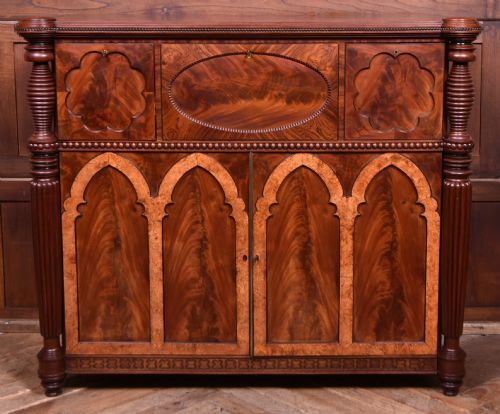
Listings span multiple stylistic periods, including Georgian, Regency, Victorian Gothic Revival, and George IV.
What varies in quality
Quality rests upon the selection of timber veneers and the crispness of architectural details such as cornice mouldings and brass hardware. Superior examples display seamless book-matching in flame mahogany and finely executed internal pigeonholes within the secretaire drawer.
Proportion and structural balance also distinguish finer cabinets, where smaller dimensions or scarce timbers like satinwood reflect higher workshop ambitions. Lesser examples may exhibit simpler secondary woods and less intricate interior fittings, though construction standards remain solid.
Gillows of Lancaster
The Gillows Secretaire Bookcase Glossary
- Secretaire
- A cabinet or chest featuring a pull-down drawer front that conceals a writing surface and small pigeonholes. This clever mechanism allows a piece of case furniture to double as a desk.
- Astragal
- A small moulding profile used to divide glass panes within a bookcase door into smaller lights. These wooden strips structure the upper display section.
- Flame mahogany
- A veneer cut from timber where the grain creates a flickering, flame-like pattern across the wood. Cabinet-makers reserved this decorative cut for prominent drawer fronts and doors.
- Satinwood
- A yellowish exotic hardwood prized for its smooth sheen and fine texture. It was frequently employed during the Regency and Georgian periods for high-status furniture.
- Press cupboard
- A large storage piece featuring upper shelving enclosed by doors above a lower section of drawers or cupboards. They were built to store linens and clothing.
Gillows Secretaire Bookcase: Frequently Asked Questions
What is a secretaire bookcase?
A secretaire bookcase combines an upper display cabinet for books with a lower section housing a pull-down writing drawer. This dual purpose made them essential furniture for period libraries and studies.
Inside the drop-down drawer, makers arranged small compartments and pigeonholes for correspondence and paperwork. When closed, the piece maintains the appearance of a standard chest or cabinet.
How do I date a Gillows piece?
Dating relies on stylistic shifts across periods like the Georgian, Regency, and Victorian eras, alongside timber choices and construction methods. Earlier examples often feature mahogany and satinwood, while later items may incorporate oak or heavier revival details.
Cabinet proportions and hardware styles also offer clues to the decade of manufacture. Comparing the joinery with documented examples helps narrow down the production period.
Where should I place a secretaire cabinet?
These cabinets suit studies, home offices, and living rooms where both display space and writing surfaces are useful. Their upright proportions allow them to fit well against large wall spaces without dominating the room.
Positioning them away from direct sunlight and heat sources protects the timber veneers and leather writing inserts. Adequate floor space in front of the cabinet is necessary to allow the secretaire drawer to fold down fully.
How do I care for mahogany furniture?
Maintenance involves dusting with a soft, dry cloth and avoiding silicone-based polishes that can build up on the wood finish. Maintaining stable indoor humidity levels prevents timber movement and veneer lifting.
Leather writing inserts benefit from occasional gentle conditioning to keep the material supple. Treating the wood with traditional beeswax preserves the natural sheen of the grain.