
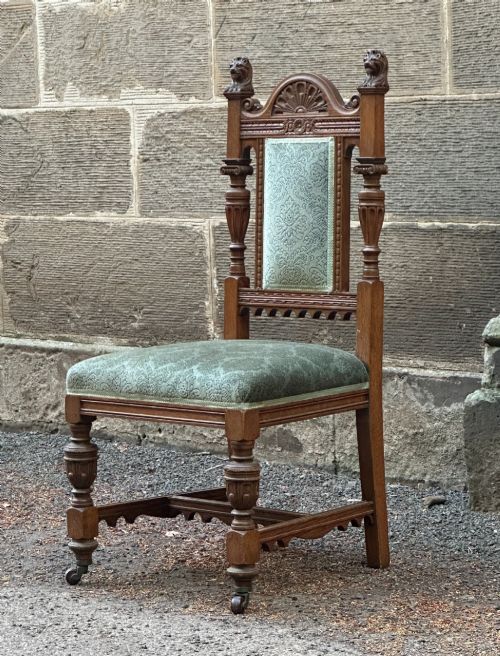

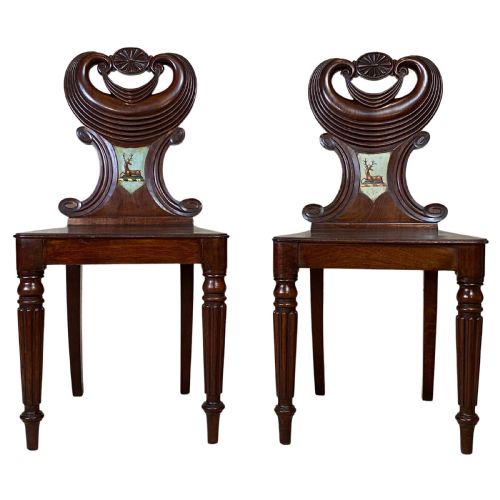


Gillows Hall Chairs
These gillows hall chairs are heavy timber seats made for grand entrance spaces, offering sculptural backs and sturdy proportions.
Gillows Hall Chairs
When buyers search for gillows hall chairs, they encounter sturdy wooden seating designed for the entrance hall rather than daily dining. These pieces frequently appear from the Regency period, though examples stretch from the eighteenth century into the Victorian era.
The most common forms on this page are mahogany pairs featuring carved shield backs or shell motifs. Oak and walnut also appear, reflecting changing domestic tastes across successive generations.
Materials and construction
Cabinetmakers utilised dense hardwoods such as mahogany and oak to construct these robust chairs. Solid timber frames provide the structural integrity required for heavy use in domestic hallways.
Carving and turning define the decorative execution, with heraldic crests, shell backs and architectural details carved directly into the solid wood.
Footman's chairs occasionally share this seating category, offering sturdy timber built to endure muddy boots and brisk hallway draughts.
Assessing quality
The crispness of the timber carving separates standard items from finer works. Deeply undercut details and well-defined heraldic motifs indicate skilled workshop execution.
Proportion and timber selection drive value. Matched pairs displaying figured mahogany grain and tight joinery represent the upper tier of production.
Gillows of Lancaster·Waring and Gillow
The Gillows Hall Chairs Glossary
- Hall chair
- A rigid wooden seat intended for an entrance hall rather than long sitting. These pieces prioritised sculptural presence and family heraldry over comfort.
- Shield back
- A chair back shaped like a heraldic shield. This design became popular during the Regency period.
- Shell back
- A carved chair back resembling an open scallop shell. This motif appears frequently on Regency seating.
- Armorial
- Bearing a coat of arms or family crest. These carved or painted emblems denoted the lineage of the owner.
Gillows Hall Chairs: Frequently Asked Questions
How do I spot a real maker stamp?
Workshop stamps usually appear pressed directly into the top of the rear seat rail or underneath the wooden frame. You need to inspect the bare timber closely in good light.
Many genuine pieces lack marks entirely, relying instead on distinct construction traits and workshop style.
Why are most examples sold in pairs?
Entrance spaces in grand houses required symmetrical arrangement flanking a doorway or console table. Cabinetmakers built these seats in matched sets to furnish large halls properly.
Pairs have survived intact because they remained stationary against hallway walls rather than moving around the house.
Can I use these at a dining table?
Sitting comfortably for long meals is difficult because the solid wooden seats lack padding and the upright backs encourage strict posture. They were designed for short waiting periods.
Placing them in a dining room works well as decorative side seating rather than for daily dining use.