


Regency Mahogany Seating
Regency mahogany seating combines the clean lines of early nineteenth-century design with the rich warmth of native timber.
Regency mahogany seating
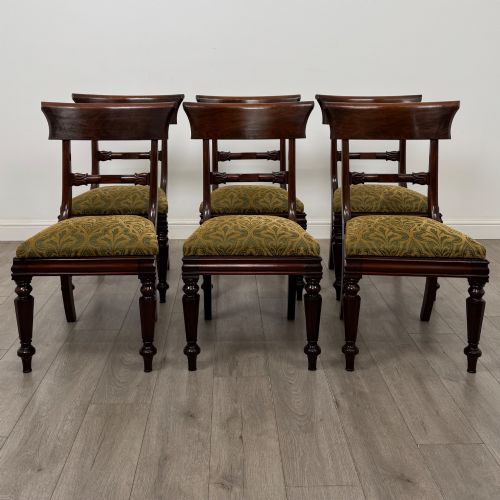
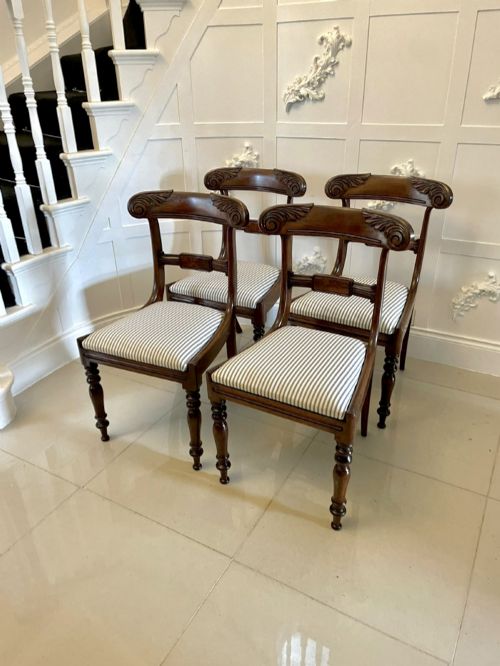
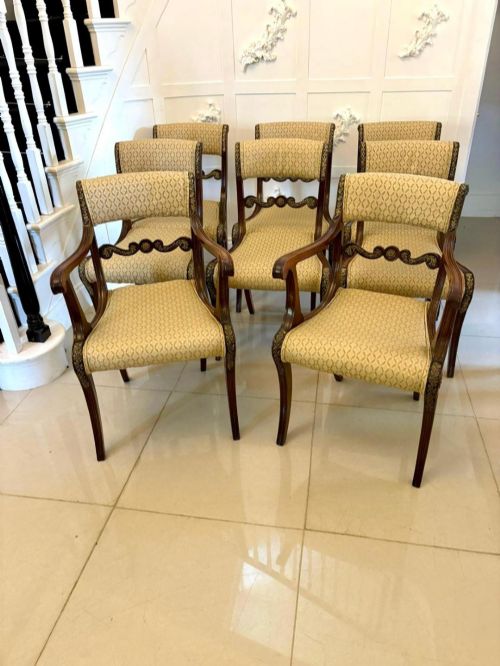
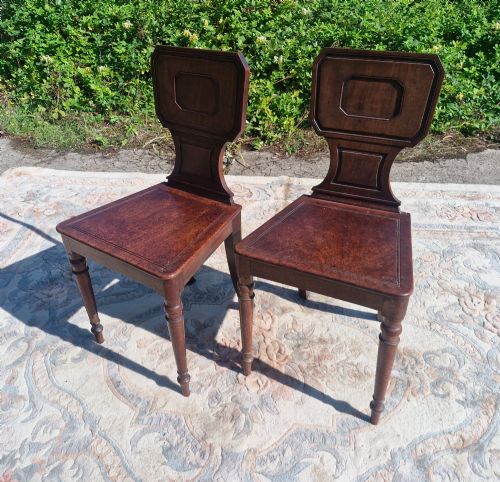
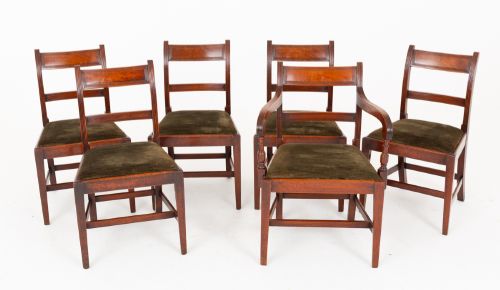
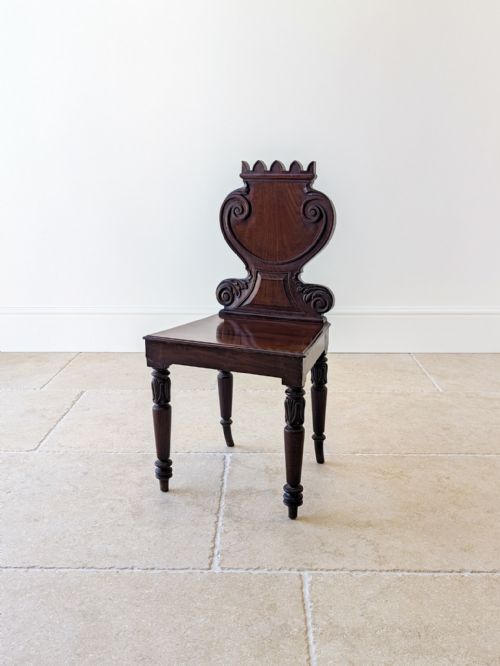
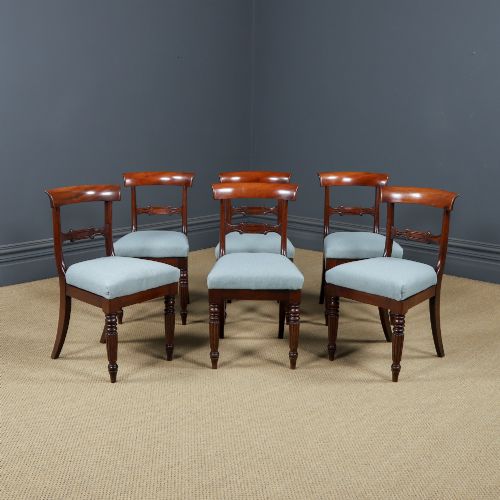
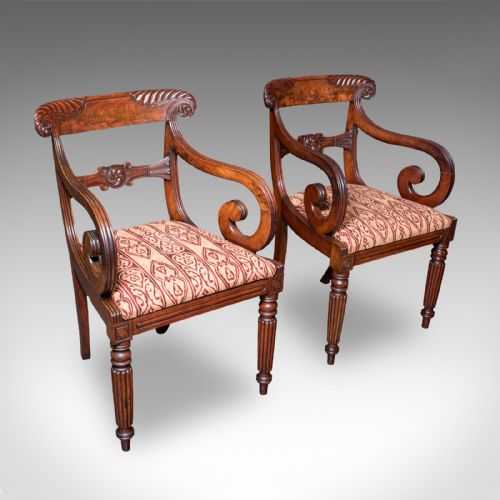
Regency mahogany seating encompasses dining chairs, armchairs, hall chairs, and child's high chairs from the early nineteenth century and the Georgian transition. These pieces are what a buyer encounters when searching for regency mahogany seating, reflecting the domestic needs of households from the period.
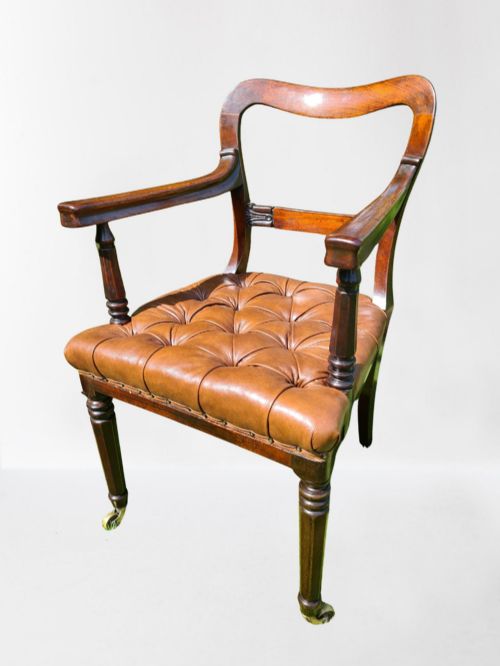
The selections on this page span several functional forms, featuring sets of dining chairs alongside library bergère armchairs and hall chairs. Each object demonstrates the distinct aesthetic priorities of the Regency and late George III eras.
Materials and construction
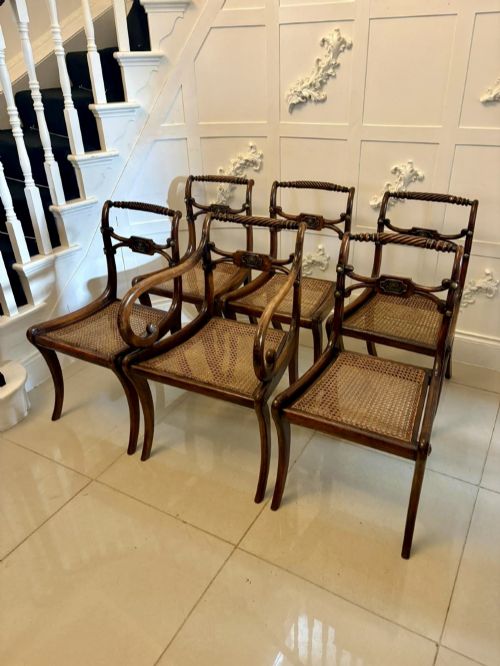
Makers utilised solid mahogany and flame mahogany veneers, often incorporating cane work and brass details for structural and decorative effect. Upholstery fabric and standard fabric complete the seats of these items.
Cabinetmakers shaped the timber using traditional joinery methods suited to the 1800 period, ensuring stability in frames designed for daily use.
Retail Price Guide 2026
Typical UK retail prices for regency mahogany seating, calculated from the Sellingantiques database of over a million retail prices indexed since 2003. This retail price guide relies exclusively on Sellingantiques data; no external sources or auction records are used, so the figures do not describe the wider market.
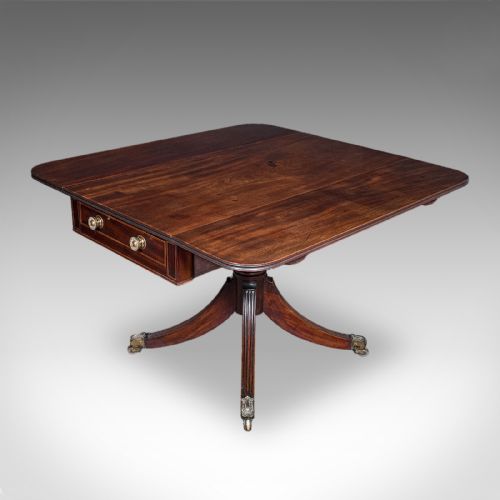
Child's high chairs on stands from around 1820 allowed the youngest household members to join the mahogany dining table at adult eye level.
Assessing the pieces
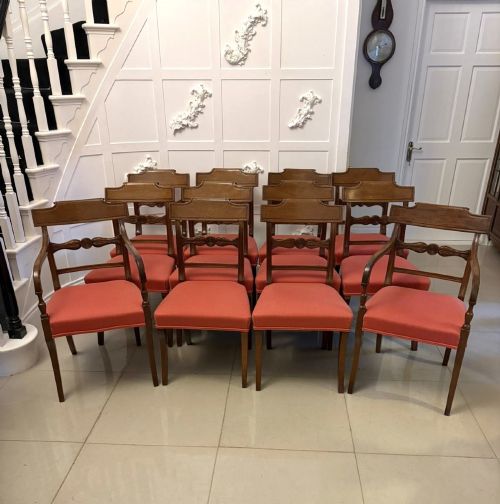
Quality separates larger sets of matching chairs from individual items, particularly when ten pieces survive together intact from the early nineteenth century. The presence of flame mahogany veneer and original caning elevates certain examples above plain timber constructions.
Subtlety in carved detail and the originality of the structural timber distinguish workshop output, where master makers applied greater refinement to dining and hall chairs.
Gillows
The Regency Mahogany Seating Glossary
- Mahogany
- A durable tropical hardwood imported for British cabinetmaking, prized for its deep reddish-brown colour and ability to take a fine polish.
- Bergère
- An enclosed upholstered armchair with cane or fabric sides, developed for relaxed seating in Regency libraries and drawing rooms.
- Caning
- A seating technique utilising woven rattan strips across a chair frame, offering lightweight flexibility and visual transparency.
- Flame mahogany
- A decorative veneer cut from the branch junction of the tree, displaying a distinctive flamed or feathered grain pattern.
Frequently Asked Questions
What defines regency mahogany seating?
Regency mahogany seating is defined by furniture produced during the early nineteenth century and late Georgian era using mahogany timber.
These objects include dining chairs, library armchairs, hall chairs, and child's seating reflecting the design tastes of the period.
How were library bergère armchairs used?
Library bergère armchairs were designed for comfortable reading and relaxation in private studies and libraries.
Their enclosed sides and upholstered or caned construction provided physical support during long periods of reading.
Are large sets of dining chairs common?
Large sets of dining chairs, such as groups of ten combining single chairs and armchairs, survive less frequently from this era.
Their survival intact provides insight into formal dining arrangements of nineteenth-century households.
What is the difference between hall chairs and dining chairs?
Hall chairs were typically constructed entirely of wood without upholstered seats, intended for brief use in entrance halls rather than long dining sessions.
Dining chairs prioritised seated comfort through padded upholstery or cane surfaces.