
Carved Back Entry Chair
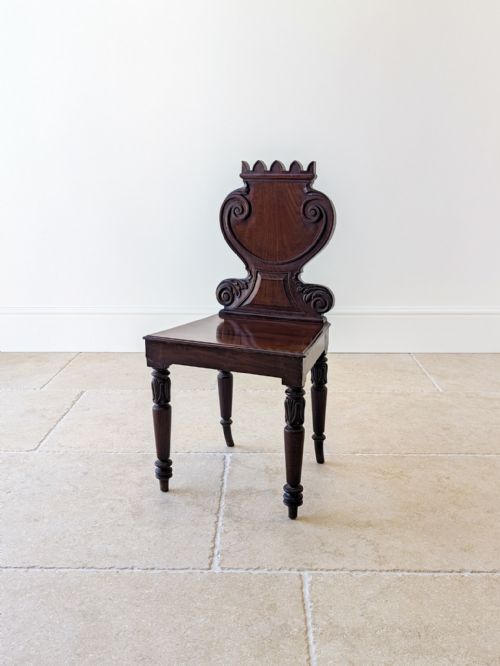
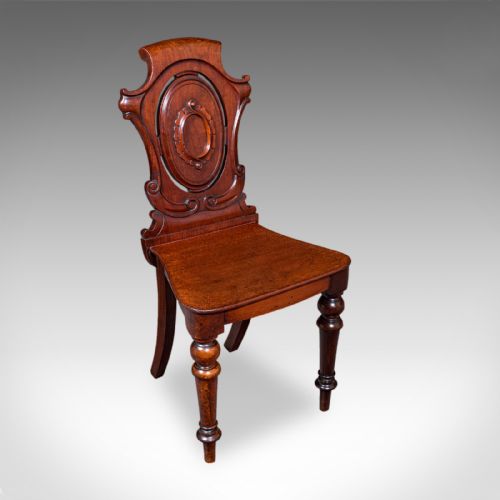
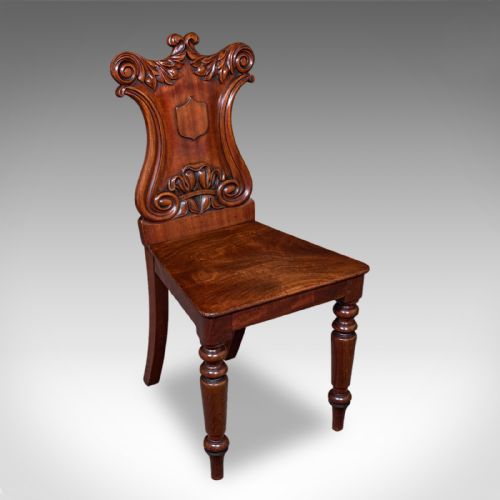
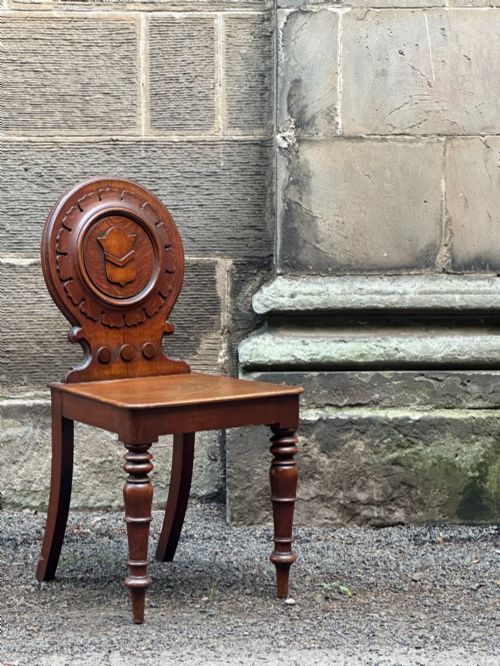
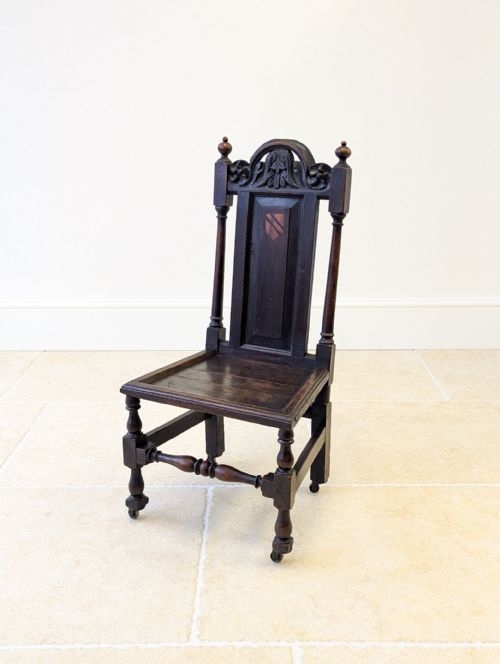
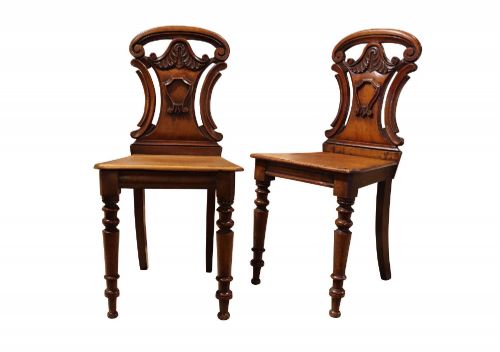
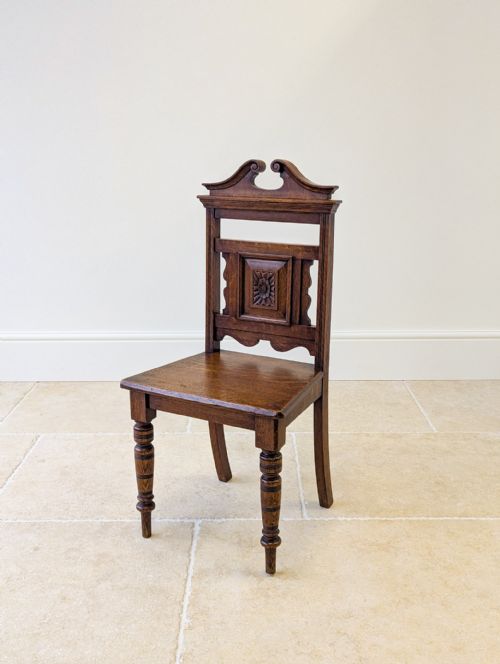
These carved back entry chair selections bring strong architectural form and historical presence into a hallway, offering both practical seating and decorative impact.
Carved Back Entry Chair
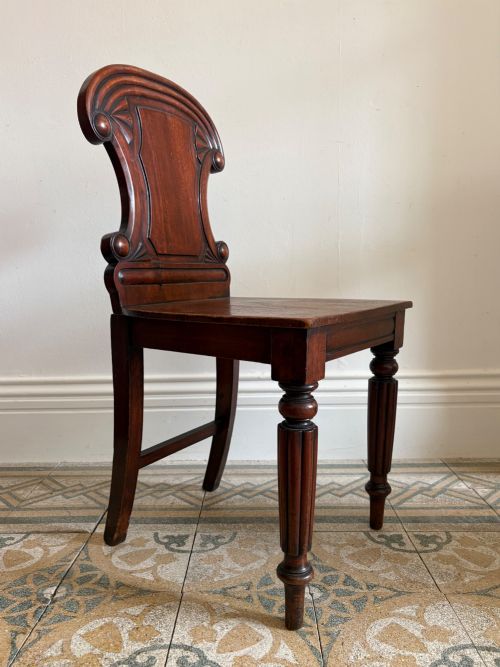
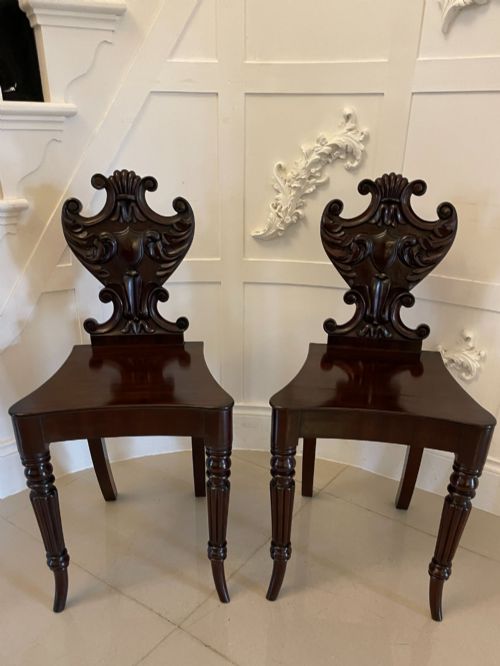
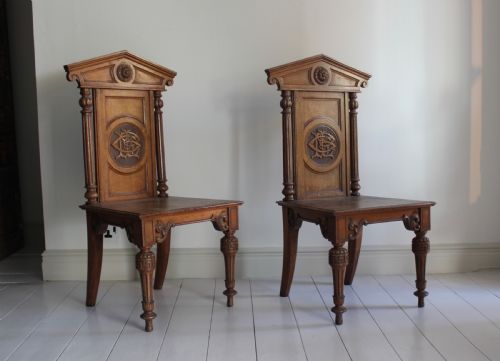
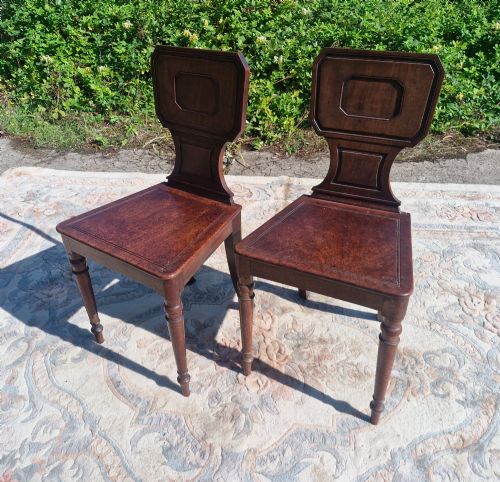
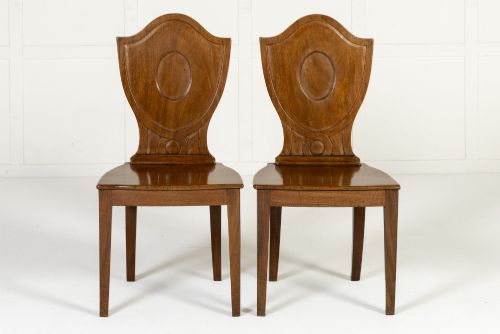
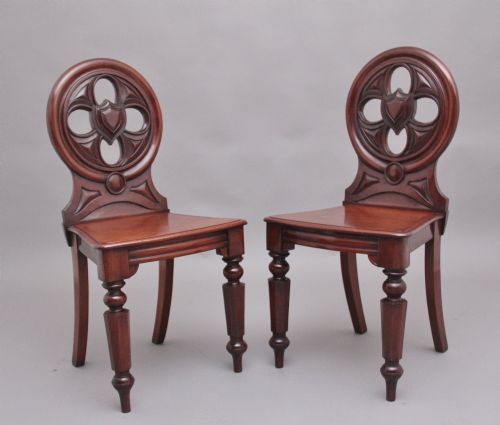
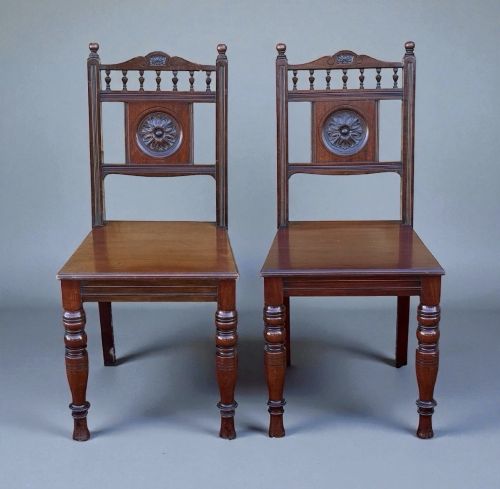
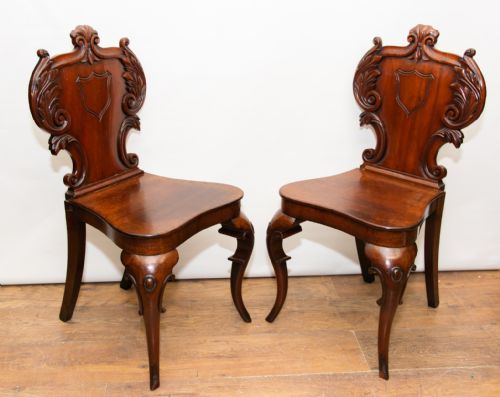
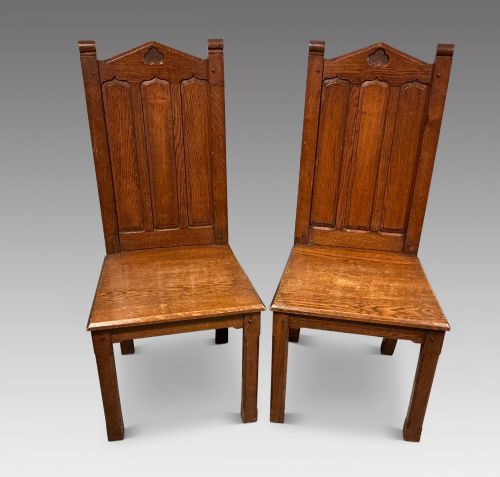
A carved back entry chair serves primarily as a reception or hall seat, designed for occasional use rather than long periods of sitting. These pieces frequently appear as matching pairs, constructed with rigid wooden seats and elaborately carved upright backs.
The selections span multiple eras including the Georgian, Regency, and Victorian periods, alongside specific revivals such as Gothic, Jacobean, and Renaissance styles. Mahogany and oak dominate the available forms, accompanied by occasional examples in walnut, pitch pine, and painted wood.
Makers utilised various regional interpretations across England, Scotland, Ireland, and Italy. The typical silhouette relies on solid timber construction, often incorporating armorial crests, shell motifs, or sculptural panels into the upper backrest.
Materials and construction
Cabinet makers relied heavily on dense hardwoods like mahogany and oak, selecting timber capable of holding deep, crisp relief carving without splitting along the grain. Walnut and pitch pine appear alongside painted wood surfaces, occasionally supplemented by brass details or velvet upholstery on related reception seats.
The manufacturing process combined robust joinery with hand-carved ornamentation applied directly to the solid wooden backrest. Regional workshops shaped these seats to function as durable entrance furniture, prioritising structural rigidity and sculptural back panels over cushioned comfort.
Listings span the eighteenth, nineteenth, and Victorian eras, predominantly constructed from mahogany and oak with occasional walnut and pitch pine.
Craftsmanship and distinction
Quality rests upon the depth, sharpness, and ambition of the carved decoration on the backrest. Pieces featuring crisp armorial bearings, sculptural shell motifs, or intricate Gothic tracery demonstrate superior artisan input compared to simpler, flatter panels.
The selection of timber grain and the integrity of the joinery further separate standard examples from exceptional ones. Heavier gauge hardwoods and well-matched pairs maintain structural coherence and visual balance across both seats.
Gillows
The Carved Back Entry Chair Glossary
- Hall Chair
- A rigid wooden seat traditionally placed in an entrance hall or reception room. These items often feature solid timber seats and carved heraldic or decorative backrests.
- Sgabello
- An early form of Renaissance chair featuring trestle-like supports and a high carved back. These pieces derive from Italian traditions and serve primarily as decorative reception seating.
- Shield Back
- A chair back shaped like a heraldic shield. This design gained prominence during the Georgian and Regency periods.
- Armorial
- Relating to heraldry or family crests. Carved armorial bearings frequently appear on the back panels of formal reception seating.
- Gothic Revival
- An architectural and decorative style drawing inspiration from medieval design. Pieces in this category display pointed arches, tracery, and heavy oak construction.
Carved Back Entry Chair: Frequently Asked Questions
What is a carved back entry chair used for?
These pieces were designed for entrance halls and reception spaces to accommodate visitors briefly. They function as architectural statements and occasional seats rather than lounge furniture.
Their sturdy wooden construction ensured durability in high-traffic corridors while displaying the status or taste of the household through carved heraldry.
How do I identify a Regency hall chair?
Regency examples typically utilise dense mahogany and draw influence from classical antiquity or robust architectural forms. Look for clean lines combined with carved crests or inset roundels.
Many incorporate sabre legs or turned front supports that reflect the neoclassical tastes prevalent during the early nineteenth century.
Are these chairs comfortable for daily seating?
They feature solid timber seats and upright wooden backs designed for posture and display rather than prolonged lounging. Adding an occasional cushion is common practice for modern daily use.
Their primary historical purpose involved brief seating in a hallway or waiting area rather than relaxation.
What woods were used for Victorian hall chairs?
Victorian cabinet makers primarily selected mahogany and oak for these items, though walnut and pitch pine also appear. Some examples feature painted wood surfaces or applied decorative elements.
Revival styles during this era frequently dictated the choice of timber, with Gothic and Jacobean designs favouring dark, heavily figured oak.