
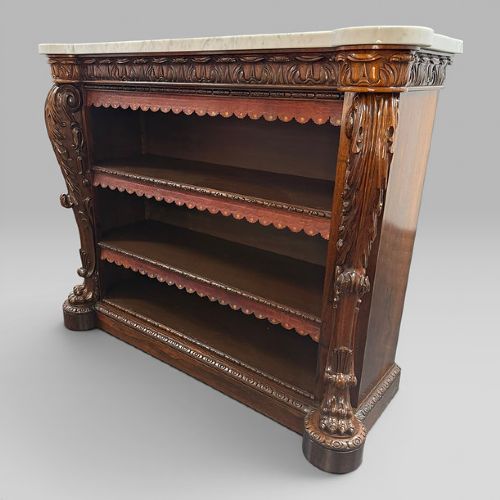


Gillows Carved Cabinet
A gillows carved cabinet brings solid cabinet-making tradition into a room through honest timber and considered proportion.
Gillows Carved Cabinet
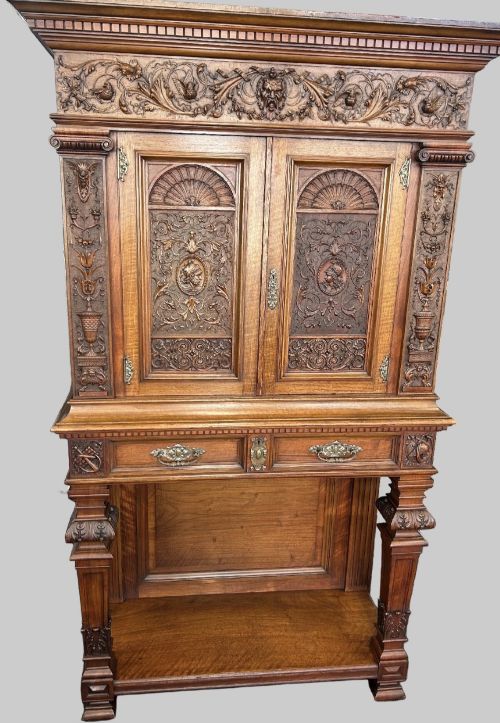
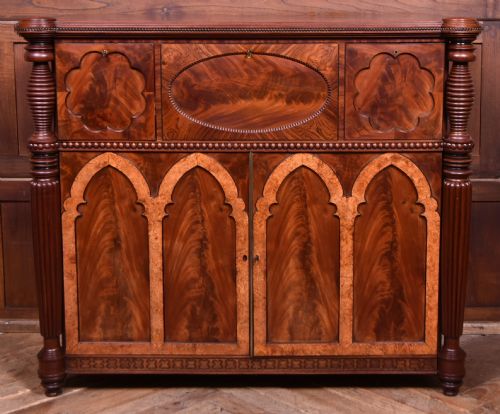
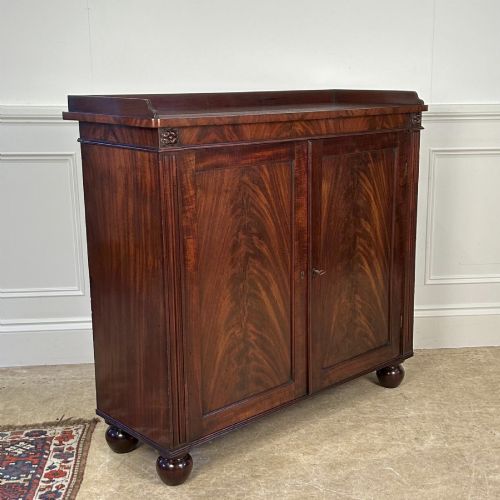
A gillows carved cabinet represents the enduring output of esteemed makers whose work spans the Georgian, Regency, and Victorian periods. Buyers seeking a gillows carved cabinet look for disciplined craftsmanship expressed through forms such as dwarf secretaire cabinets, side cabinets, and expansive library bookcases.
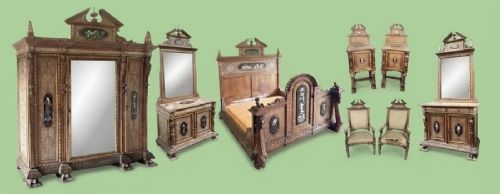
The pieces appearing on this page extend across multiple eras, including George IV, William IV, and Edwardian styles, alongside Renaissance Revival and Victorian Gothic Revival movements. Makers associated with these works range from Gillows itself to Waring and Gillow, as well as pieces produced in the manner of the firm or attributed to its workshops.
Beyond standalone cabinets, related forms such as open bookcases, chiffoniers, display cabinets, and bedroom suites demonstrate the breadth of domestic furniture produced. Each example relies on traditional joinery and architectural details to establish its character within an interior.
Materials and construction
Timbers form the foundation of these pieces, with mahogany, oak, walnut, burr walnut, satinwood, and flame mahogany providing varied grain patterns and structural strength. Accents in brass hardware and glass panels complete the construction of the larger bookcases and display cabinets.
Carving and inlay techniques define the surface decoration, applied to solid carcases and veneered panels alike. Cabinet-makers balanced structural integrity with refined decorative elements, ensuring that timber selection matched the intended architectural style of the piece.
Listings feature walnut, mahogany, oak, satinwood, and brass across pieces spanning the Georgian, Regency, and Victorian periods.
Judging quality and execution
Quality rests upon the selection of timber, such as figured mahogany or burr walnut, and the crispness of any carved enrichment. Pieces demonstrating superior execution exhibit seamless joinery and a considered balance between ornamental carving and functional form.
Attribution and provenance also influence standing, distinguishing documented works from those produced in the manner of the firm. The integration of secondary woods and the refinement of internal fittings further separate standard production from exceptional examples.
Gillows·Waring and Gillow·Bruce Talbert
The Gillows Carved Cabinet Glossary
- Secretaire
- A piece of furniture incorporating a writing drawer with a drop-front revealing small drawers and pigeonholes. This form combines the utility of a desk with the storage of a cabinet.
- Chiffonier
- A low sideboard or cabinet developed during the Regency and Victorian periods, often featuring doors enclosing shelves and sometimes a superstructure with a mirror or small shelf.
- Renaissance Revival
- A nineteenth-century architectural and decorative style drawing inspiration from fifteenth and sixteenth-century Italian forms. It manifests in heavy carving, architectural symmetry, and classical motifs.
- Dwarf cabinet
- A low freestanding storage piece designed to sit below dado height, keeping sightlines open in a room while providing functional surface and interior space.
- Satinwood
- A pale, hard timber with a natural sheen, frequently utilised for inlay, banding, and veneering on high-status cabinet work.
Gillows Carved Cabinet: Frequently Asked Questions
How do I identify an authentic Gillows piece?
Authentic pieces often bear stamped signatures, maker marks, or specific numbering associated with the Lancaster and London workshops. Construction methods, timber quality, and secondary wood choices also aid attribution.
Attributed pieces lack direct stamps but display the characteristic proportions, carving styles, and joinery standard to the firm's output.
What is the difference between Regency and Victorian cabinets?
Regency cabinets generally reflect classical restraint, drawing on ancient Greek and Roman motifs with clean architectural lines and subdued brass mounts. Mahogany and rosewood dominate this period.
Victorian cabinets tend toward heavier proportions and more exuberant ornamentation, embracing revival styles like Renaissance Revival and Gothic Revival with deeper carving and varied timber veneers.
Where should I place a side cabinet?
A side cabinet suits a dining room, hallway, or drawing room where surface display space and enclosed storage are both required. Their finished backs and compact proportions allow them to sit against principal walls or function as room dividers.
Pairing a cabinet with appropriate lighting highlights the grain of the mahogany, walnut, or satinwood used in its construction.
How do I care for antique mahogany and walnut?
Maintain timber surfaces by dusting with a dry, soft cloth and avoiding placement near direct heat sources or strong sunlight. Proper humidity control prevents veneer lifting and wood splitting.
Occasional application of appropriate wax polish preserves the natural sheen of the wood without building up heavy residues over time.