






Gilded Wood Plant Pedestal
A gilded wood plant pedestal brings sculptural height and golden reflection to a room, holding a favourite fern or urn with effortless grace.
Gilded Wood Plant Pedestal
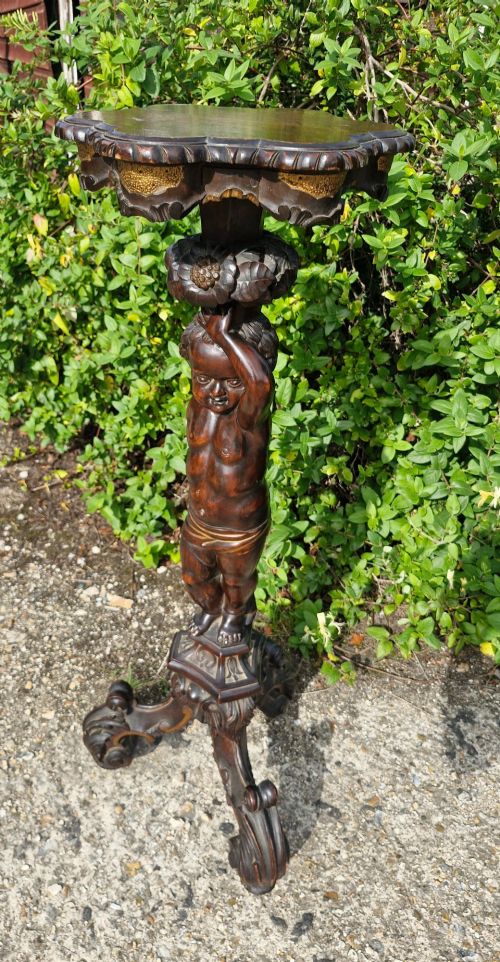
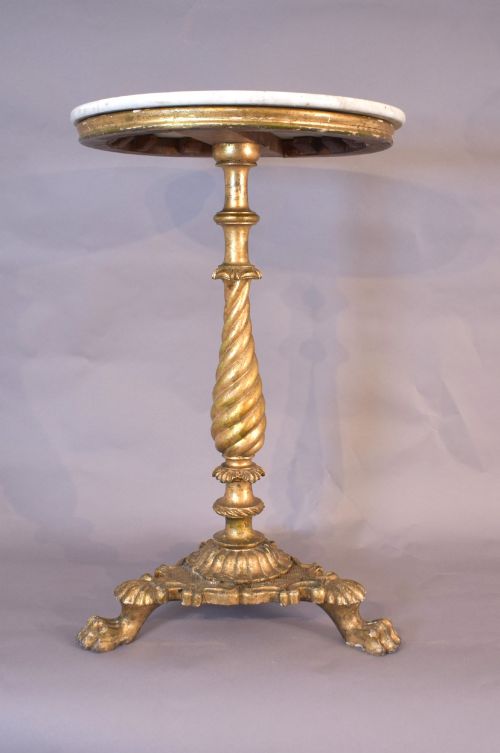
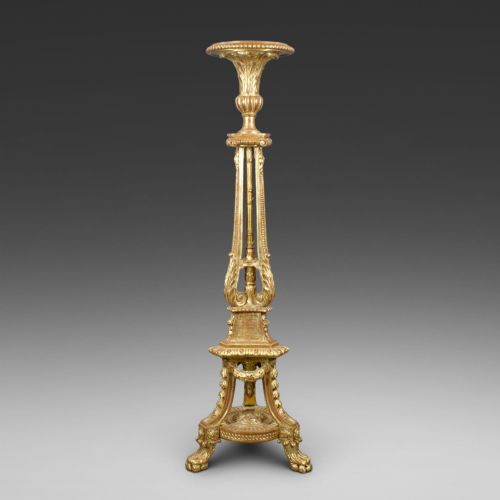
A gilded wood plant pedestal elevates greenery and sculpture, functioning primarily as a stand, torchere, or small occasional table within a room. When searching for a gilded wood plant pedestal, buyers encounter forms ranging from simple circular tripod tables to ornate Italian torchere stands and Venetian figures.
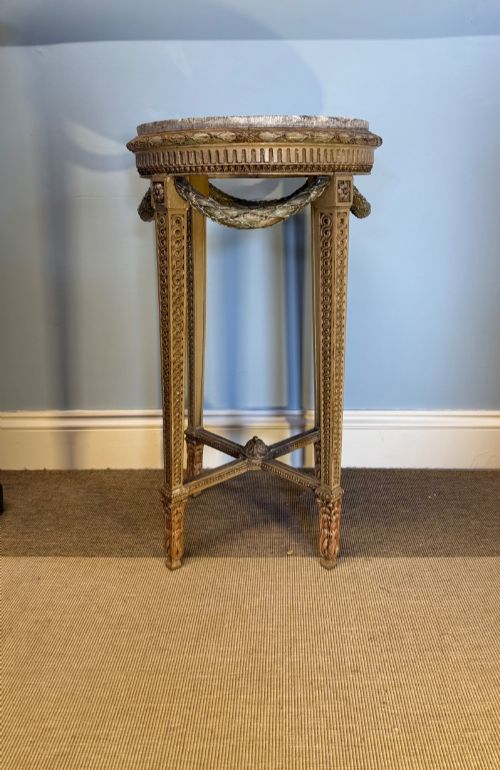
The pieces span from the eighteenth century through to the early twentieth century, drawing on French Chateau, Regency Revival, and Venetian Baroque styles. Most examples seen here originate from the nineteenth century, reflecting historical preferences for classical revival and continental interior decoration.
How they were made
Carved wood provides the structural core for these stands, frequently built from timber shaped into intricate foliage, fluted columns, or figurative supports. Gesso is often applied beneath the surface to smooth the wood and create a crisp bed for subsequent gilding.
Gold leaf supplies the brilliant metallic finish characteristic of giltwood, while select pieces incorporate polychrome paint or contrasting marble tops. Artisans combined traditional carpentry with decorative surface finishing, such as paint and metal leaf, to achieve opulent visual textures.
Gilded Wood Plant Pedestal Retail Price Guide 2026
Typical asking prices for gilded wood plant pedestal among the pieces listed under this phrase on Sellingantiques today, from the lower quarter to the upper quarter. They describe what is for sale here now, not the wider market.
Design influences span Venetian, French Chateau, and Regency Revival styles across various occasional tables and plant stands.
What varies in quality
Depth and precision in the wood carving set exemplary pieces apart from simpler workshop productions, showing clear definition in acanthus leaves, drapery, or figurative anatomy. The quality of the gilding technique dictates how light plays across the surface, distinguishing delicate hand-applied leaf from heavier, flat metallic applications.
The integration of inset marble tops and the structural stability of tripod or pedestal bases reveal the original maker's skill and ambition. Pieces that retain their original polychrome highlights and undisturbed surface patination command greater aesthetic coherence.
The Gilded Wood Plant Pedestal Glossary
- Giltwood
- Wood that has been decorated with gold leaf or powder over a prepared ground. This technique creates a luminous metallic surface that catches interior candlelight or daylight.
- Torchere
- A tall ornamental stand originally designed to hold a torch or candle, later adapted for lamps, urns, and plants. These stands emphasise verticality and decorative carving.
- Gesso
- A plaster mixture applied to wood surfaces as a smooth base for gilding and painting. It allows carvers to achieve sharp, refined details beneath the gold leaf.
- Polychrome
- The practice of decorating architectural elements or sculpture in a variety of colours. Painted highlights often complement the gilded areas on continental furniture.
Gilded Wood Plant Pedestal: Frequently Asked Questions
How do I style a plant pedestal?
Position the stand in a corner or beside seating to create vertical interest and draw the eye upward in a room. Place a trailing plant or a decorative urn on top to soften the architectural lines.
Ensure the weight of the pot matches the stability of the tripod or pedestal base to prevent tipping. Keep the stand away from direct moisture sources to protect the delicate gold leaf and gesso surfaces.
Can these stands support heavy pots?
Most antique stands were designed for decorative urns, light planters, or sculpture rather than massive earthenware vessels. Check the diameter and balance of the top surface before placing heavy items upon it.
Use a discreet saucer inside any planter to catch stray water and prevent moisture damage to the antique wood below. Lighter ceramic or brass pots suit these historic surfaces best.
How do I clean gilded wood?
Dust the surface gently with a very soft, dry brush or a clean microfiber cloth. Avoid using water, chemical sprays, or abrasive cleaners, which can strip away the delicate gold leaf.
Professional conservation is recommended if the gilding begins to flake or separate from the gesso ground. Gentle handling preserves the historic lustre of the finish.