
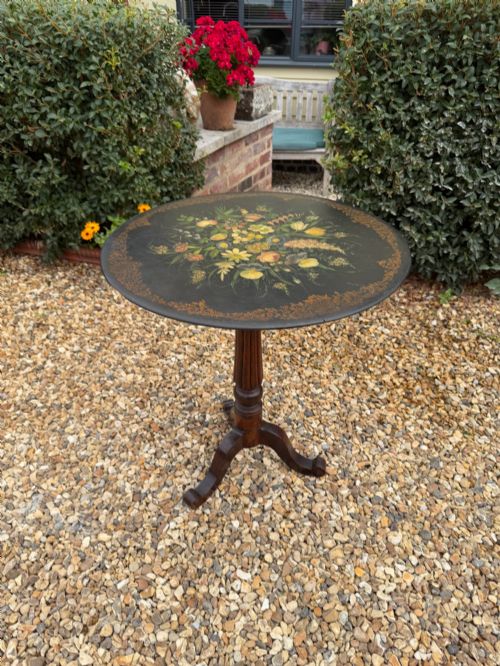
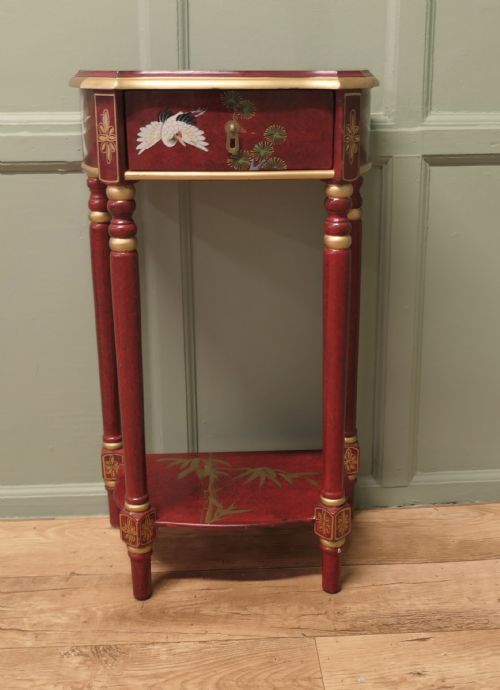

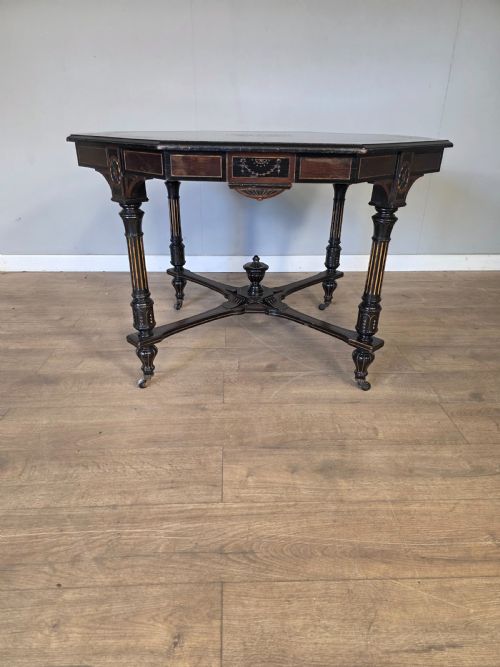
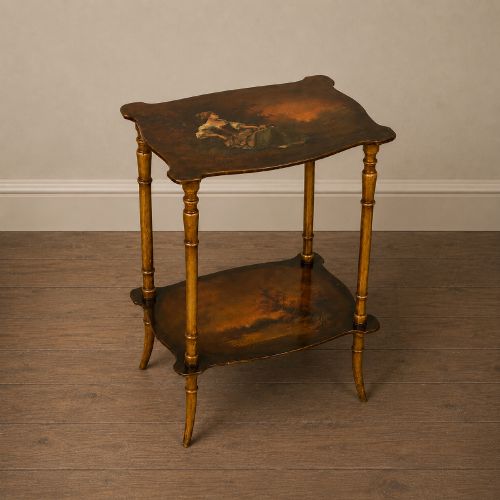


Gilded Wood Occasional Table
A gilded wood occasional table brings bright warmth and sculptural form to a room, serving as a compact surface finished in gold leaf or paint.
Gilded Wood Occasional Table
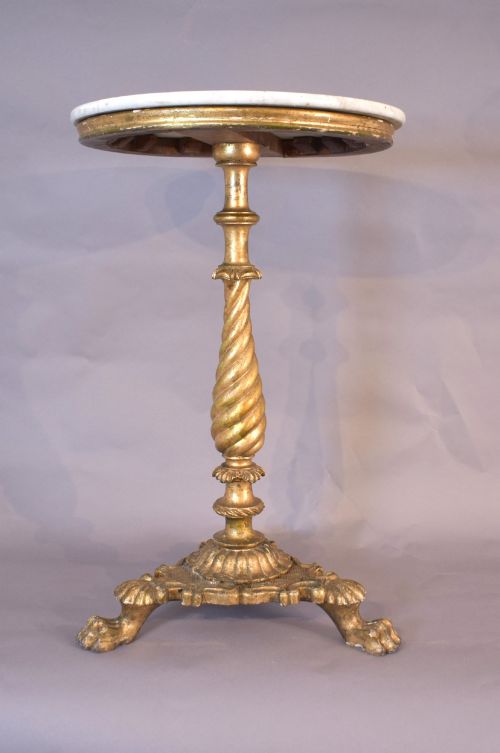
A gilded wood occasional table encompasses small decorative stands designed for specific corners, lamp placements, and display uses. The selections span the nineteenth century through the early twentieth century, incorporating Victorian, Edwardian, and Regency eras alongside Continental interpretations.
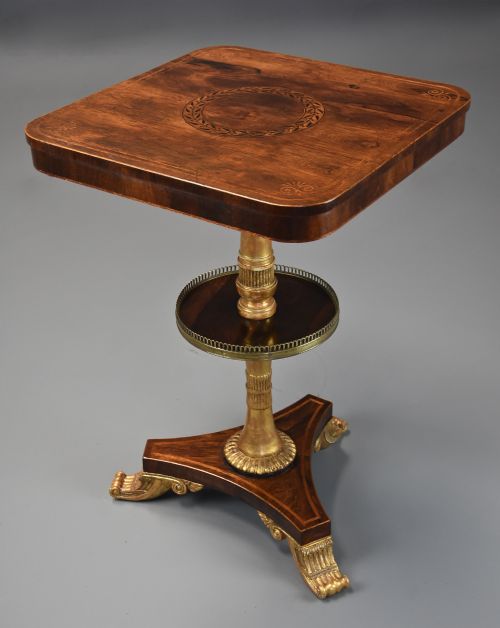
The physical configurations vary widely across the inventory, ranging from tripod bases and two-tier étagères to nests of tables, urn stands, and marble-topped centre pieces. Side tables and lamp tables dominate the forms, frequently drawing on French Rococo, Chinoiserie, and classical revival styles.
Materials and construction
Makers utilised solid timbers such as mahogany, rosewood, walnut, and ebonised woods as the structural foundation for these pieces. Surfaces were then enhanced through gesso preparation before receiving applications of gold leaf, silver gilt, or decorative paint.
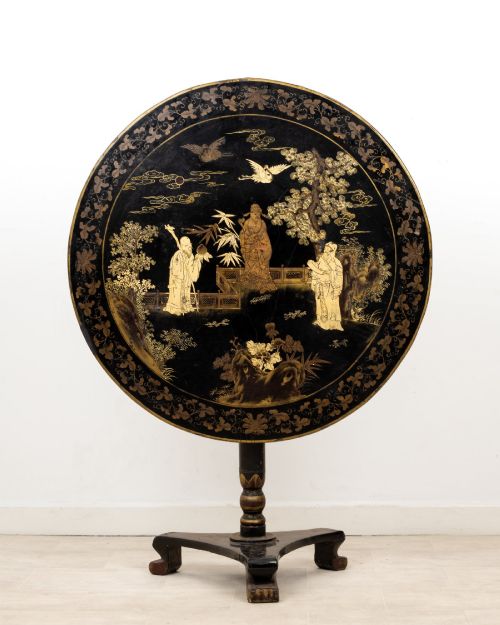
Insets of white or coloured marble frequently form the table tops, secured within carved wooden or gilded brass frames. Lacquer work and hand-painted motifs appear on specific Continental and Chinoiserie examples, adding patterned colour and surface depth.
The inventory records pieces from the nineteenth and early twentieth centuries, utilising giltwood, marble, mahogany, and lacquer.
Assessing quality
The calibre of a gilded wood occasional table rests upon the crispness of the carver's chisel and the purity of the surface gilding. Superior examples display sharply defined ornament without the softening of detail that occurs when layers accumulate over a worn base.
Material selection dictates the underlying integrity, with dense hardwoods and genuine marble insets separating robust pieces from lighter constructions. The harmony between the painted or gilded finish and the underlying structural woodwork determines the overall visual weight.
George Bullock·Thomas Hope·Whytock and Reid·E.Daligny
The Gilded Wood Occasional Table Glossary
- Giltwood
- Timber that has been coated with gold leaf over a prepared gesso layer. This technique gives furniture a brilliant metallic sheen while maintaining a carved wooden core.
- Gesso
- A plaster-like mixture applied to wood to create a smooth surface for gilding or painting. It allows carvers to achieve sharp relief details before the metal leaf is laid down.
- Tripod table
- A small freestanding table supported by a single central pillar resting on three feet. This form allows the table to occupy minimal floor space in domestic interiors.
- Étagère
- A small open piece of furniture with multiple tiers or shelves for displaying ornaments or holding lamps. These are typically light in construction and easily moved between rooms.
- Chinoiserie
- European decorative style reflecting Chinese artistic traditions, often featuring painted lacquer and gilt motifs on dark backgrounds.
Gilded Wood Occasional Table: Frequently Asked Questions
Where should I place a giltwood table?
These tables suit corners, beside seating, or beneath mirrors where their reflective surfaces catch natural light.
Their compact scale allows them to function as lamp stands or display points without crowding a room.
How do I clean gilded wood?
Dust surfaces gently with a soft, dry ostrich feather duster or a clean microfibre cloth.
Avoid using water, chemical sprays, or abrasive cleaners, as moisture and friction easily damage delicate gold leaf.
Are marble tops original?
Many nineteenth-century occasional tables were designed specifically to house inset marble slabs for durability and decorative contrast.
Checking the fit within the wooden frame and the matching wear patterns helps confirm originality.
What is a nest of tables?
A set of graduating tables designed to slide neatly beneath one another when not in use.
This practical format gained popularity for entertaining, allowing extra surfaces to be deployed quickly.