


Gilded Wood Candlesticks
These gilded wood candlesticks bring the grand, luminous scale of European Baroque and neoclassical interiors straight onto a modern table.
Gilded Wood Candlesticks
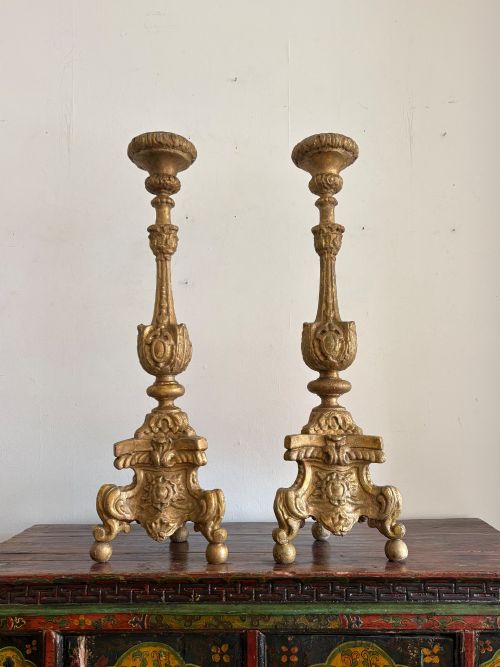
When you search for gilded wood candlesticks, you encounter a striking array of altar sticks, standard lamps, and table lamps spanning the eighteenth and nineteenth centuries. These pieces predominantly originate from continental workshops, with Italian Baroque and Venetian styles appearing frequently among the listings.
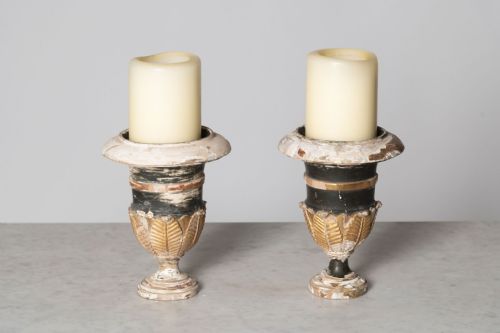
The selection ranges from tall altar-type pricket sticks to converted candle holders and carved figural candelabras. Pairs dominate the offerings, often showing the substantial proportions typical of ecclesiastical and formal domestic lighting from earlier periods.
How They Were Made
Maker's hands shaped these pieces primarily from carved wood, applying gesso as a smooth preparatory ground before laying down delicate gold leaf. Craftsmen utilised silvered mecca finishes alongside traditional gilding to achieve deep, reflective surfaces on the timber.
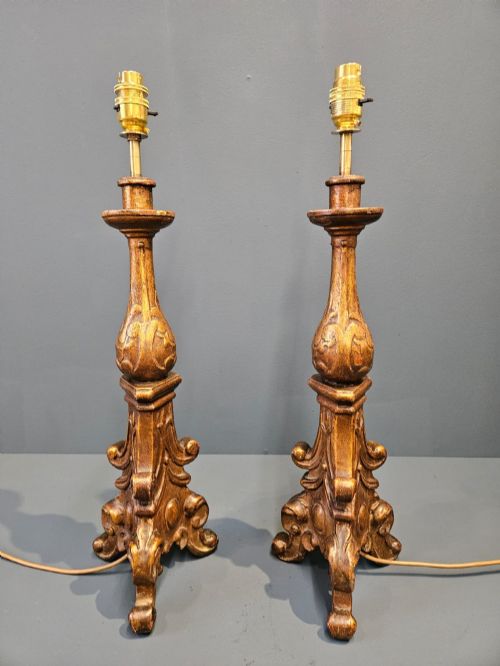
Structural elements frequently incorporate iron or brass components for stability, particularly in pieces adapted later into standard lamps and table lamps. The underlying woodwork showcases skilled carving, from robust Baroque scrolls to slender classical proportions.
What Varies in Quality
The distinction between ordinary and exceptional examples rests upon the depth and crispness of the wood carving. Vigorous, detailed hand-carving in Italian and French pieces stands apart from simpler, flatter surface decoration.
Preservation of the original gold leaf and gesso layers dictates the visual presence of each piece. Finer items retain their rich surface texture and tonal warmth, while others show more extensive historic repair or re-gilding.
The Gilded Wood Candlesticks Glossary
- Giltwood
- Timber that has been coated with gold leaf over a prepared gesso ground. This finish provides a luminous, durable surface characteristic of fine European decorative arts.
- Pricket stick
- A candlestick featuring a central spike designed to secure a candle rather than a socket. These forms frequently derive from ecclesiastical altar furnishings.
- Gesso
- A plaster-like mixture applied to wood to create a smooth surface for gilding. It allows craftsmen to build up relief details before applying gold leaf.
- Mecca
- A transparent golden varnish applied over silver leaf to simulate the rich appearance of gold. It creates a distinct warm sheen on period wooden objects.
- Treen
- Small handmade wooden items produced before the prevalence of mass manufacturing. These objects display traditional turning and carving techniques.
Gilded Wood Candlesticks: Frequently Asked Questions
What is a pricket stick?
A pricket stick uses an upward-pointing metal spike to hold a candle in place rather than a traditional hollow socket. These pieces commonly originate from church altars and ecclesiastical settings.
Their distinct form creates a striking silhouette when displayed on a modern sideboard or table, reflecting their historical origins in formal religious interiors.
Are these wired for electricity?
Many examples listed under this category have been adapted over time to function as table lamps and standard lamps. This conversion usually involves discreet wiring while preserving the antique carved wooden base.
Unconverted candlesticks retain their original configuration for holding candles, allowing buyers to choose between historic function and modern lighting utility.
How do I identify Italian Baroque pieces?
Italian Baroque candlesticks typically feature robust, dramatic carving with dynamic scrolls, acanthus foliage, and substantial proportions. They often display deep surface relief designed to catch candlelight in grand rooms.
These pieces frequently date from the eighteenth century and reflect the ornate aesthetic prevalent in Venetian and Florentine workshops of the period.
How do I care for giltwood?
Giltwood requires gentle dusting with a soft, dry cloth to protect the delicate gold leaf and underlying gesso layers. Moisture and harsh cleaning agents should be strictly avoided.
Placing these items away from direct sunlight and excessive humidity helps preserve the original surface texture and metallic lustre over time.