

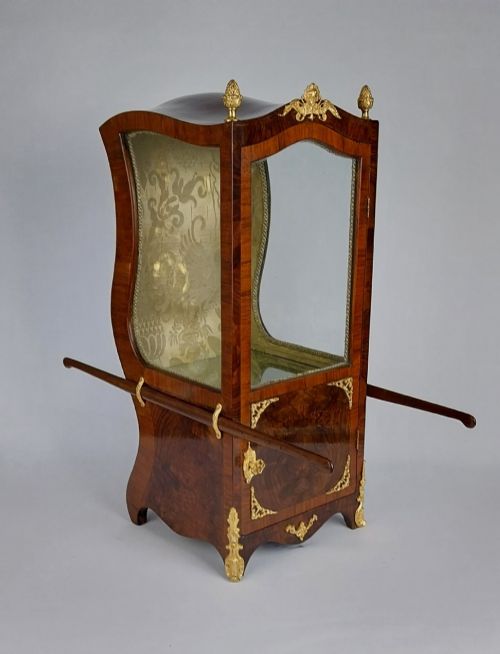


Gilded Vitrine Cabinet
A gilded vitrine cabinet turns a room into a private museum, framing porcelain and silver behind glass.
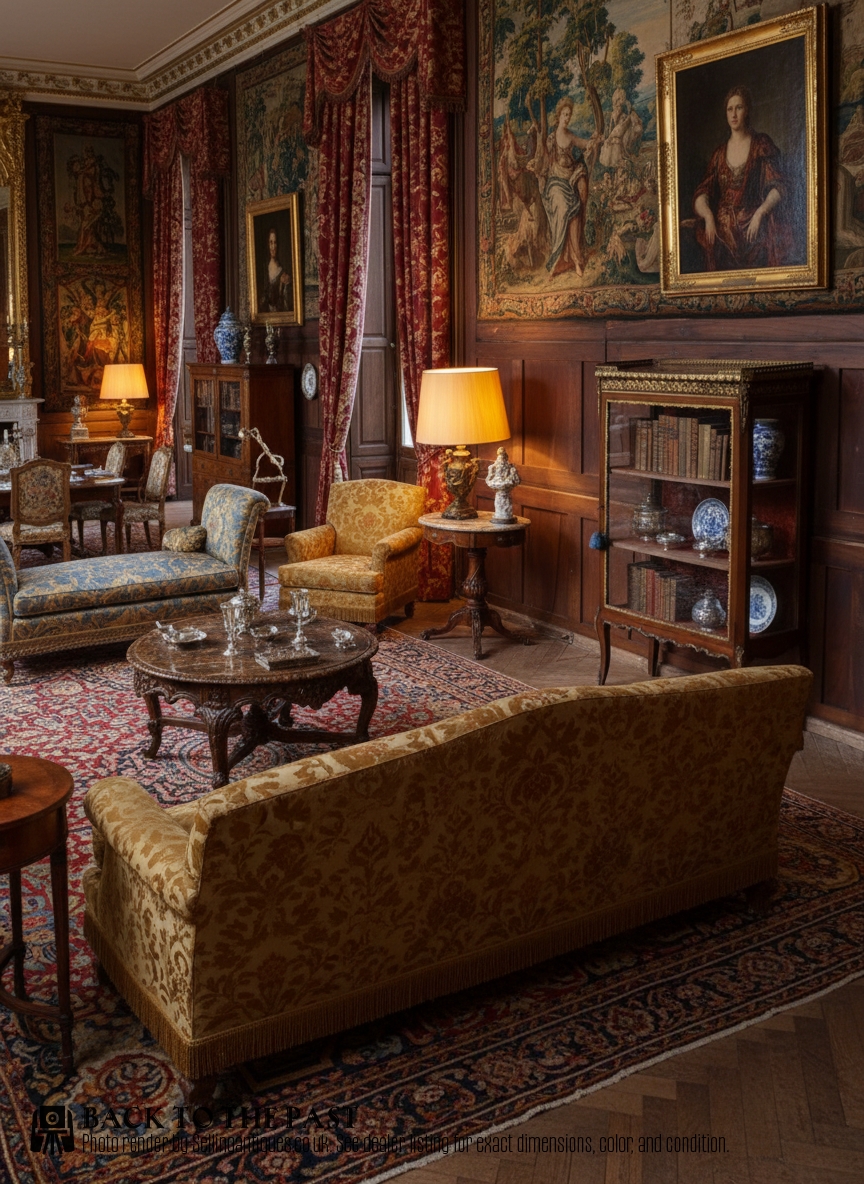
Gilded Vitrine Cabinet
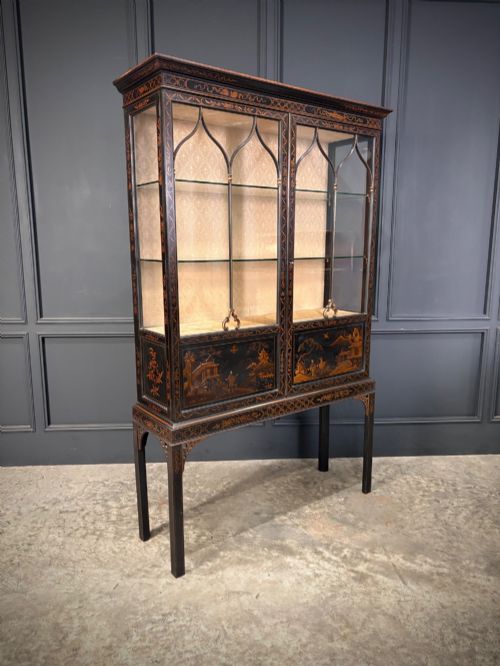
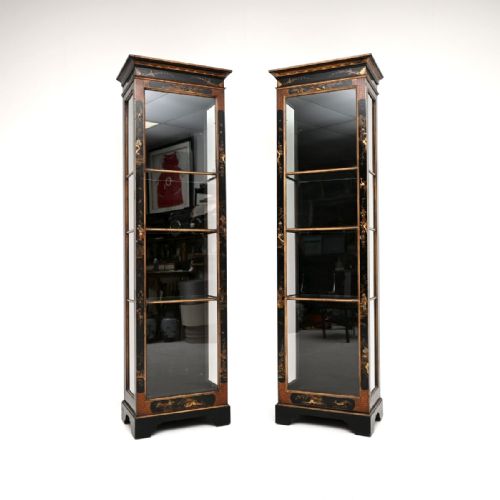
When searching for a gilded vitrine cabinet, buyers encounter French and English display pieces designed to showcase small treasures. The most common examples on this page date from the nineteenth century, featuring glass panels and gilt surfaces.
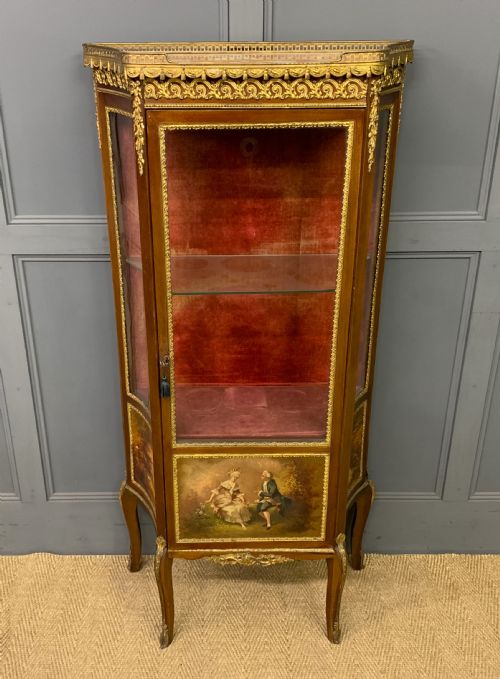
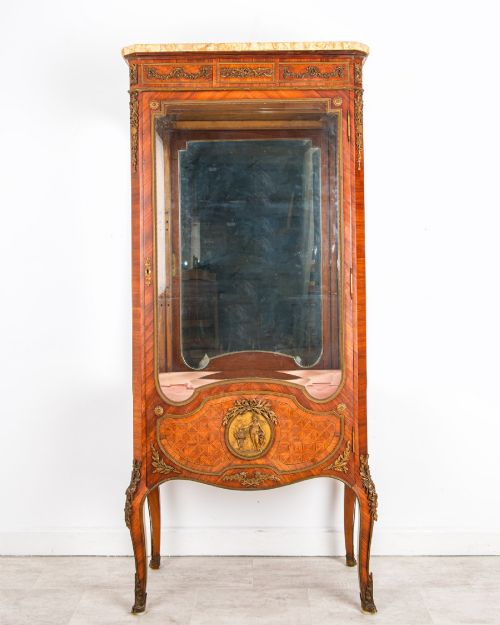
Forms range from floor-standing pier cabinets and cylindrical pedestals to compact table-top sedan vitrines and boudoir cabinets. Many adopt Louis XV or Louis XVI revival styles, incorporating glazed sides and fitted shelving.
Makers and workshops across France and England produced these display cases using fine timbers and decorative paintwork. They served as formal reception room furniture intended to reflect the owner's taste and wealth.
How they were made
Makers constructed these cabinets using hardwoods such as mahogany, walnut, and kingwood as a structural base. Cabinetmakers then applied veneers, gold leaf, or giltwood carvings to the exterior surfaces.
Ormolu mounts cast in bronze were chased and gilded before being fastened to corners and door frames. Glass panels were fitted into doors and sides, often accompanied by painted panels in the Vernis Martin tradition.
Even tiny sedan vitrines managed to squeeze in glass panels, proving that miniature architecture needs a display case too.
What varies in quality
The distinction between standard production and top-tier workshop output lies in the crispness of the gilt bronze mounts and hand-painted details. Superior pieces demonstrate meticulous integration of ormolu borders with curved wood veneers.
The choice of timber underpins the overall grade, with figured kingwood and intricate lacquer work demanding greater skill than plain surfaces. Interior linings of velvet and the weight of the cast glass also separate basic display cases from exceptional examples.
François Linke·Angela Kaufman·Maison Krieger
The Gilded Vitrine Cabinet Glossary
- Vitrine
- A glass-fronted cabinet designed specifically for displaying fine objects and porcelain. The term derives from the French word for glass.
- Ormolu
- Gilt bronze mounts applied to furniture for decoration and edge protection. The technique involves a mercury-gilding process common in nineteenth-century workshops.
- Vernis Martin
- A simulated Japanese lacquer developed by the Martin brothers in eighteenth-century France. Later revival pieces utilised this technique on painted panels.
- Pier cabinet
- A narrow cabinet built to fit the wall space between windows. These pieces often feature marble tops and glazed doors.
- Kingwood
- A dense, richly figured Brazilian timber used heavily in high-end French cabinetmaking. It provides contrasting grain patterns beneath polished finishes.
Gilded Vitrine Cabinet: Frequently Asked Questions
What is a gilded vitrine cabinet used for?
These cabinets were built to display porcelain, miniatures, and precious ornaments in drawing rooms and boudoirs. The glass panels protected delicate items from dust while keeping them visible to guests.
Today, they serve the same decorative purpose in domestic interiors, holding collections of glassware, ceramics, or small sculptures.
How do I identify a 19th-century vitrine?
Nineteenth-century examples often rely on revival styles like Louis XV or Louis XVI, utilising cast ormolu mounts and kingwood veneers. Examine the construction methods, hinges, and glass quality to determine the manufacturing period.
Makers from this era frequently employed machine-sawn timbers alongside hand-chased bronze mounts, blending industrial techniques with traditional craftsmanship.
What is the difference between giltwood and ormolu?
Giltwood refers to carved wooden furniture surfaces coated with thin sheets of gold leaf or gilt paint. Ormolu describes cast bronze decorative mounts that have been gilded and screwed onto the cabinet exterior.
Both materials provide the reflective golden sheen characteristic of nineteenth-century French and English reception room furniture.
Where should I place a display cabinet?
These cabinets suit reception rooms, libraries, and hallways where natural light can pass through the glazed sides. Avoid placing them in direct sunlight to protect interior fabrics and painted panels from fading.
Floor-standing pier cabinets work well against solid wall spaces, while smaller table-top or pedestal versions fit neatly on top of desks or empty corners.