



Gilded Upholstered Armchairs
These gilded upholstered armchairs bring historic French and English seating styles into a room through carved timber and gold leaf.
Gilded Upholstered Armchairs
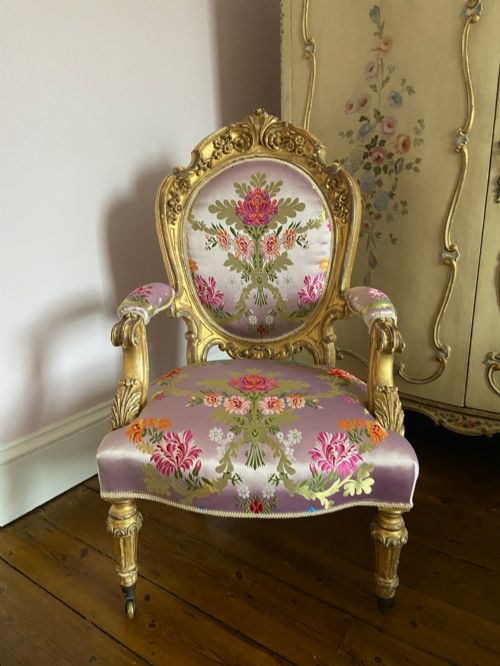
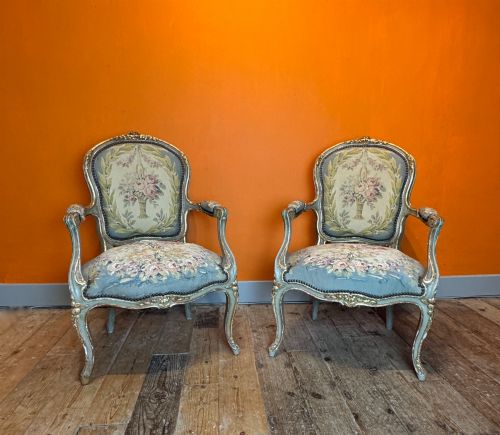
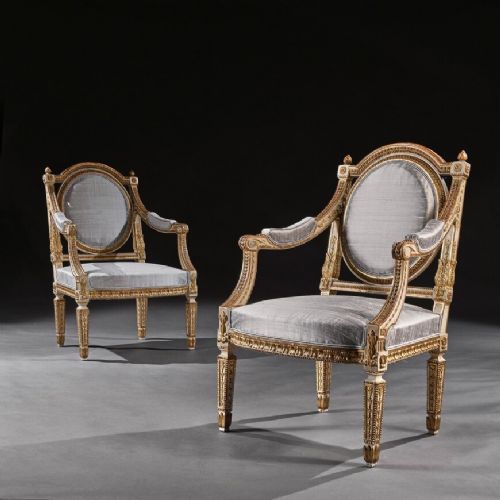
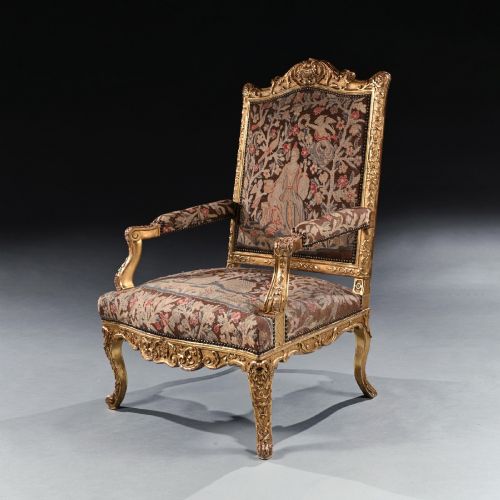
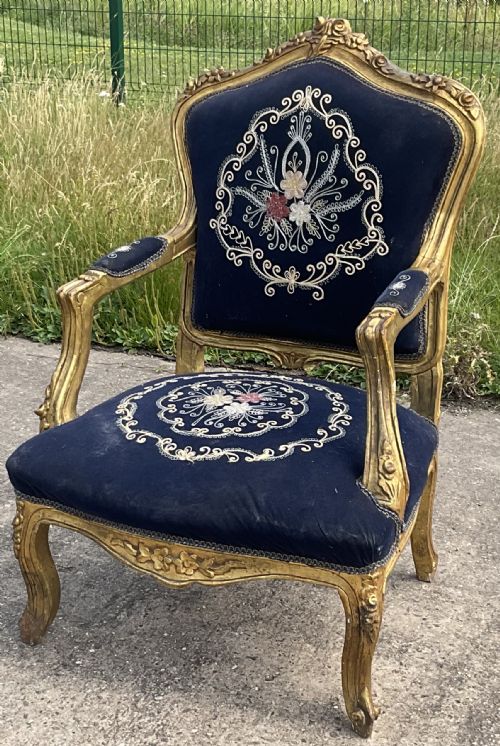
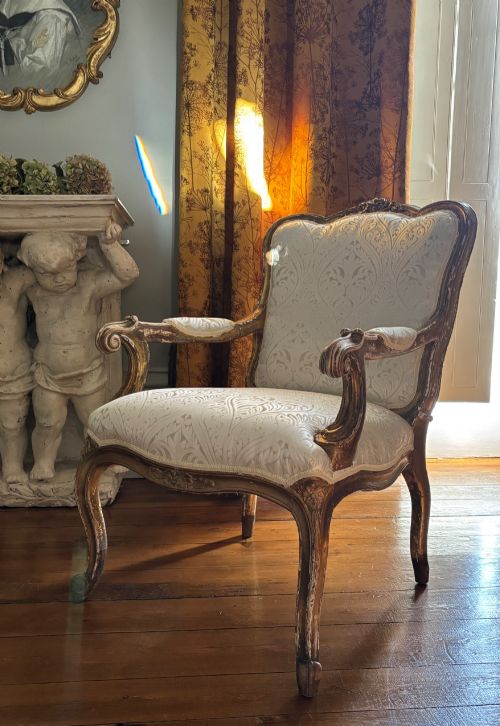
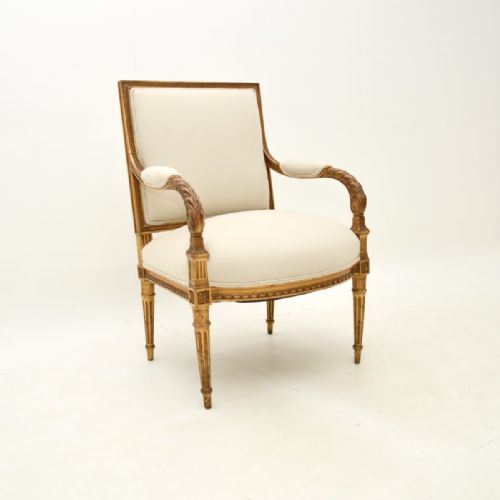
When you search for gilded upholstered armchairs, you encounter formal seating designed for salons, drawing rooms and bedrooms across the eighteenth, nineteenth and early twentieth centuries. These pieces combine wooden frames finished with gold leaf or paint with soft textile coverings, spanning specific historical revivals such as Louis XVI, Rococo and Neoclassical designs.
The versions most commonly met on this page are French and English salon chairs, bergères and open armchairs originating primarily from the nineteenth century. Makers and manufacturers produced both single seats and larger matching suites upholstered in silk damask, tapestry and contemporary fabrics.
How they were made
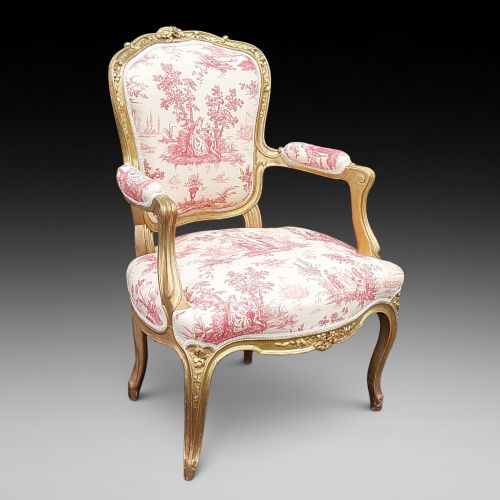
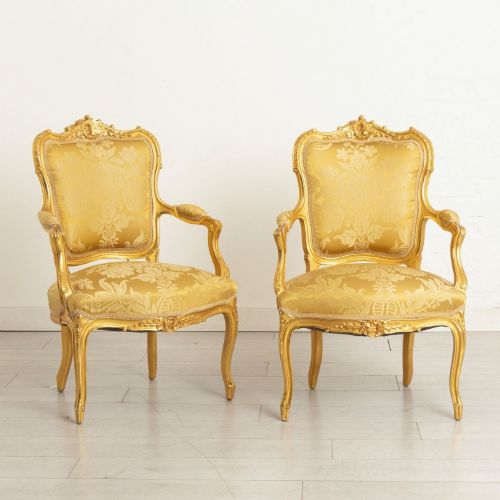
Frames rely on carved beech, walnut and other timbers shaped into scroll arms, cabriole legs and ornamented crest rails. Artisans applied thin sheets of gold leaf or paint over prepared surfaces to achieve the characteristic metallic lustre.
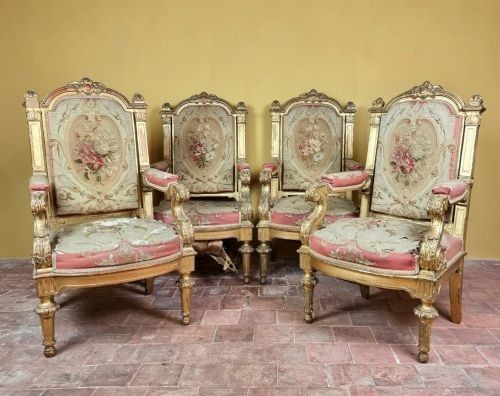
Upholstery techniques combined traditional stuffing with textiles including silk damask, needlework, tapestry and modern replacement fabrics secured with brass detailing.
The inventory spans the eighteenth, nineteenth, and early twentieth centuries, encompassing Victorian, Edwardian, and various French revival periods.
What varies in quality
Quality depends upon the crispness of the wood carving and the depth of the gilding applied to the frame. Finer examples show hand-carved detail and well-balanced proportions that reflect period cabinet-making standards.
The integrity of the structural joinery and the authenticity of the period upholstery materials also distinguish standard production pieces from higher-tier commissions.
Holland and Sons·Blaise Maucuy
The Gilded Upholstered Armchairs Glossary
- Bergère
- An enclosed upholstered armchair with wooden framing around the back and sides. These seats typically feature padded armrests and a loose seat cushion.
- Giltwood
- Timber coated with gold leaf or gold dust over a prepared base layer. This finish creates a reflective metallic appearance on carved frames.
- Fauteuil
- An open-armed French armchair with exposed wooden framing and upholstered back and seat. The sides remain open beneath padded armrests.
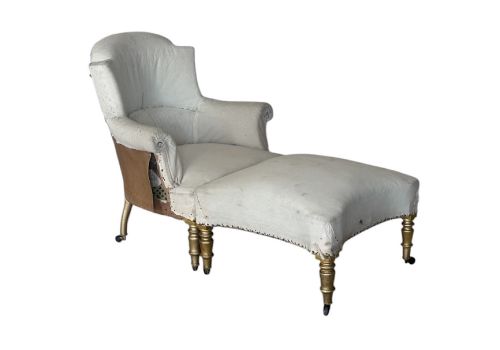
- Duchesse brisée
- A multi-part daybed or chaise longue arrangement consisting of an armchair paired with a matching footstool or ottoman. Pieces can be used separately or joined together.
- Silk damask
- A patterned fabric woven with a reversible design created by contrasting warp and weft threads. This textile frequently appears on formal period seating.
Gilded Upholstered Armchairs: Frequently Asked Questions
How do I identify a Louis XVI style armchair?
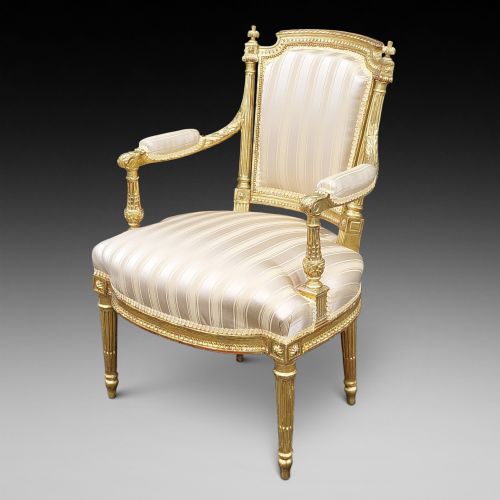
Louis XVI style armchairs are characterised by straight fluted legs, carved rectangular or oval backs, and classical motifs such as ribbons and acanthus leaves.
These design elements distinguish them from the more curved and asymmetrical lines found in earlier Rococo revival pieces.
Were these chairs meant for daily use?
Many of these pieces originated as formal salon or drawing room furniture designed for display and polite entertaining rather than heavy domestic lounging.
Their delicate gilded frames and fine silk or tapestry coverings require gentle placement and consideration in modern interiors.
How can I tell nineteenth century pieces from twentieth century revivals?
Nineteenth century pieces often show the natural wear of older timber and hand-applied gilding techniques consistent with Victorian and period workshops.
Twentieth century revivals replicate earlier forms using clean joinery methods and later manufacturing standards.