

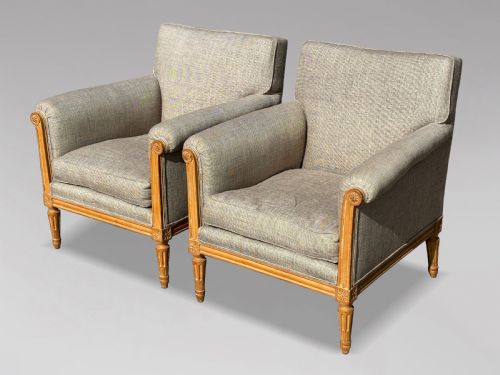


Pair of Bergeres
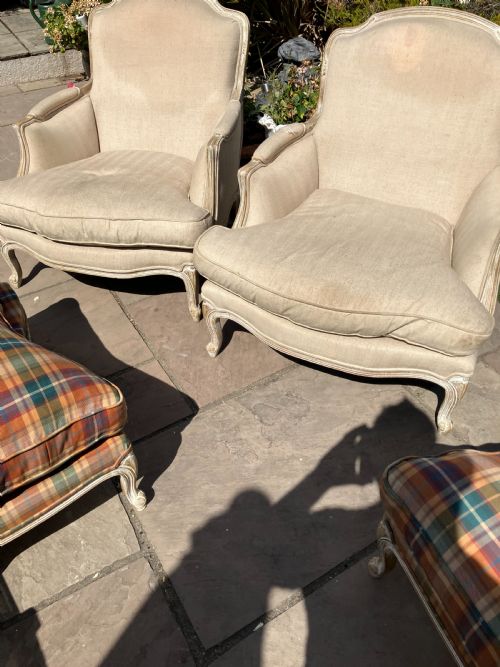
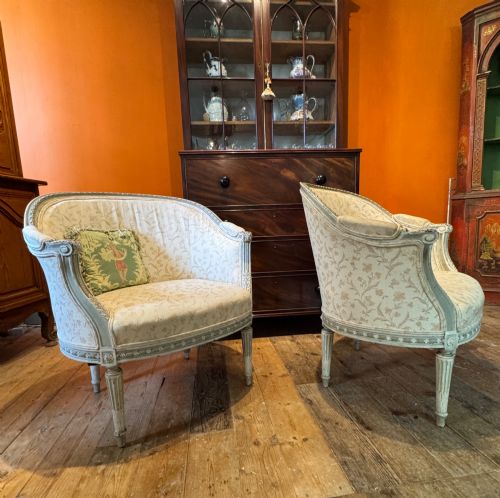
A pair of bergeres brings enclosed, upholstered comfort and classic French design to a room.
Pair of Bergeres
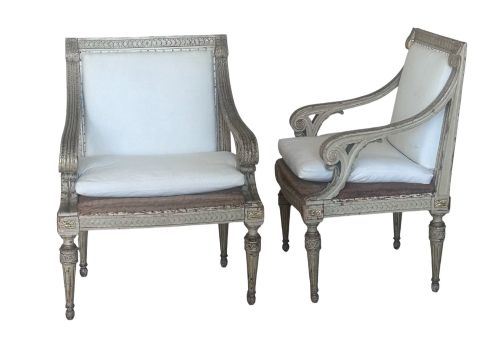
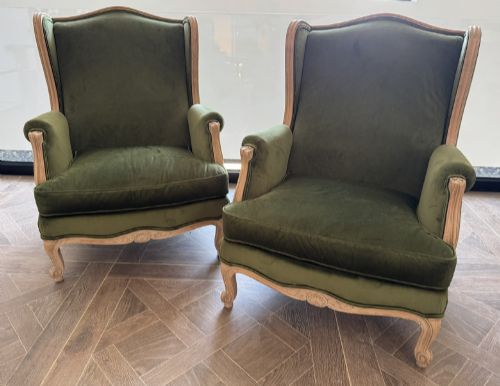
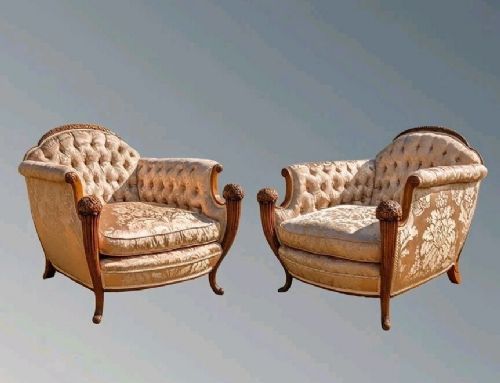
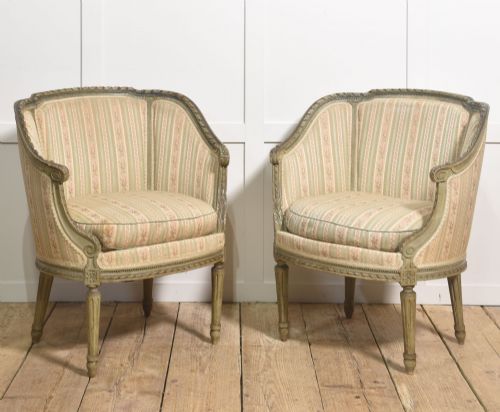
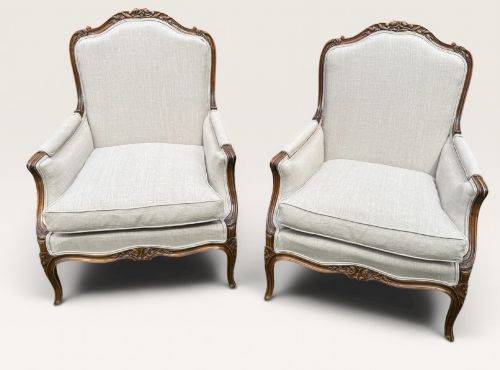
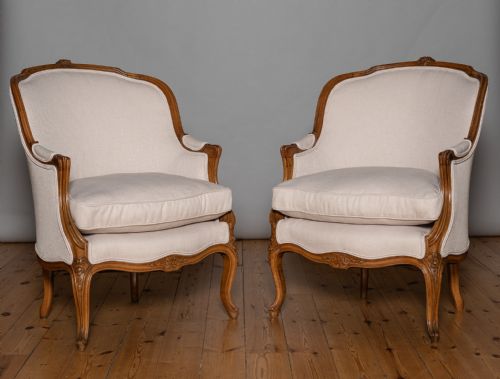
A pair of bergeres represents enclosed upholstered seating originating in France, designed with solid sides and a low seat for relaxed lounging. When you search for a pair of bergeres, you meet nineteenth-century and early twentieth-century examples shaped by Louis XV, Louis XVI, and Regency styles.
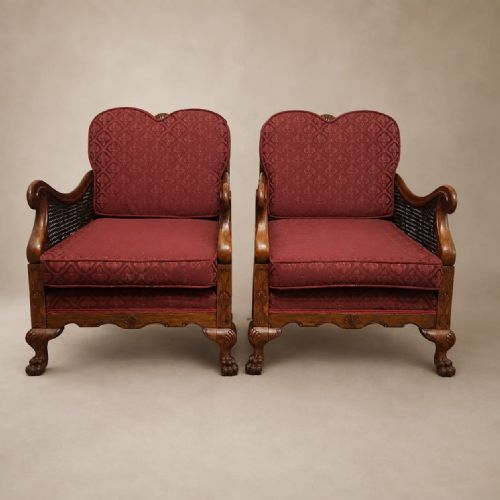
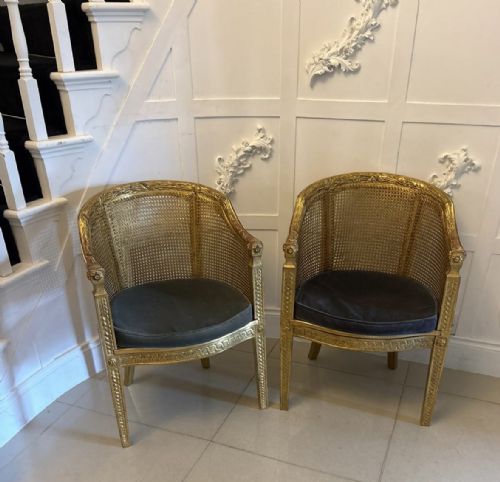
The frames appear in walnut, mahogany, beech, oak, and rosewood, alongside gilded or painted finishes. Many incorporate split cane panels to the back and sides, whilst others rely entirely on plush velvet, silk, or fabric upholstery.
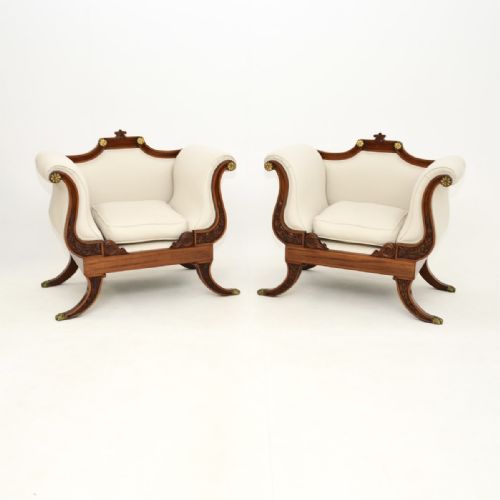
Armchairs dominate the selection, accompanied by occasional library chairs and tub chairs. Pieces stretch from the 1800s through the Regency era and into the 1920s Art Deco period.
How they were made
Craftsmen shaped structural frames from hardwoods including walnut, mahogany, beech, and oak, often carving intricate details by hand before applying paint, giltwood, or polished finishes.
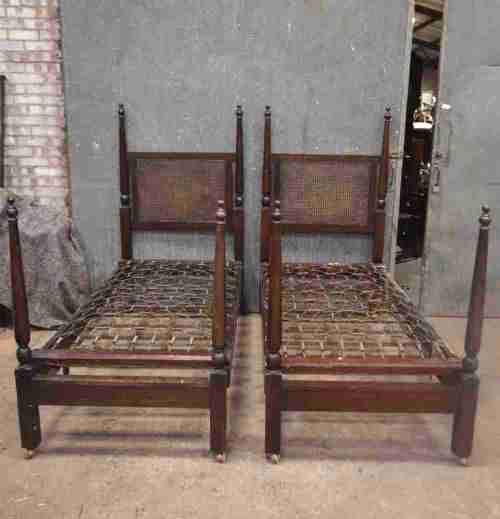
Cane panels were tightly woven by hand into the wooden framework to form breathable back and side walls, offering structural support without solid weight.
Upholstery techniques combined traditional stuffing with quality textiles such as velvet, silk, and fabric, secured tightly to the frame.
The listings show frames finished in painted surfaces, giltwood, and natural walnut, alongside cane and velvet materials.
What varies in quality
The refinement of the wooden carving distinguishes standard frames from exceptional ones, with hand-carved motifs displaying crisp detail and balanced proportions. The execution of painted or gilded surfaces likewise dictates visual depth and historical fidelity.
The integrity of the cane work separates enduring examples from lesser items, requiring tight, uniform weaving that withstands daily pressure without sagging. Timber selection also matters, as dense walnut and mahogany retain structural stability far better than softer secondary woods.
The Pair of Bergeres Glossary
- Cane
- Woven material made from rattan peel, utilised for back and side panels on seating frames. It offers a lightweight yet resilient grid pattern.
- Giltwood
- Timber treated with a thin layer of gold leaf or gilt paint. This finish creates a bright, reflective surface characteristic of formal period furniture.
- Louis XV Style
- A decorative design movement characterised by asymmetric curves, natural scrollwork, and cabriole legs. It draws inspiration from the mid-eighteenth-century French court.
- Fauteuil
- An open-armed upholstered armchair with exposed wooden framing around the armrests and back. Unlike the bergere, the sides remain open.
Pair of Bergeres: Frequently Asked Questions
Where should I place a pair of bergeres?
These armchairs suit drawing rooms, studies, and large bedrooms where their enclosed shape creates a distinct seating area. Placing them opposite a sofa or beside a fireplace establishes a balanced arrangement.
Because the carved wooden frames and cane panels look finished from every angle, they also work well floating in the middle of a room rather than pushed against a wall.
How do I care for cane panels?
Cane requires moderate humidity to prevent the natural fibres from becoming brittle and snapping under tension. Dust the woven surfaces regularly with a soft brush.
Avoid placing them directly against heat sources or in harsh sunlight, which dries out the rattan over time.
Are these chairs comfortable for daily use?
The low seat and enclosed padded sides offer a supportive, sheltered posture designed for reading or conversation. Modern reupholstery often updates internal padding while preserving the traditional silhouette.
Adding matching stools, which appear alongside certain sets, extends the seating for full relaxation.
How can I identify the period of a frame?
Stylistic cues such as cabriole legs and scrollwork point towards Louis XV revivals, while straight tapered legs indicate Louis XVI or Neoclassical influences. Timber choices and finishing methods offer further clues to their age.
Construction marks and hand-carved details help distinguish nineteenth-century revival pieces from early twentieth-century interpretations.