




Pair of Italian Armchairs
A pair of Italian armchairs brings an unmistakable architectural presence and grand scale to a room, offering both history and deep seating comfort.
Pair of Italian Armchairs
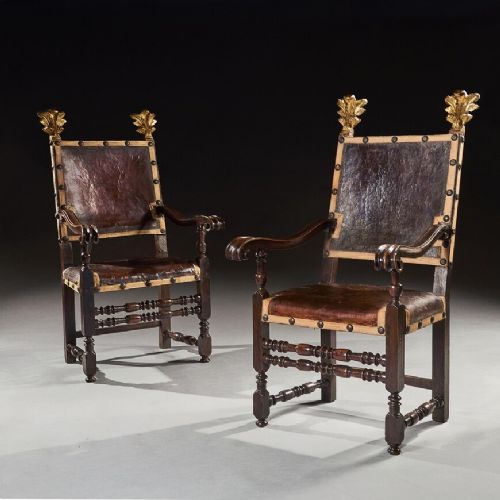
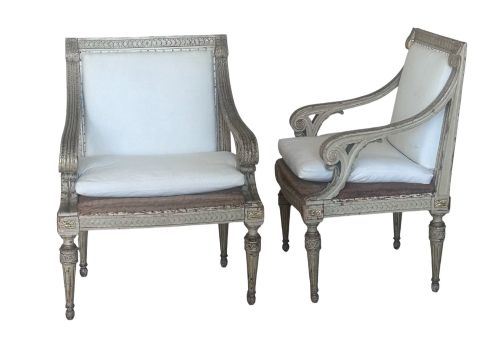
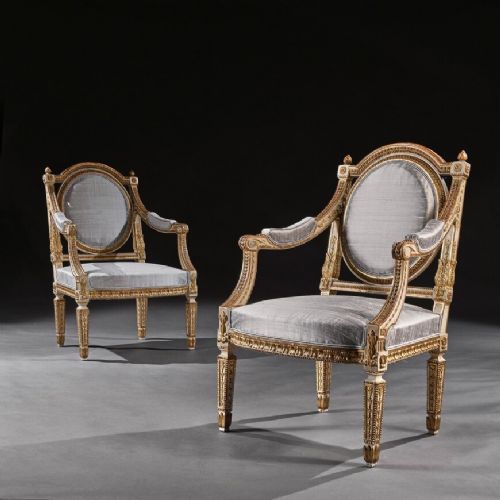
The material vocabulary of these seating pairs relies heavily on carved wood, walnut, and applied decoration such as gold leaf, silver gilt, and paint. Frameworks often incorporate exposed timber structures paired with leather, fabric, or needlework upholstery suited for formal reception spaces.
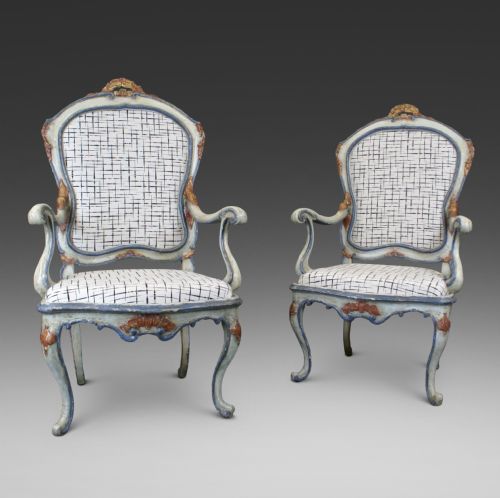
Surviving examples span centuries of production, recording shifts from seventeenth-century leather-bound models to eighteenth-century Barocchetto forms and nineteenth-century revival pieces. Each era contributes distinct proportions and decorative vocabulary, giving these seating pairs their characteristic visual weight.
What varies in quality
The refinement of the carved wood details dictates much of the distinction between standard production and masterwork pieces. Crisp execution of leaf motifs, scrollwork, and structural turnings demonstrates the skill invested by the original workshop.
The integrity of the original surface finishes, particularly the depth and preservation of early gilding, paint, and gesso layers, determines the historical standing of the chair. Frames retaining their original gilding or authentic painted decoration hold greater material authenticity than later re-finishes.
Listings feature walnut, carved wood, and painted finishes spanning the seventeenth to the twentieth century.
White, Allom and Co·Henry Thomas Peters
The Pair of Italian Armchairs Glossary
- Barocchetto
- The Italian iteration of the Rococo style, characterised by asymmetrical scrolling, playful carved details, and lighter proportions than the preceding Baroque period.
- Giltwood
- Timber surfaces covered with a thin layer of gold leaf applied over a prepared gesso ground. This technique creates a luminous metallic finish standard in formal European furniture.
- Gesso
- A plaster-like mixture applied to wooden furniture frames to provide a smooth surface for gilding or painting. It is built up in layers before being carved or polished.
- Parcel-gilt
- A decorative treatment where only specific carved elements of a wooden frame receive gilding, while the remaining areas display exposed wood or painted surfaces.
- Savonarola
- A type of folding armchair constructed from multiple intersecting curved wooden slats, named after the fifteenth-century Florentine friar. This X-framed design draws on Renaissance precedents.
Pair of Italian Armchairs: Frequently Asked Questions
Where should I place a pair?
These large-scale seats suit reception rooms, libraries, or spacious hallways where their architectural presence can be appreciated from multiple angles. Positioning them opposite a fireplace or framing a central window creates a balanced focal point.
Because of their decorative frames and historic upholstery, keeping them out of direct sunlight preserves the textiles and gilded surfaces. Allowing sufficient breathing room around each chair highlights their carved timber silhouettes.
How do I identify a Baroque frame?
Baroque frames display robust proportions, deep carving, and heavy structural elements such as bold stretchers and paw feet. You will often notice dark walnut timbers or rich giltwood finishes that project a sense of theatrical weight.
Later revival pieces produced in the nineteenth century imitate these seventeenth-century markers but typically feature machine-cut elements or softer timber patination. Examining the underside and joinery helps clarify the age of the construction.
Are these chairs comfortable?
Historic seating design prioritised upright posture over deep lounging, meaning older padding layers feel firmer than modern equivalents. Many examples feature supportive sprung or webbed foundations paired with supportive armrests.
Using fitted cushions can adjust the seat depth to modern preferences while keeping the antique upholstery and frame intact. The generous scale of these armchairs ensures ample elbow room and stable seating.