




Gilded Travelling Clock
These gilded travelling clock examples combine portable precision with ornate metalwork, offering collectors a functional piece of nineteenth century craftsmanship.
Gilded Travelling Clock
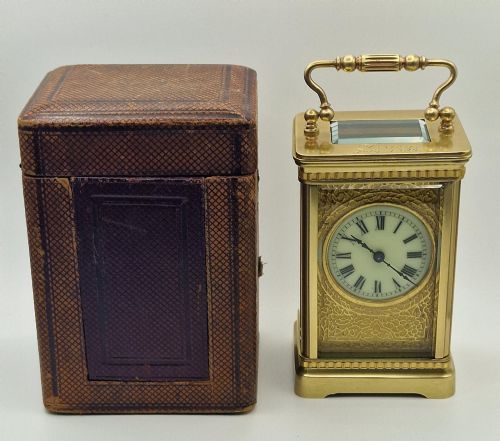
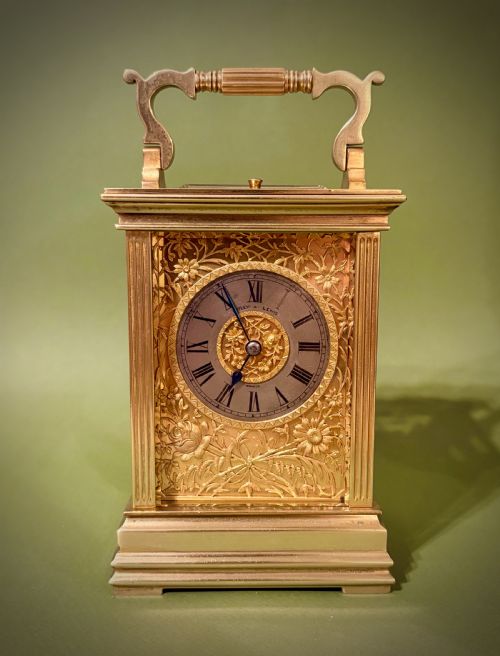
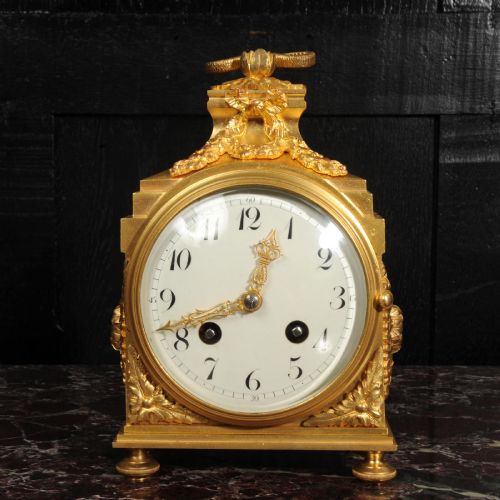
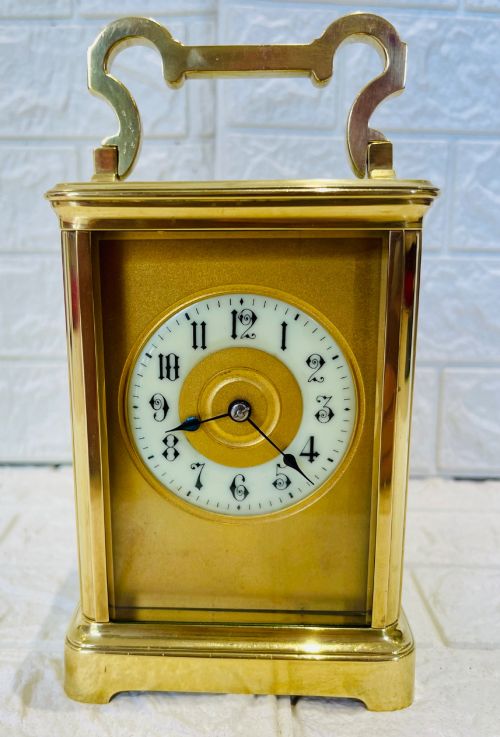
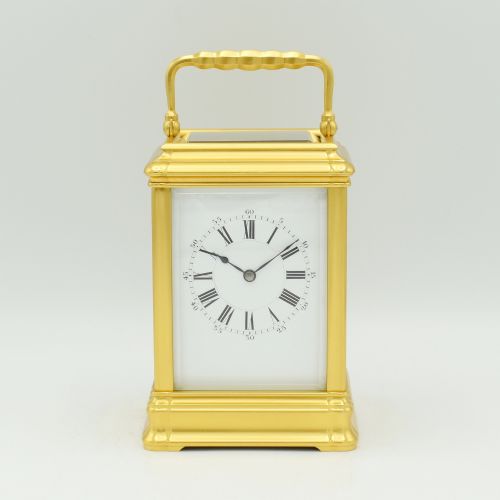
A gilded travelling clock takes the form of a portable timepiece designed for transit, frequently encountered in carriage clock and mantel clock formats originating from French workshops during the nineteenth century. These objects date across periods spanning the Victorian era, the Second Empire, and the Belle Epoque, incorporating structural styles such as gorge cases and pendule d'officier designs.
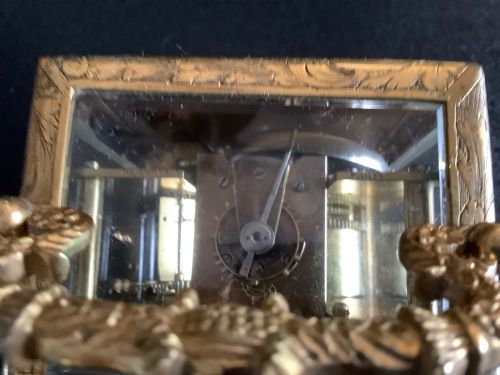
The specimens seen here appear in various scales, ranging from subminiature and miniature formats to larger repeating and striking configurations. Dials present porcelain panels or enamel bandings, while protective outer housings utilise glass panels to reveal the moving escapement within.
Materials and construction
Makers constructed the primary frameworks from brass, gilt brass, or ormolu, applying surface gilding to create a uniform metallic brilliance across the bronze and brass components. Steel elements regulate the internal gear trains, while glass windows protect the delicate dials and visible movement parts.
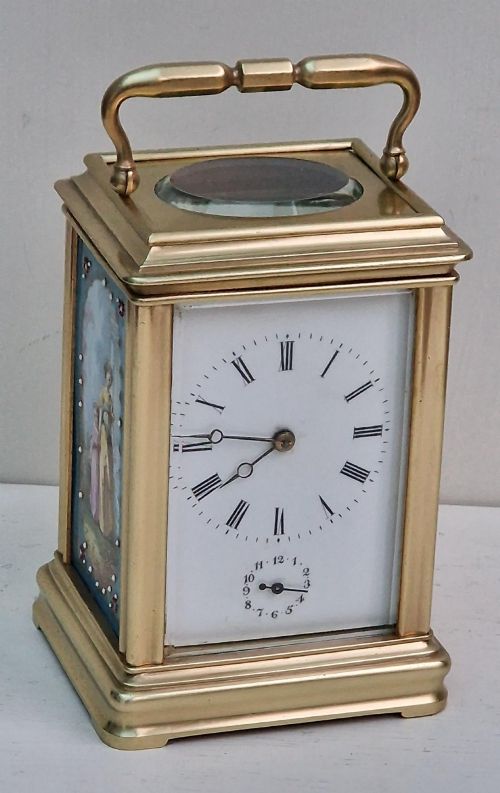
Decorative embellishments involve hand-painted enamel panels, Limoges enamel details, and intricate case engraving. Dial faces utilise porcelain or metal plates, paired with subsidiary dials for alarms and calendar complications where specified.
Some models squeeze complex alarm systems and calendar dials into housings small enough to fit inside a pocket.
Quality factors
Distinctions in standard depend upon the complexity of the internal movement, separating basic timepieces from examples equipped with repeater mechanisms, grande sonnerie strikes, or alarm functions. The presence of signed movements from notable clockmakers elevates the standing of an individual piece.
Case execution determines the visual calibre of the object, noting the crispness of chased brass work, the preservation of original ormolu gilding, and the integration of hand-painted porcelain or enamel side panels.
Henri Jacot·C. Detouche Paris·Margaine Of France·Drocourt·Paul Garnier·Goldsmiths·E.J.Dent·J.W.BENSON·Joseph Soldano·Alfred Hollinge
The Gilded Travelling Clock Glossary
- Carriage clock
- A portable spring-driven timepiece designed for travel during the nineteenth century. These clocks typically feature a rectangular brass case with glass panels and a handle on top.
- Gorge case
- A specific stepped rectangular brass case style popular in French carriage clocks. It is characterised by its distinctive moulded top and base profile.
- Repeater
- A mechanism that sounds the hours and quarters on demand when a lever or button is pressed. This complication allowed owners to tell the time in the dark.
- Sonnerie
- A striking train that automatically chimes the hours and quarters as they pass. A petite sonnerie strikes the quarters only on the quarter hour, whilst a grande sonnerie strikes both the hours and quarters.
- Pendule d'officier
- A military style of portable clock developed for use by officers in the field. These early forms often feature distinct case shapes and robust movements.
Gilded Travelling Clock: Frequently Asked Questions
What is a gilded travelling clock?
A gilded travelling clock is a portable mechanical timepiece housed in a brass or ormolu case, designed to be moved easily without losing time.
Most examples date from the nineteenth century and originate from French workshops, utilising glass panels to display the internal escapement.
How do repeating mechanisms work?
A repeating mechanism sounds the last elapsed hour and quarter hours when the owner depresses a button or cord on the case.
This complication permitted travellers to check the time during the night without needing a candle.
How should I wind my clock?
Winding requires using the correct key on the arbors located on the backplate of the movement, turning gently until resistance is felt.
Care must be taken not to overwind the mainsprings, ensuring the mechanism continues to keep accurate time.