





Gilded Satsuma Earthenware
Gilded satsuma earthenware pieces bring intricate hand-painted detail and metallic richness to decorative collections through traditional Japanese forms.
Gilded Satsuma Earthenware
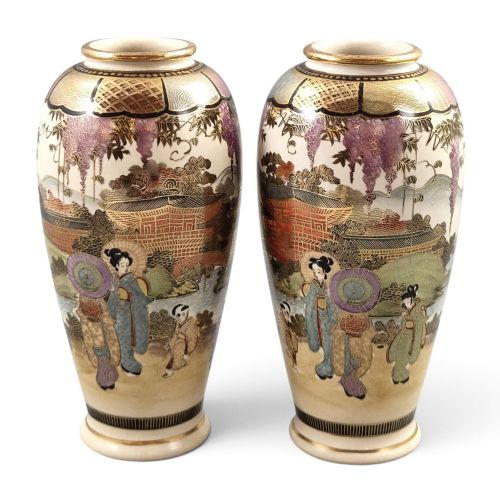
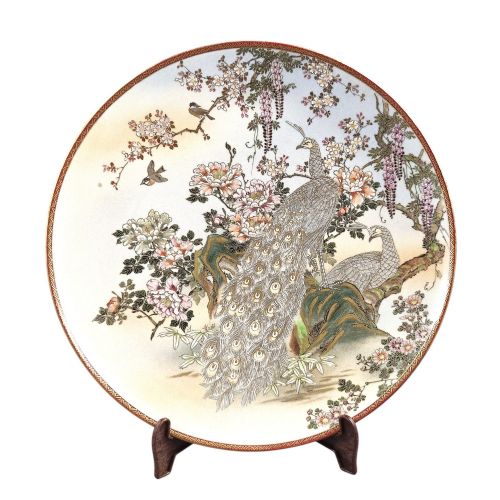
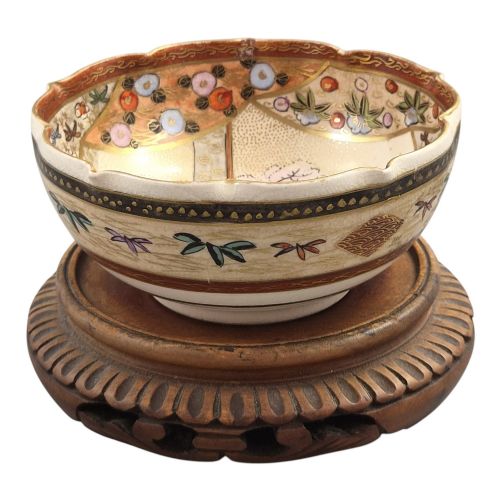
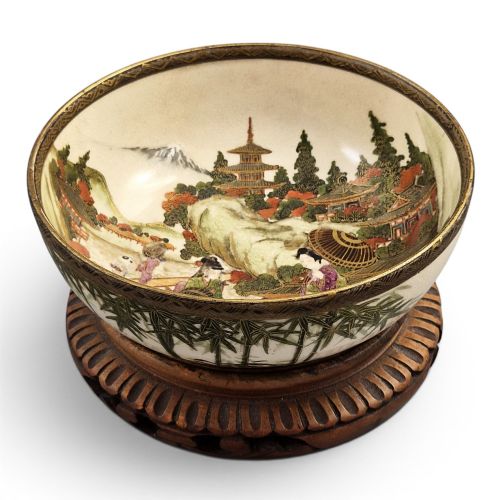
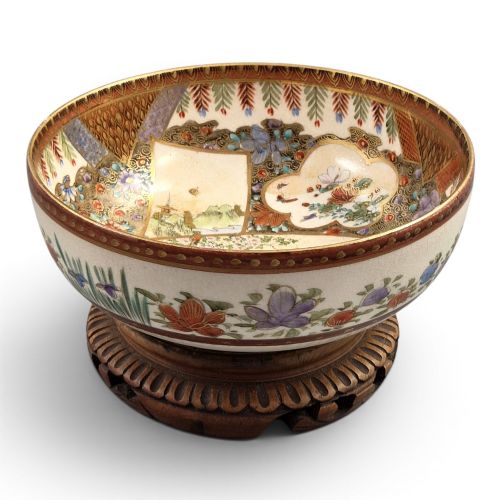
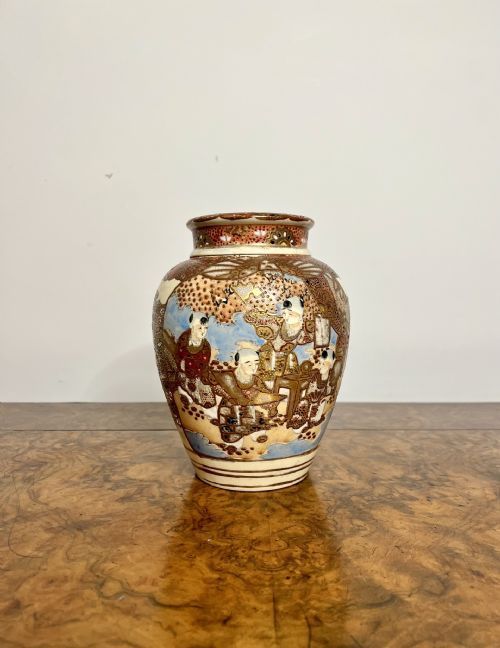
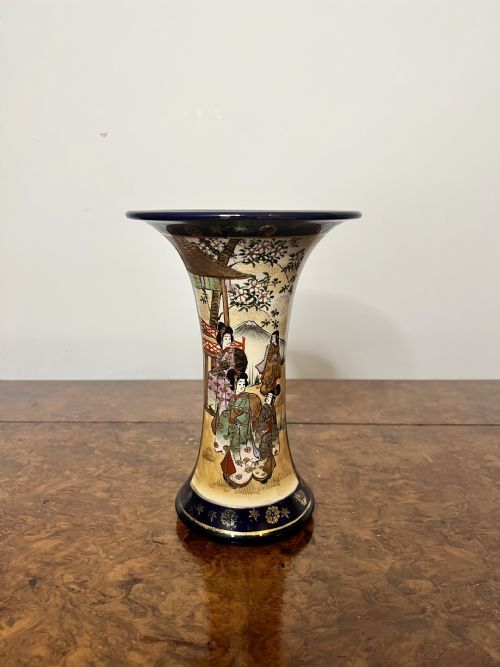
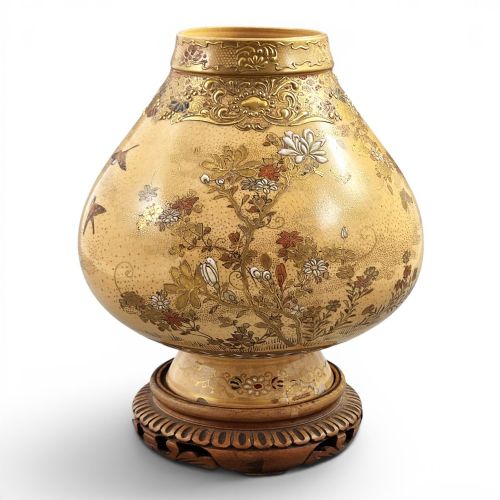
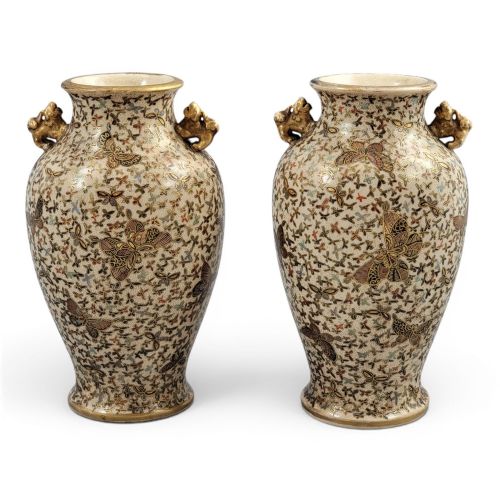
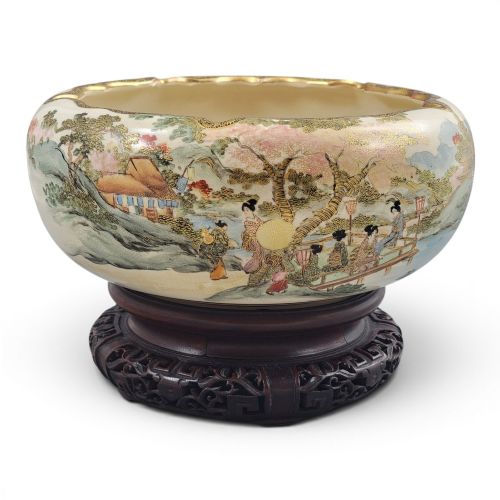
Gilded satsuma earthenware pieces primarily take the form of vases, decorative bowls, chargers, and tea caddies originating from the Meiji period and subsequent early twentieth-century eras. A buyer examining this selection encounters items adorned with court figures, landscapes, and detailed floral motifs such as wisteria and peonies.
Many of these objects trace their origins to Kyoto workshops, while others emerge from Yokohama production centres. The physical evidence demonstrates a strong representation of nineteenth-century craftsmanship alongside pieces dated into the Edwardian and Showa periods.
Materials and Construction
Makers utilised earthenware bodies coated in specialised glaze, forming a base for elaborate surface decoration. Gold leaf and gilt details were applied alongside enamel pigments to accentuate specific motifs.
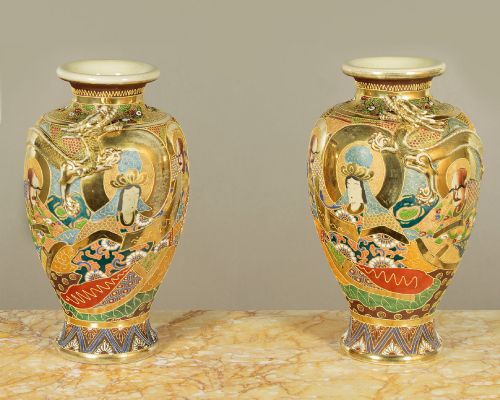
Techniques such as moriage were employed to build up raised clay designs before painting and gilding took place. Artisans incorporated bronze elements in select contexts, while wooden components occasionally complemented the ceramic forms.
Assessing Craftsmanship
The sophistication of the painted figures and the precision of the moriage relief work distinguish finer examples from standard production. Master-signed pieces and outputs from renowned workshops demonstrate superior control over the enamel and gold application.
Compositional balance across complex scenes involving numerous figures or detailed natural elements indicates the hand of a skilled decorator. The fineness of the crackle glaze and the clarity of artist seals contribute further to the standing of an individual piece.
Koshida·Shozan·Kizan·Gyokkō·Kozan·Kinkōzan·Kinzan·Hotoda·Shizan·Toshozan·Ryuzan·Chosei·Shuzan·Seiko-en Chokei·Yamashu·Yasuda·Tagawa·Hododa
The Gilded Satsuma Earthenware Glossary
- Moriage
- A ceramic technique where slip is piped onto the surface to create raised decorative patterns before glazing and firing. This method adds a tactile dimension to robes, flowers, and dragons.
- Koro
- A traditional Japanese incense burner typically supported on legs and fitted with a pierced cover. These vessels often feature intricate figurative scenes and gilt highlights.
- Natsume
- A small tea caddy traditionally used in Japanese tea ceremonies, named after its resemblance to a jujube fruit. These items frequently display delicate painted flora and fauna.
- Charger
- A large decorative plate designed for display rather than dining use. Artisans often utilised the expansive surface area to depict crowded narrative scenes.
- Shimazu Mon
- The heraldic crest of the Shimazu clan, featuring a cross within a circle, commonly found on Satsuma wares produced in their domain. Its presence links pieces directly to Satsuma provincial patronage.
Gilded Satsuma Earthenware: Frequently Asked Questions
What is satsuma earthenware?
Satsuma earthenware is a type of Japanese pottery traditionally characterised by an ivory-coloured crackle glaze and elaborate polychrome enamel and gilt decoration.
The style evolved significantly during the nineteenth century to cater to international export markets, resulting in densely decorated vases, bowls, and decorative plates.
How were these vessels used?
Many of these pieces served purely decorative roles in Western and Japanese interiors, displayed on mantelpieces or tables to showcase fine craftsmanship.
Specific forms like tea caddies and koro incense burners also retained functional roles connected to tea preparation and traditional domestic rituals.
How do I identify Meiji period pieces?
Meiji period items are typically recognised by their intricate narrative scenes, dense floral patterns, and the inclusion of artist signatures or workshop marks on the base.
The historical parameters of the Meiji era span from eighteen sixty-eight to nineteen twelve, aligning with the height of detailed export ceramic production.
What is the Shimazu crest?
The Shimazu mon is a family crest featuring a cross inside a circle that frequently appears on Satsuma pottery associated with the Satsuma domain.
Its presence signifies a connection to the historical ruling clan of the region where this distinct ceramic tradition originated.