

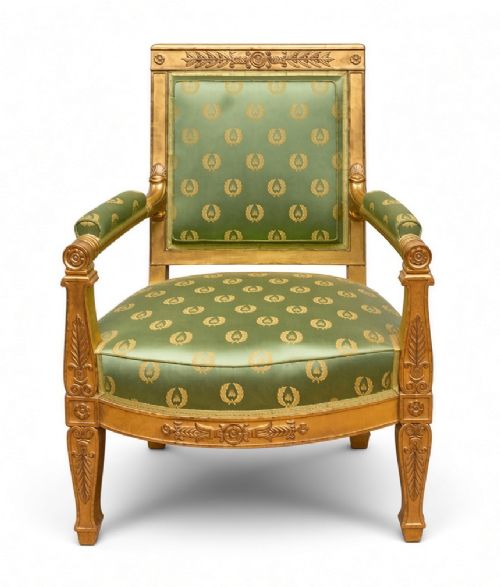
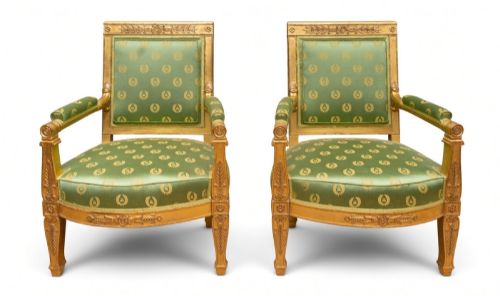
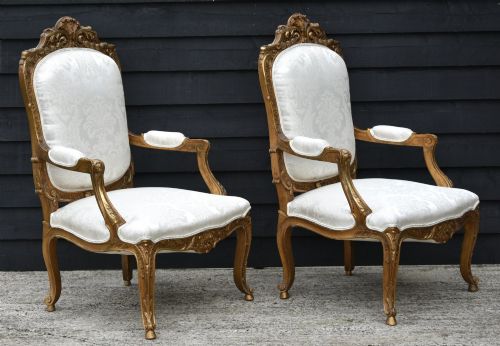
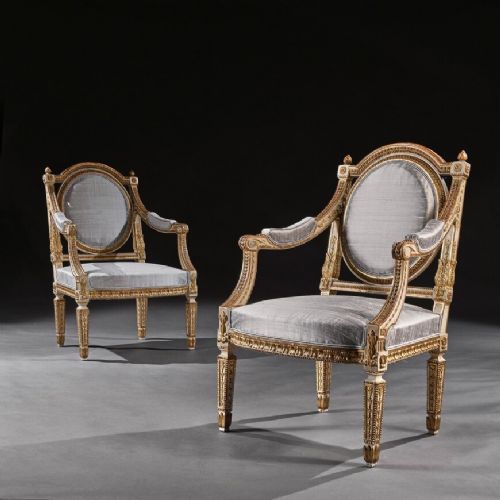
Gilded Salon Armchairs
Gilded salon armchairs bring formal French and English seating traditions into the principal rooms of a home.
Gilded Salon Armchairs
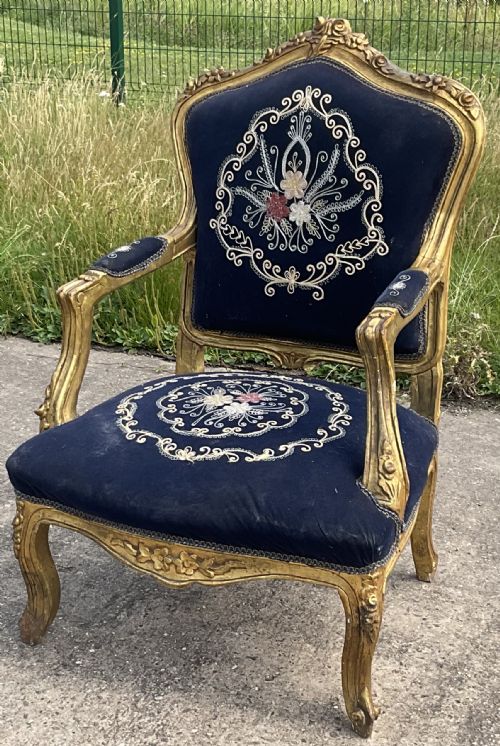
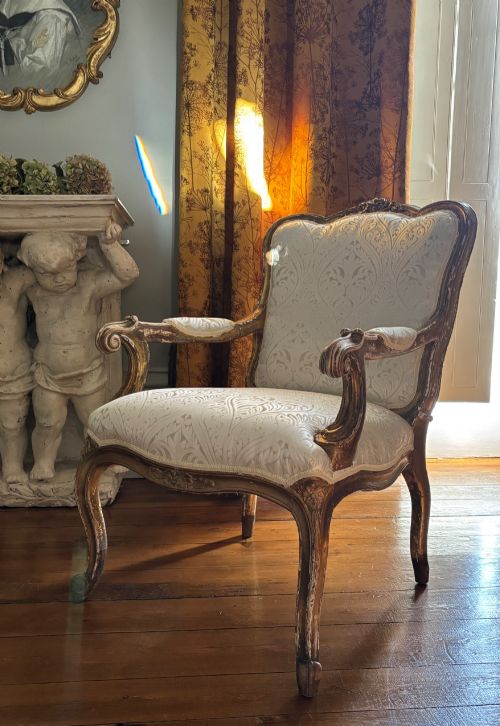
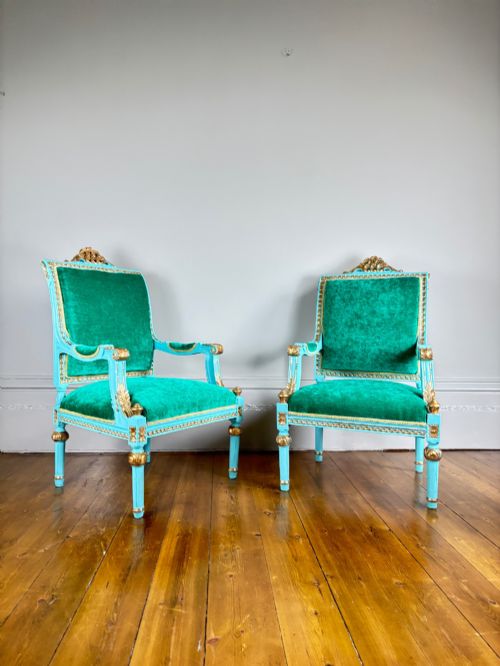
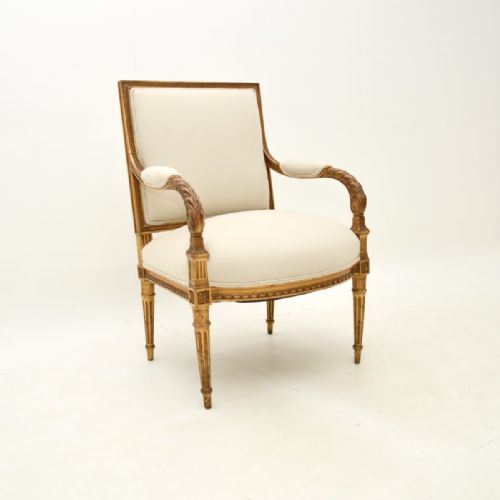
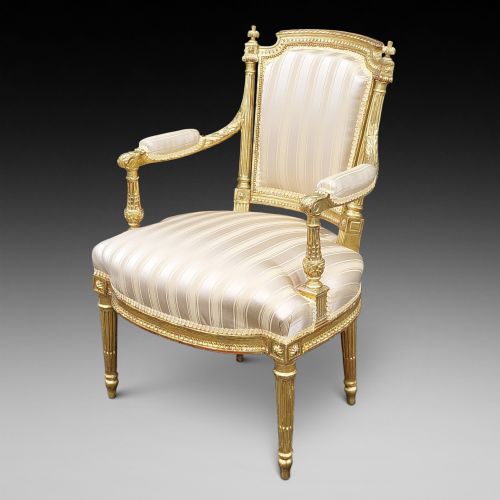
Gilded salon armchairs are decorative seats created for formal reception rooms, drawing upon centuries of European design history. When searching for gilded salon armchairs, you will encounter diverse forms ranging from large nineteenth century French throne chairs to matched pairs of Louis XVI style open armchairs.
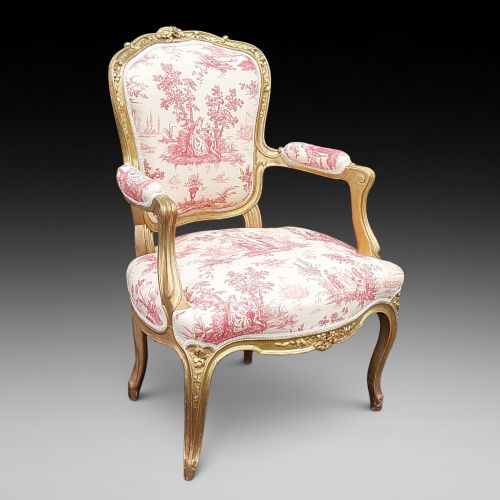
The selections span numerous periods including eighteenth century origins, nineteenth century revivals, and early twentieth century interpretations. Many pieces originate from French workshops, though English walnut and painted variations also appear alongside Italian neo-classical examples.
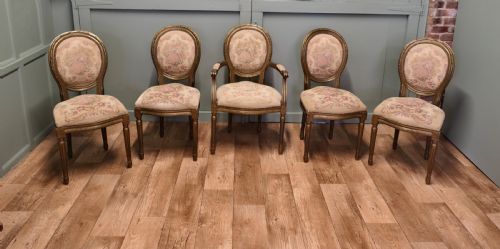
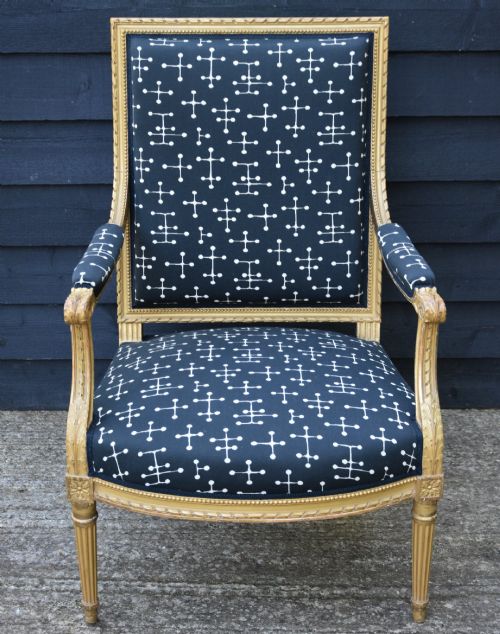
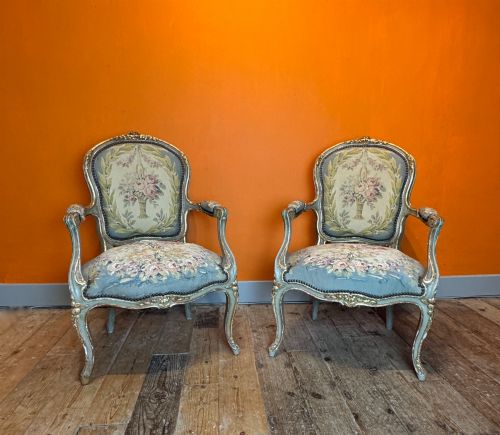
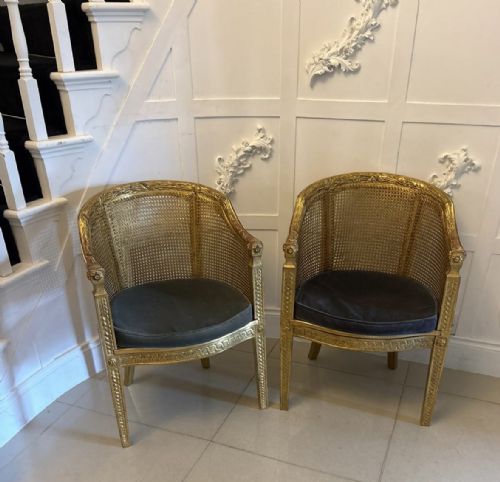
Forms include bergères with enclosed upholstered sides, open arm fauteuils, and fireside chairs designed for parlour use. They survive as single statement pieces, pairs, or part of larger salon suites.
Materials and Construction
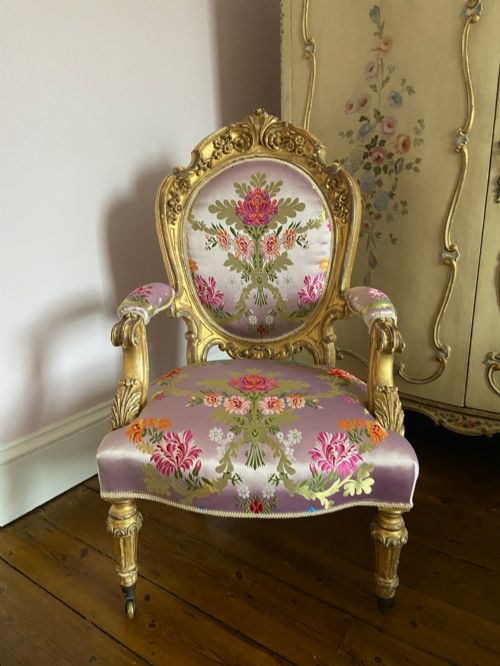
Carved wooden frames provide the structural foundation, executed primarily in beech, walnut, or general timber before receiving surface ornamentation. Artisans applied thin sheets of gold leaf over a prepared ground to achieve the characteristic giltwood finish, sometimes combining parcel gilt with painted surfaces.
Upholstery materials reflect both original execution and later preservation, utilising silk, velvet, tapestry, and general textile coverings secured over padded seats and backs. Woodcarving techniques define the decorative vocabulary, displaying rococo curves, neo-classical symmetry, and architectural mouldings.
Evaluating Quality
The refinement of the woodcarving dictates the artistic merit of each frame, distinguishing crisp, deep relief work from softer, shallower execution. The application of the gilding itself varies, with burnished surfaces and intricate preparation separating standard workshop output from exceptional cabinetmaker production.
Proportion and scale contribute significantly to the distinction between standard seating and distinguished salon furniture. Pieces retaining their period upholstery textiles or demonstrating documented workshop attribution carry greater historical interest.
Jacob Desmalter·Blaise Maucuy·Holland and Sons
The Gilded Salon Armchairs Glossary
- Giltwood
- Wood that has been coated with gold leaf. This technique provides a lustrous, reflective metallic surface popular in formal furniture design.
- Fauteuil
- An open-armed upholstered armchair with wooden arms left exposed. Originating in France, this form became standard for formal reception rooms.
- Bergère
- An enclosed upholstered armchair with solid upholstered sides. These pieces offer a deeper, more enclosed seat than standard open armchairs.
- Parcel Gilt
- A finishing method where only specific decorative elements of a painted or stained wooden surface are highlighted with gold leaf. This technique creates contrast against the underlying colour.
- Louis XVI Style
- A neoclassical design movement characterised by straight lines, symmetry, and classical architectural motifs. It draws inspiration from ancient Greek and Roman forms.
Gilded Salon Armchairs: Frequently Asked Questions
Where were salon armchairs originally used?
These seats belonged in formal drawing rooms, reception spaces, and grand salons where guests gathered. Their ornate giltwood frames were designed to catch candlelight and daylight.
Today, they function as occasional chairs in living rooms or studies, bringing historical character to domestic interiors.
What is the difference between giltwood and painted gilt?
Giltwood involves covering the entire wooden frame with gold leaf over a prepared base. The metal surface creates a continuous golden sheen across the carved details.
Parcel gilt combines painted base colours with gold leaf applied selectively to highlights and carvings. This creates visual contrast between the paint and the exposed gold.
Are these chairs suitable for daily seating?
Most salon armchairs were built for formal use rather than heavy lounging, featuring upright backs and supportive padding. Their structural integrity depends on the underlying wooden frame and joint condition.
Many surviving pieces have received modern upholstery updates while preserving their historic wooden frames for contemporary interior use.