


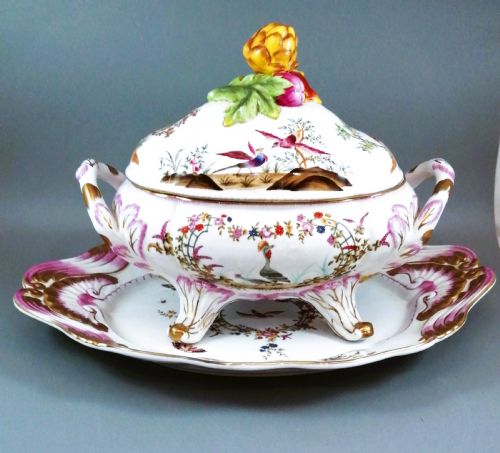


Gilded Porcelain Tureen
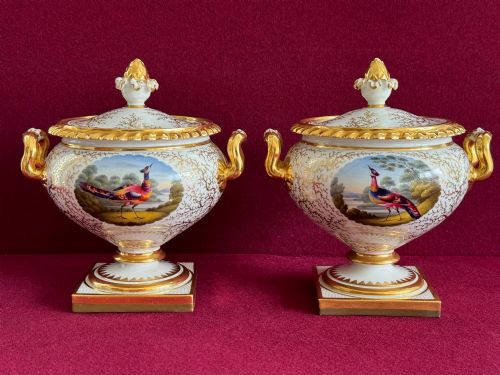
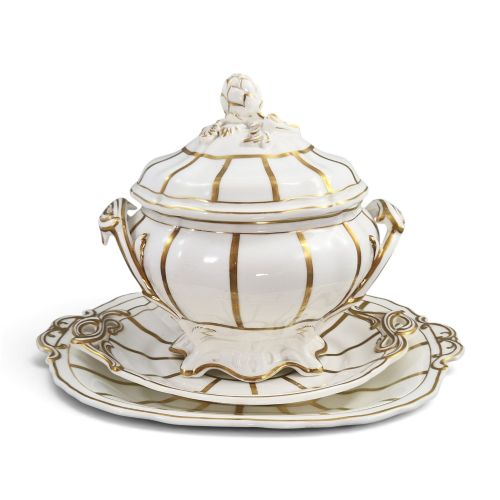
These gilded porcelain tureen examples bring nineteenth-century dining grandeur to the table through rich ceramic craft and brilliant gold leaf ornamentation.
Gilded Porcelain Tureen
A gilded porcelain tureen serves as a centrepiece for formal nineteenth-century dining, designed for presenting soups, sauces, or broths at the table. These vessels combine functional ceramic bodies with decorative handles, covers, and matching stands.
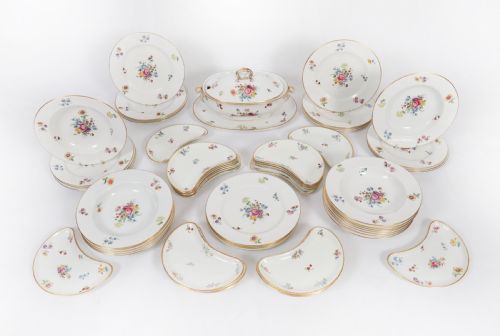
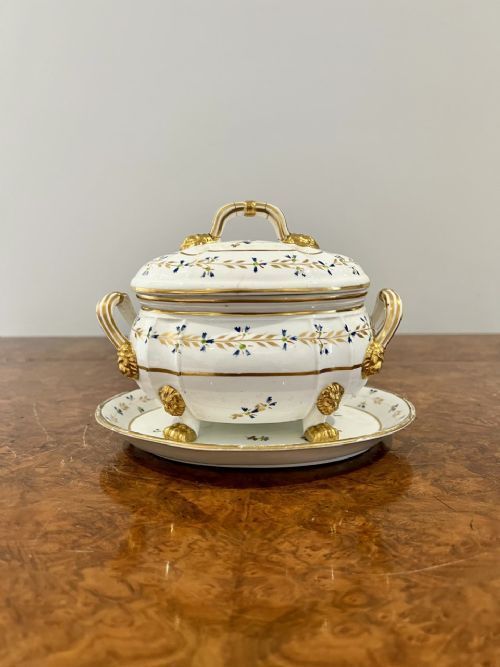
Buyers will encounter various forms across this selection, ranging from large soup tureens and extensive dinner services down to smaller sauce tureens, broth cups, and gravy boats. Continental rococo and Regency styles dominate the available pieces.
Origins span English factories like Worcester, Davenport, Spode, and Coalport alongside continental makers from France, Italy, and Germany. Ironstone and earthenware bodies also appear alongside finer bone china and porcelain.
How they were made
Potters shaped these vessels using traditional ceramic bodies including porcelain, bone china, and heavy ironstone, which were then fired and coated in smooth glazes. Enamel colours were applied by hand before a subsequent firing fixed the pigments.
Gilding was executed using gold leaf or liquid gold highlights applied to handles, rims, and moulded motifs. Artisans hand-painted intricate patterns such as Imari palettes and Chinoiserie mandarin designs directly onto the glazed surfaces.
An eighteenth-century dining table could feature a cabbage-shaped tureen, proving that historical potters enjoyed a vegetable joke.
What varies in quality
The crispness of the moulded rococo scrolls and the precision of the hand-painted enamels set finer vessels apart from standard production pieces. Superior examples exhibit heavy, clean gilding that remains vibrant across intricate handles and finials.
The presence of matching lids and original under-stands significantly elevates a piece, as does documented attribution to renowned factories like Flight Barr & Barr or Chamberlain Worcester.
Flight Barr And Barr·Richard Ginori·Chamberlain Worcester·Coalport Porcelain
The Gilded Porcelain Tureen Glossary
- Ironstone
- A durable type of earthenware patented in the nineteenth century to rival true porcelain. It offered high resistance to chipping during heavy daily service.
- Imari
- A decorative style featuring deep underglaze blue combined with iron red and gilt highlights, inspired by Japanese export wares. English factories frequently adopted this palette during the Regency period.
- Finial
- The decorative knob or handle attached to the top of a tureen cover. These details often receive elaborate gilding or sculptural moulding.
- Chinoiserie
- European decorative motifs inspired by Chinese art and design, popular in nineteenth-century ceramic patterns. These scenes typically depict figures, pavilions, and exotic landscapes in bright enamels.
- Broth cup
- A small, two-handled vessel designed for serving individual portions of soup or broth. They frequently include fitted lids and matching saucers.
Gilded Porcelain Tureen: Frequently Asked Questions
What were gilded porcelain tureens used for?
These vessels were principal serving pieces on nineteenth-century dining tables, used to hold and insulate hot soups, gravies, or broths during formal meals.
Their ornate gilded surfaces and sculptural forms were designed to display wealth and taste during elaborate dinner services.
How do I tell Regency tureens from Victorian ones?
Regency pieces often display neoclassical or early rococo revival lines with fine hand-painted Imari or crested decoration from factories like Worcester.
Victorian examples tend towards heavier ironstone bodies, robust floral patterns, and more exuberant continental rococo moulding.
Are sauce tureens different from soup tureens?
Sauce tureens are scaled-down versions designed for table condiments and gravies, frequently accompanied by small ladles and matching stands.
Soup tureens are much larger centrepiece vessels meant to hold substantial quantities for multiple diners.