
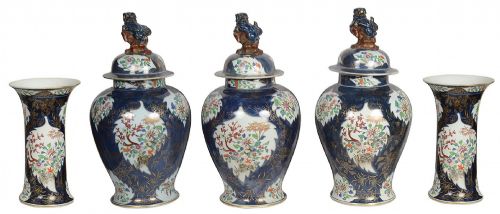


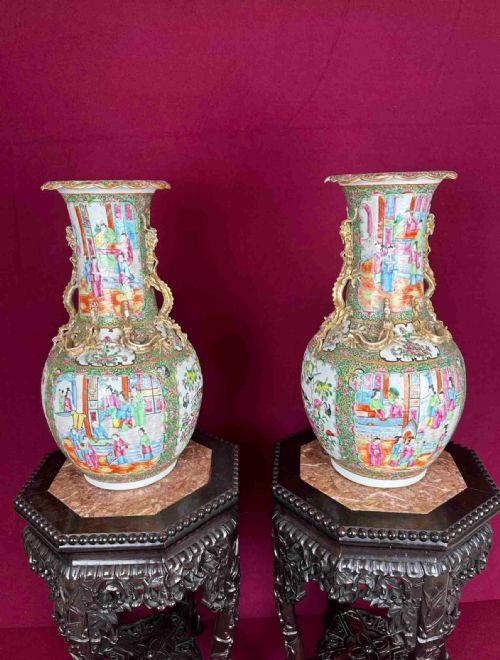


Gilded Porcelain Temple Jar
A gilded porcelain temple jar brings heavy gilding, vibrant enamel, and commanding scale to any mantelpiece.
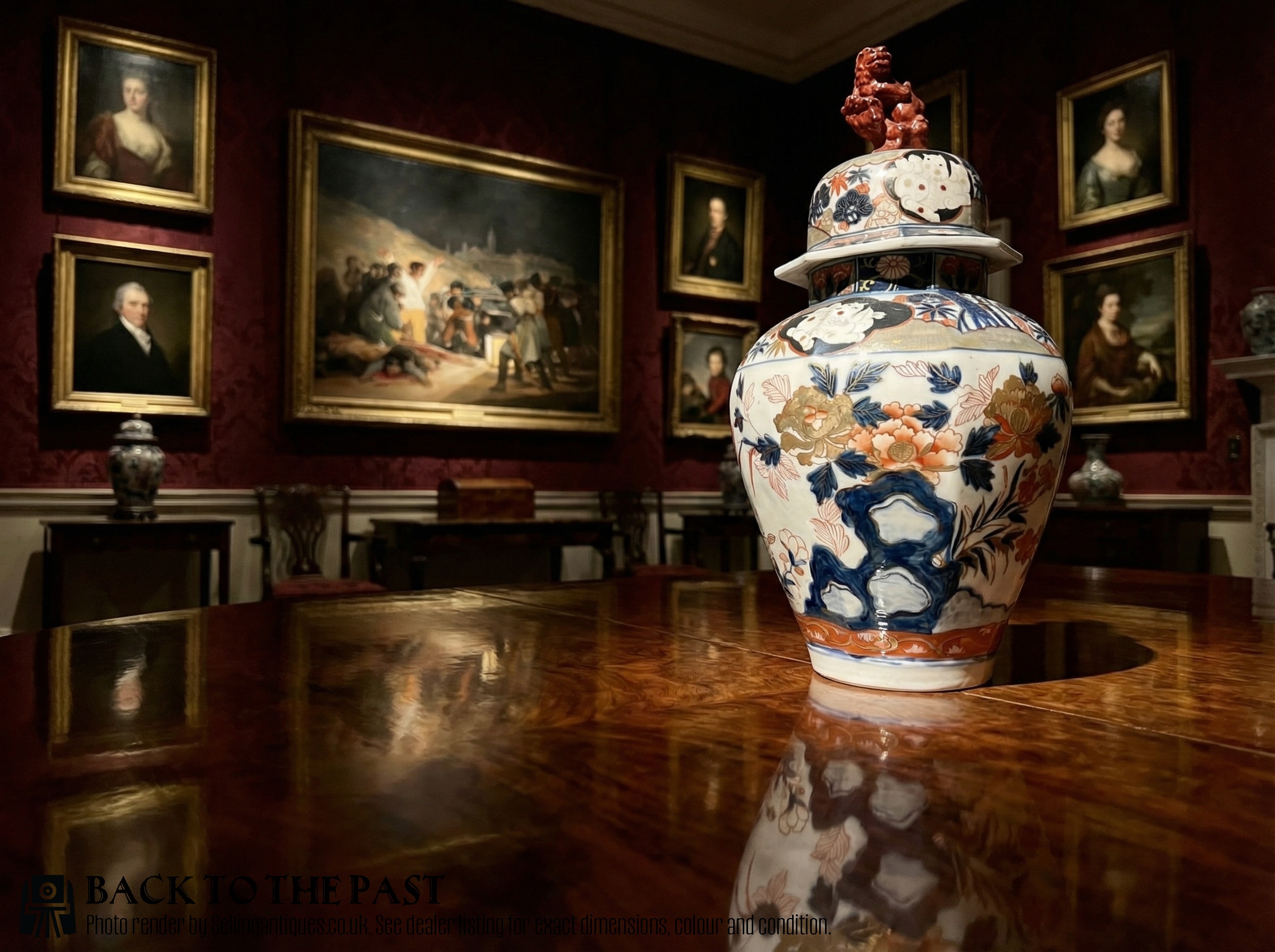
Gilded Porcelain Temple Jar
A gilded porcelain temple jar combines large-scale ceramic vessels with rich surface decoration, often featuring lidded forms designed as statement ornaments. When searching for a gilded porcelain temple jar, buyers encounter grand decorative urns and lidded vases originating from Japanese and Chinese traditions.
The pieces on this page span the eighteenth, nineteenth, and early twentieth centuries, capturing periods from the Edo and Meiji eras through to Victorian and Edwardian interpretations. Japanese Imari styles and Satsuma wares dominate the selections, alongside Chinese export and Famille Rose influences.
Most items function purely as decorative vases and garniture sets rather than utilitarian vessels. Collectors choose these jars to anchor a room with traditional Orientalist or Chinoiserie aesthetic weight.
How they were made
Makers shaped these vessels from high-fired porcelain and earthenware before applying cobalt blue underglaze and intricate overglaze enamel. Artisans then added gold leaf and extensive gilding to highlight key decorative panels and motifs.
Many items incorporate wooden components alongside ceramic bodies, particularly for fitted bases or structural stability in larger lidded jars. Kiln firing techniques varied depending on whether the workshops produced classic Imari palettes or detailed Satsuma landscapes.
Listings feature porcelain, earthenware, and wood materials across the eighteenth, nineteenth, and early twentieth centuries.
What varies in quality
The refinement of the hand-painted enamel and the precision of the gold leaf application distinguish superior examples from standard production. Artisans who executed complex landscape scenes or detailed floral garnitures achieved a higher level of artistic depth.
Scale and proportion also dictate standing, with taller lidded jars and matched pairs commanding greater presence. The integrity of the ceramic body and the crispness of the underglaze cobalt determine the overall execution.
Yamashu·Samson
The Gilded Porcelain Temple Jar Glossary
- Imari palette
- A traditional colour scheme utilising cobalt blue, iron red, and gold on a white porcelain background. This combination creates a striking visual contrast characteristic of Japanese export wares.
- Satsuma
- A type of earthenware originating from Japan, typically featuring a ivory crackle glaze decorated with elaborate enamels and heavy gilding. Makers often signed these pieces to denote specific studio production.
- Garniture
- A set of three or more matching vases and jars designed to be displayed together on a mantelpiece or sideboard. These matched groups originated in seventeenth-century Europe to display imported oriental porcelain.
- Overglaze enamel
- Coloured glass paste applied over the fired and glazed ceramic surface before undergoing a second, lower-temperature kiln firing. This technique allows for a broad spectrum of vibrant surface hues.
- Edo period
- A historical epoch in Japan spanning from sixteen-03 to eighteen-68, known for a flourishing of arts and crafts. Pieces attributed to this time reflect traditional aesthetic standards predating Western mass export.
Gilded Porcelain Temple Jar: Frequently Asked Questions
What is a temple jar?
A temple jar is a large, covered ceramic vessel historically used to hold incense or dry goods in Eastern traditions. Over time, Western decorators adopted them purely as ornamental pieces.
Today, collectors prize these lidded vases for their substantial scale and decorative presence in large rooms.
How do I style a temple jar?
These jars look best placed symmetrically on mantelpieces, pedestals, or large sideboards where their height can command attention. Matching pairs work well framing a central fireplace or mirror.
Avoid overcrowding them with smaller items so the painted enamel and gilding remain the focal point.
How do I tell Imari from Satsuma?
Imari wares use a hard porcelain body decorated in a distinct palette of cobalt blue, iron red, and gold. The overall effect is bright and glossy with strong geometric or floral patterns.
Satsuma wares typically feature an earthenware body with a fine crackle glaze and dense, pictorial scenes rendered in muted earth tones and heavy gold.
Were these made for export?
Many nineteenth-century pieces were produced specifically to satisfy Western demand for Orientalist and Chinoiserie home decor. European factories also created their own interpretations of these Eastern designs.
This cross-cultural exchange produced both authentic Japanese or Chinese export goods and European revival pieces.
What does a garniture mean?
A garniture refers to a set of matched vases and jars, usually numbering three or five pieces designed to sit together. Wealthy households displayed them symmetrically to demonstrate status and refined taste.
Finding a complete surviving set from the nineteenth century or earlier is particularly desirable for collectors.