


Gilded Porcelain Spill Vase
These gilded porcelain spill vase pieces combine bright metallic leaf with fine ceramic bodies to hold tapers for lighting fires, offering a functional piece of history for the mantel.
Gilded Porcelain Spill Vase
A gilded porcelain spill vase serves as a decorative ceramic holder designed originally for keeping paper spillers near a fireplace. Buyers searching this phrase encounter examples stretching from the Regency period through the Victorian era and into the early twentieth century.
Most items belong to the nineteenth or early twentieth centuries, with Edwardian and Victorian aesthetic influences dominating the visual range. Pieces vary from miniature decorative objects to larger painted items signed by notable studio artists.
Materials and construction
Makers shaped these objects from fired ceramic paste to create durable bodies capable of holding painted decoration and metallic embellishment. The resulting white surfaces provided an ideal ground for subsequent hand-painting in enamel pigments.
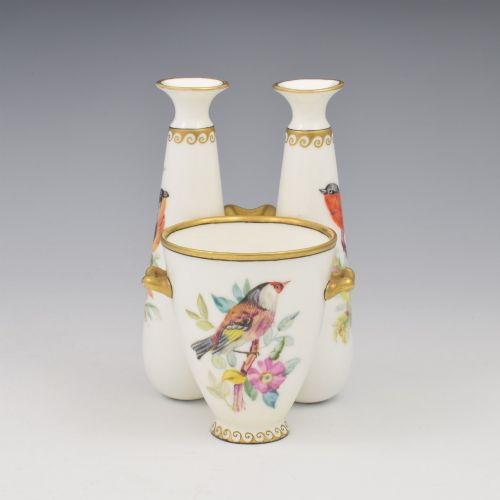
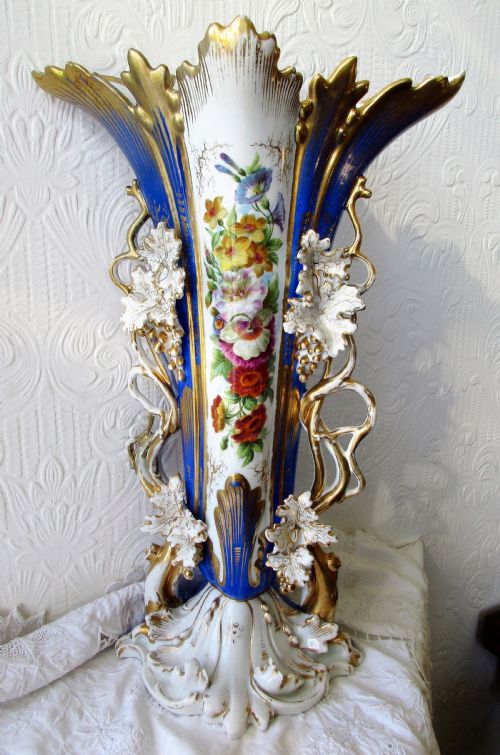
Artisans applied surface decoration using gold leaf and liquid gilt to highlight rims, handles, and raised relief motifs. Skilled painters then added detailed botanical, ornithological, or pastoral scenes directly onto the porcelain body before a final glaze firing.
Listings span multiple eras from Regency and Victorian production up through the 1940s, utilising porcelain, enamel, and gold leaf.
Judging quality and execution
The standard of a gilded porcelain spill vase rests upon the precision of the hand-painted artwork and the crispness of the gilt application. Fine examples display intricate brushwork by named artists, whereas simpler pieces rely on standard factory transfer prints or heavier, less refined gilding.
Proportion and material weight also distinguish better pieces, with superior porcelain bodies showing greater translucency and more deliberate sculptural detailing. The stability of the base and the harmony between the ceramic form and the metallic highlights determine overall visual balance.
Locke & Co.·Flight Barr and Barr·Royal Worcester·Vion & Baury·John Hopewell
The Gilded Porcelain Spill Vase Glossary
- Spill
- A thin twist of paper or wood used for transferring a flame from a hearth fire to a candle or pipe. These vessels were made specifically to store them.
- Gilt
- A thin layer of gold applied to the surface of the porcelain for decorative effect. It often appears on rims, feet, and moulded handles.
- Enamel
- Opaque vitreous material fused to the ceramic body through firing to create coloured pictorial scenes. These pigments provide the detailed artwork seen on the painted surfaces.
- Imari
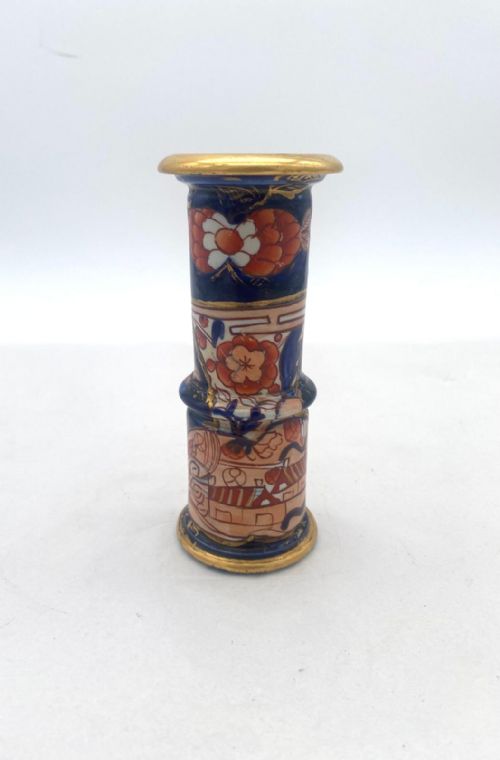
- A decorative style featuring rich underglaze blue and iron red, frequently accented with gold. This aesthetic reflects Japanese ceramic traditions adapted by Western makers.
- Cornucopia
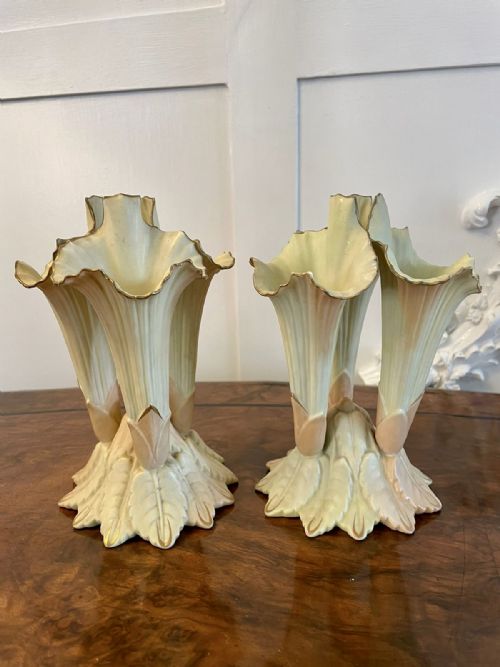
- A horn-shaped vessel symbolizing abundance, often utilised as a specific form for decorative mantel pieces. Pairs of these shapes add symmetry to fireplace displays.
Gilded Porcelain Spill Vase: Frequently Asked Questions
What is a spill vase?
A spill vase is a small upright vessel designed to hold slender paper spills or wooden matches used for lighting fires before the invention of safety matches.
These holders sat on mantelpieces near the hearth so a flame could be easily transferred from the fire to lamps or candles.
How do I date a porcelain vase?
Dating involves examining the maker marks stamped on the base, the painting style, and the overall ceramic body composition. Factory ciphers and registration numbers often point to specific decades of production.
Stylistic cues such as Regency neoclassical shapes or Victorian floral motifs also help narrow down the period of manufacture.
Are these pieces fragile?
These items consist of fired ceramic and delicate surface gilding, meaning they require careful handling to avoid chipping or surface wear. Normal household placement away from heavy traffic keeps them safe.
Cleaning should be done gently with a dry or barely damp cloth without abrasive scrubbing agents.
Why are some vases signed?
Certain pieces feature artist signatures or initials on the body or base, indicating that a specific painter executed the hand-painted decoration. Factory artists often specialised in floral, ornithological, or pastoral scenes.
Signed works by recognised ceramic painters frequently command greater interest among collectors of antique porcelain.