



Gilded Porcelain Serving Tray
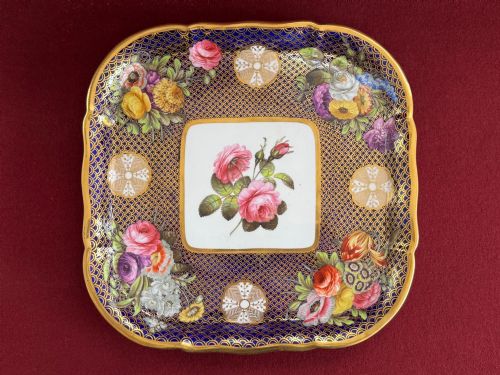
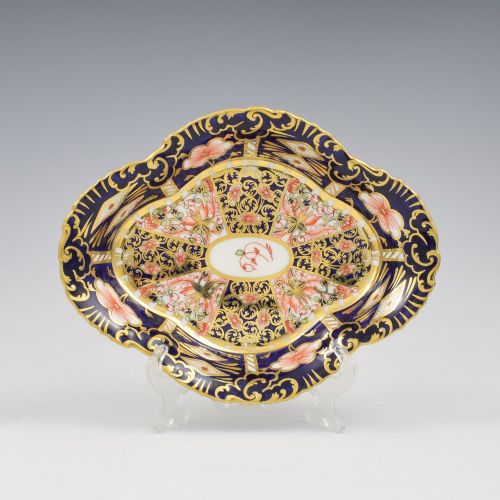
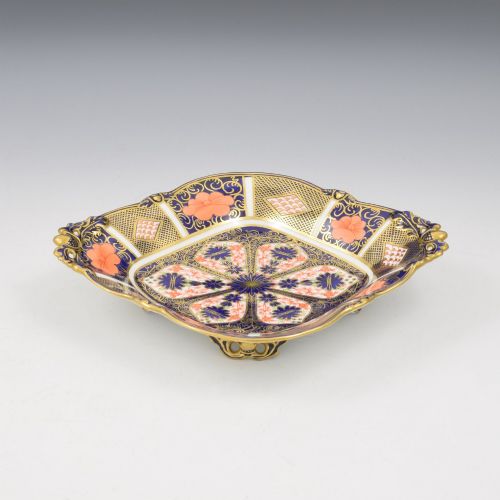
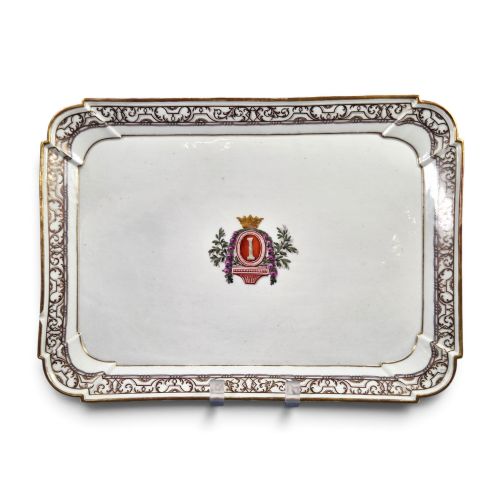
A gilded porcelain serving tray brings hand-painted colour and gilt embellishment directly to the table or cabinet, combining utility with fine ceramic artistry.
Gilded Porcelain Serving Tray
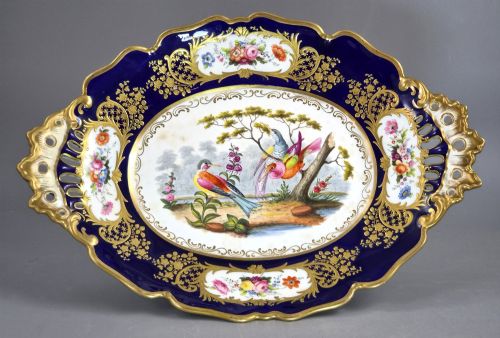
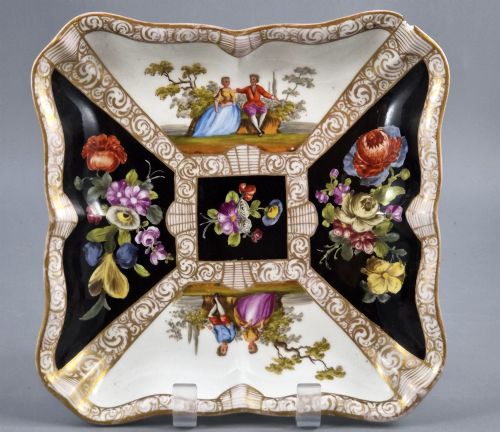
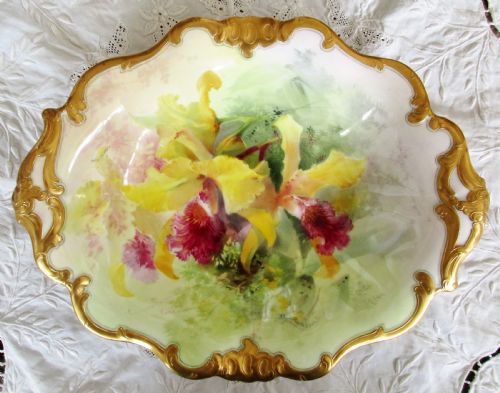
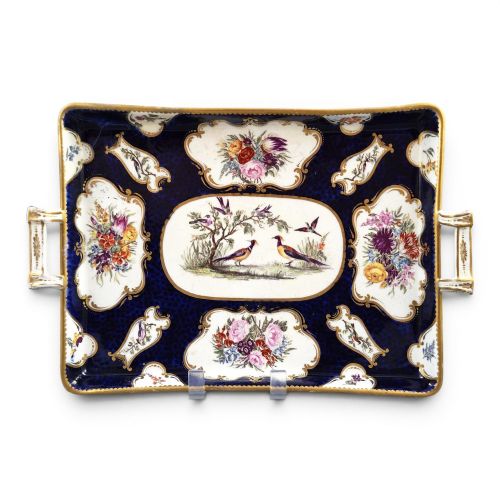
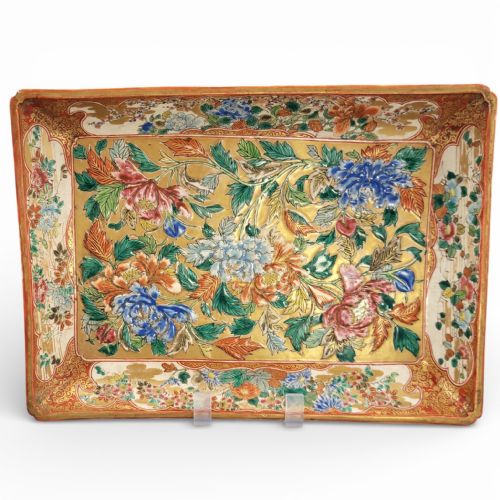
A gilded porcelain serving tray represents a functional yet decorative form found across European and Asian ceramic traditions, spanning the eighteenth century through the Edwardian era. Buyers searching this phrase meet pieces shaped as oval, square, rectangular, or trefoil dishes, alongside twin-handled serving platters and supper sets.
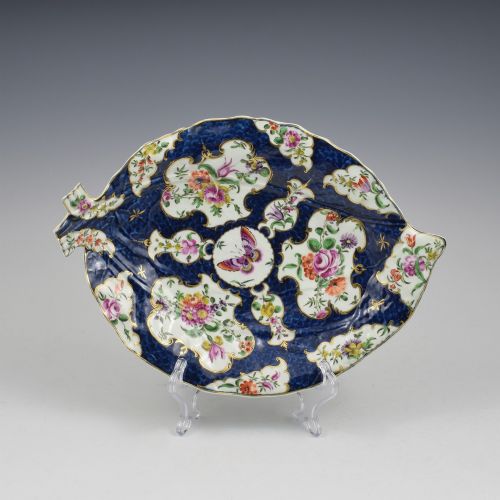
The selection ranges from eighteenth-century pieces by factories such as Ludwigsburg and Worcester to nineteenth-century examples in Rococo Revival, Regency, and Victorian styles. Makers from English, German, French, and Japanese kilns provide varied interpretations of the form, utilising floral motifs, mythological scenes, and exotic birds.
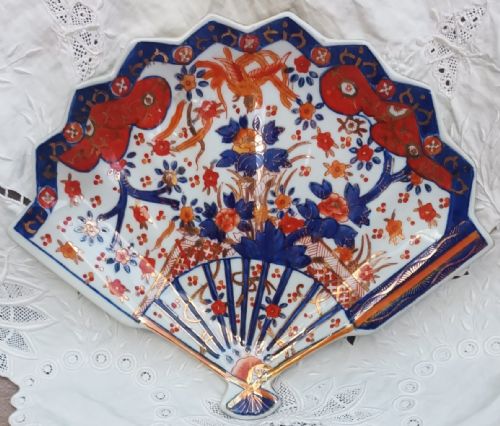
Objects include cabinet dishes, decorative platters, and specialised serving trays designed for display or formal dining. Many incorporate moulded details, pierced borders, or cobalt blue and Imari patterns alongside their characteristic gold decoration.
Materials and Techniques
Makers shaped these items using hard-paste porcelain, soft-paste porcelain, bone china, and general ceramic bodies, applying enamel pigments for hand-painted bird, floral, or figural compositions. Cobalt blue underglaze decoration frequently provides a contrasting backdrop to painted details.
Gilding was applied using gold leaf, gilt, or liquid gold preparations, which workers then fired and burnished to achieve a reflective finish. Moulding techniques created shaped edges, fluted rims, and twin handles on serving dishes and platters.
Listings feature porcelain serving trays spanning the eighteenth, nineteenth, and early twentieth centuries, incorporating hard-paste, soft-paste, and bone china bodies.
Assessing Quality
Quality rests upon the precision of the hand-painted execution, whether depicting botanical studies, Watteau scenes, or exotic birds, alongside the crispness of moulded porcelain forms. Superior pieces display careful control in brushwork and enamel application.
The application and preservation of the gold leaf or gilding distinguish finer examples, as does the clarity of factory marks and the complexity of decorative schemes such as Kakiemon or Imari patterns.
Royal Crown Derby·Ludwigsburg Porcelain·Coalport·Meissen·Royal Doulton·Worcester·Canton·Minton·Carlton Ware·Paul Müller Selb·Kutani·Sevres·Royal Worcester·Ridgway·Spode·Vienna·KPM·Barr Flight and Barr·Wedgwood·David Dewsberry
The Gilded Porcelain Serving Tray Glossary
- Hard-paste porcelain
- A dense, durable ceramic composed of kaolin and petuntse fired at high temperatures. It forms a strong body resistant to scratching.
- Soft-paste porcelain
- An artificial ceramic compound fired at lower temperatures than hard-paste, possessing a softer texture and distinct translucency. It was widely used in eighteenth-century European factories.
- Gilding
- The application of gold leaf or gold powder to ceramic surfaces for decorative effect. This process highlights rims, handles, and painted borders.
- Imari
- A decorative style originating in Japan and copied by European factories, defined by a palette of underglaze blue, iron red, and gold. It appears frequently on serving dishes and plates.
- Cailloute
- A pebble-like enamel ground pattern used in eighteenth-century porcelain decoration, often serving as a textured background for bird or floral panels.
Gilded Porcelain Serving Tray: Frequently Asked Questions
How were serving trays used historically?
These items functioned as serving dishes for food at the table or as decorative platters displayed in cabinets. They held sweetmeats, fruit, or tea service elements during formal gatherings.
Over time, many transitioned purely to decorative display objects within aristocratic and middle-class interiors, showcased on sideboards or hung on walls.
How do I identify the period of a tray?
Dating relies on factory marks, paste composition, and stylistic shifts such as Regency moulding or Victorian Rococo Revival ornamentation. Examining the style of hand-painted scenes provides further chronological context.
Comparison with documented pieces from factories like Worcester, Meissen, or Sevres helps narrow the date of manufacture to specific decades or reigns.
Can I use these trays for serving food today?
While structurally sound, antique porcelain serving trays require careful handling due to age and delicate enamel or gold leaf decoration. Modern dishwashers and abrasive cleaners will damage the historical surface.
Hand washing in lukewarm water with mild soap is necessary if used for dining, though many owners prefer to keep them strictly for display.
What is the difference between hard-paste and soft-paste porcelain?
Hard-paste porcelain uses natural clay ingredients fired at extreme heat, resulting in a vitrified body that resists scratching and absorbs no moisture. Soft-paste employs artificial glass frits and clay mixtures fired at lower temperatures.
Soft-paste pieces often display a warmer tone and distinctive glaze pooling, making them particularly prized by collectors of eighteenth-century ceramics.