




Chinese Ceramic Tray
A chinese ceramic tray brings hand-painted colour and export history directly to a table, offering both decorative presence and functional service.
Chinese Ceramic Tray
When you search for a chinese ceramic tray, you encounter a range of forms designed for export, service, and display across multiple centuries. These objects appear as serving platters, drip trays, decorative dishes, and trefoil trays originating from Chinese workshops and European makers adopting Eastern motifs.
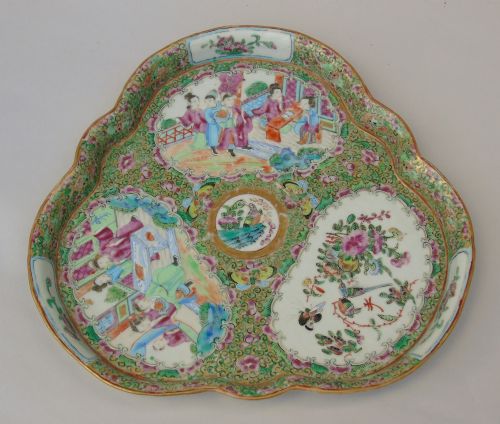
The pieces on this page span from the eighteenth century into the twentieth century, covering styles such as Qing Dynasty, Chinese Export, and Victorian Chinoiserie. You will frequently find blue and white Nanking wares, Famille Rose enamels, and Canton dishes shaped as shamrocks or hexagons.
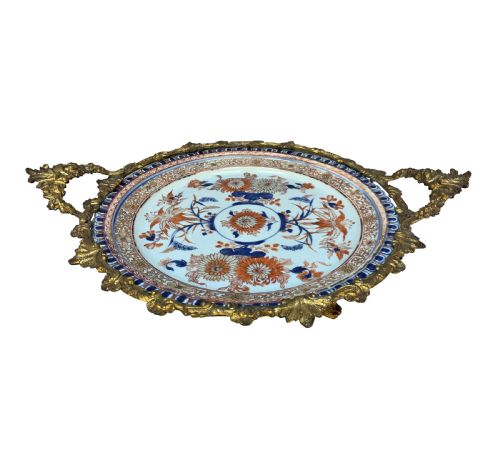
Many examples combine ceramic bodies with metal mounts, such as ormolu frames or gilt bronze borders, linking Eastern porcelain production with Western mounting traditions. Whether utilised for serving or displayed as decorative items, these trays reflect global trade routes and shifting aesthetic tastes.
What varies in quality
Quality in these pieces rests upon the precision of the hand-painting, the clarity of the enamel colours, and the crispness of moulded details like seals and floral motifs. Finer examples display meticulous brushwork on complex scenes, whereas standard domestic wares exhibit simpler, repetitive border patterns.
The integration of metal mounts also defines the tier of an object, with heavy, chased ormolu mountings indicating superior craftsmanship compared to plain ceramic edges. Preservation of original enamels and gilding without excessive rubbing distinguishes the finest survivals from heavily worn items.
Materials recorded across the inventory include ormolu mounts, gold leaf, and traditional enamel pigments applied to imported and domestic forms.
The Chinese Ceramic Tray Glossary
- Famille Rose
- A palette of opaque overglaze enamels dominated by pink or rose colours, introduced during the Qing dynasty. This technique allowed for subtle tonal gradations in floral and figural scenes.
- Canton Enamel
- Painted copper or ceramic wares produced in the port city of Canton primarily for the export market. They feature vibrant polychrome decorations often depicting domestic or garden narratives.
- Ormolu
- Finely ground high-carat gold applied to a bronze base, used extensively for decorative mounts on European and export porcelain. It provides a rich, warm metallic contrast to ceramic surfaces.
- Nanking Blue and White
- Porcelain decorated with cobalt blue underglaze depicting landscape and architectural scenes, shipped from the port of Nanking. These pieces formed a staple of eighteenth-century maritime trade.
- Trefoil
- A three-lobed decorative shape resembling a clover leaf, frequently utilised for dishes and trays. This form required careful moulding to maintain symmetry during high-temperature firing.
Chinese Ceramic Tray: Frequently Asked Questions
How were chinese ceramic trays used historically?
These pieces served practical functions at dining tables as meat dishes, serving platters, and drip trays beneath planters. They held food and caught moisture while displaying status through imported materials.
Over time, many transitioned into pure display objects, hung on walls or set upon furniture to showcase hand-painted export designs.
Can I use an antique tray for serving food?
Most antique ceramic trays are suitable for dry foods or presentation, though older enamels can be sensitive to modern detergents. Hand washing in tepid water preserves the historic glaze and surface gilding.
Consider the presence of metal mounts or delicate pierced work when deciding between active service and static display.
How do I identify an eighteenth-century piece?
Eighteenth-century examples often exhibit specific stylistic markers such as Qianlong period characteristics, hand-mixed Famille Rose enamels, and specific potting weights. Nanking blue and white wares from this era display deep cobalt tones under clear glaze.
Examine the foot ring and base for signs of age, wear patterns, and historical potting imperfections typical of early export kilns.
What is Victorian Chinoiserie?
Victorian Chinoiserie represents European interpretations of Chinese artistic motifs, produced during the nineteenth century. Makers applied these decorative styles to local ceramic bodies and earthenware shapes.
These items blend traditional Eastern dragons, pagodas, and flora with distinct European manufacturing techniques and pattern numbers.