

Gilded Porcelain Mantel Urns
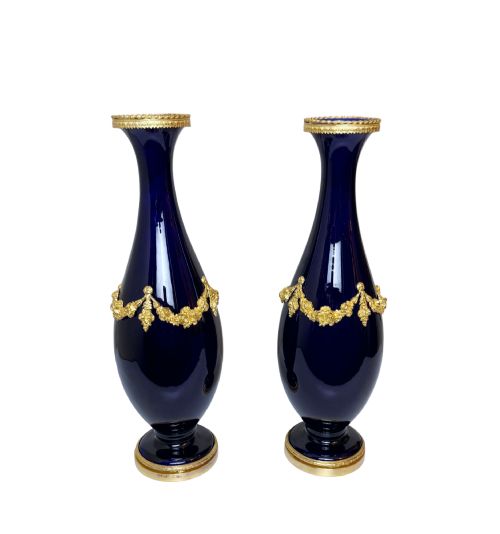
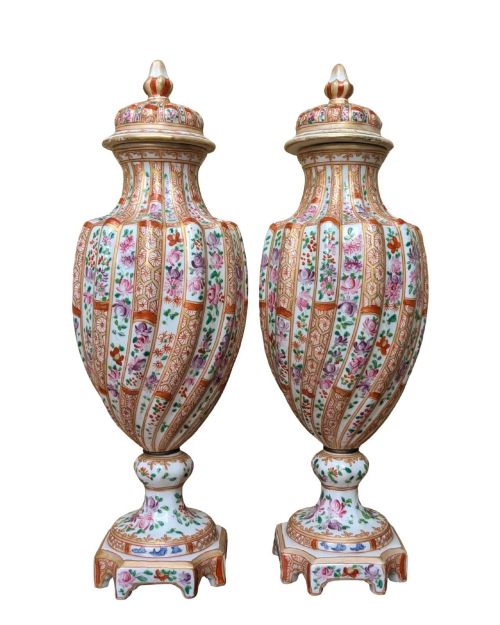
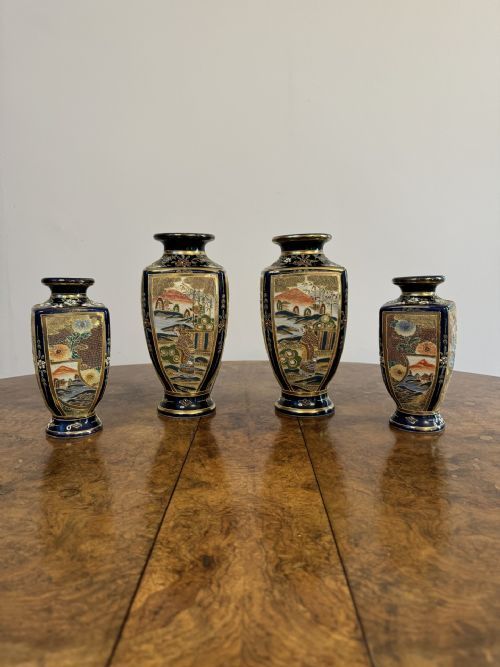
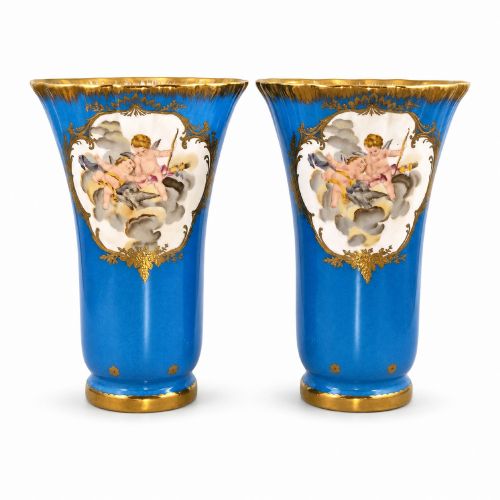
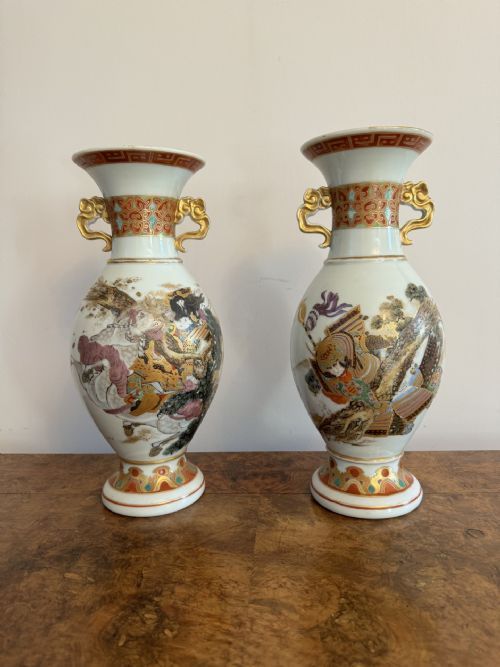
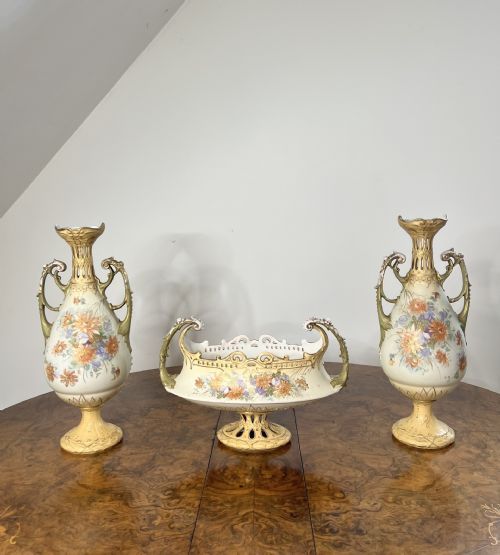
These gilded porcelain mantel urns combine gleaming gilt mounts and hand-painted ceramic bodies to anchor a grand interior scheme.
Gilded Porcelain Mantel Urns
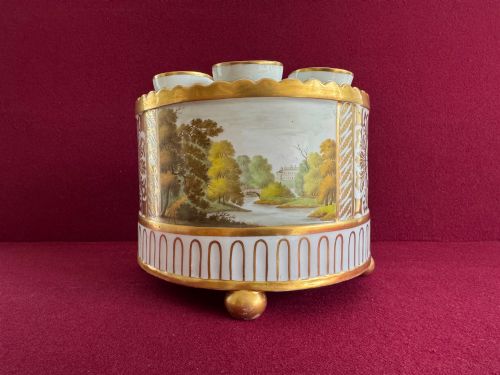
Gilded porcelain mantel urns are decorative vessels and garniture components produced primarily during the nineteenth century across European and Asian workshops. These pieces frequently incorporate metal mounts, handles or pedestals that elevate standard ceramic forms into substantial decorative objects.
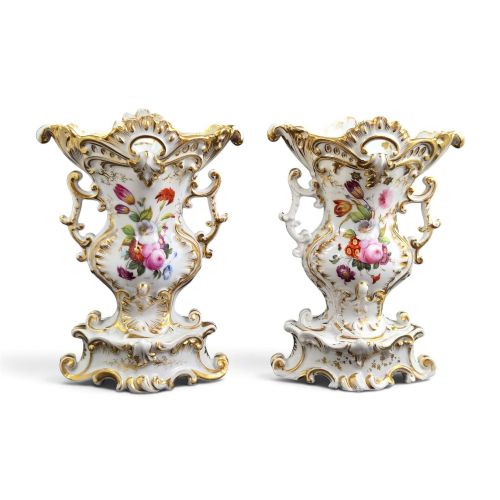
Continental European manufactories dominate the selections here, offering French Paris porcelain, Sèvres style lidded pieces, and German porcelain from Berlin and Dresden. Alongside these European examples sit Japanese Satsuma and Chinese export ceramics mounted in western gilt frameworks.
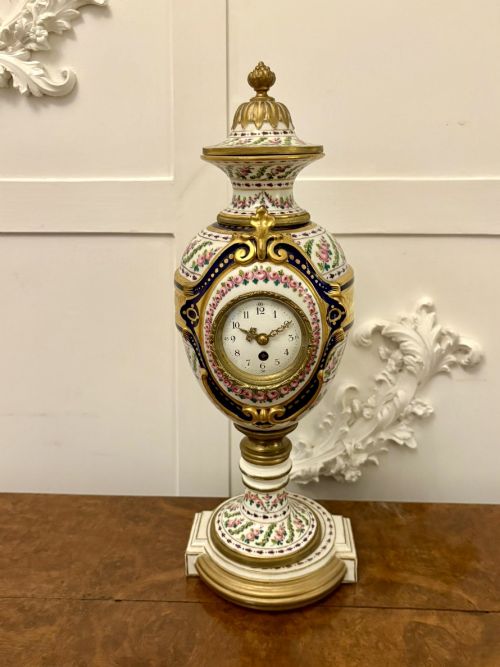
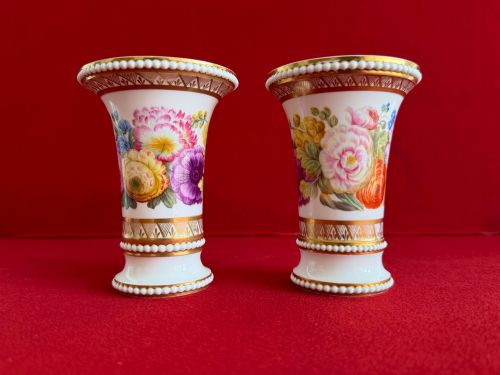
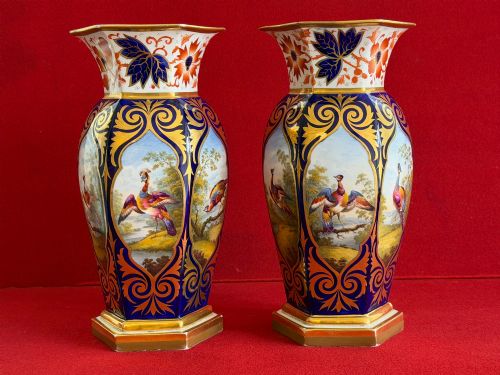
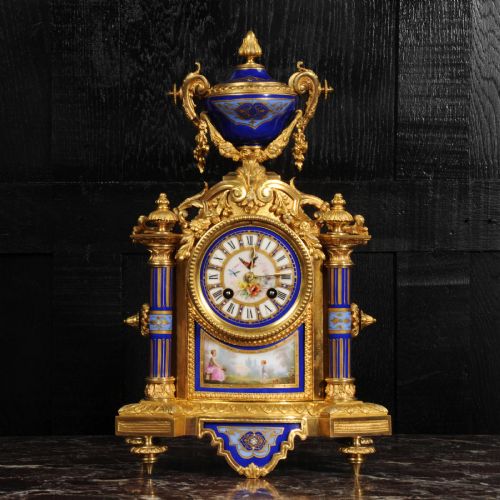
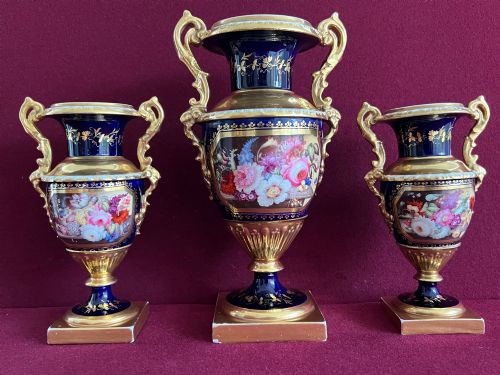
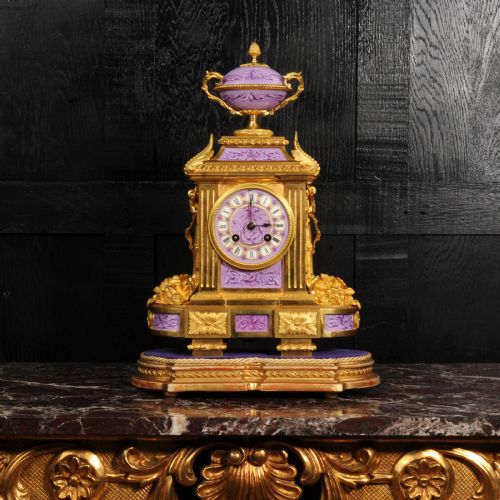
Forms vary from classical Medici shapes and twin-handled garniture vases to complete clock sets flanked by matching side vases. Buyers encounter both standalone decorative urns and functional mantel clocks integrated with porcelain dial faces and gilded bronze cases.
Materials and technique
The foundation of each piece is hard-paste or soft-paste porcelain, thrown or moulded into shape before receiving hand-painted enamel decoration and detailed gilding in gold leaf or liquid gold. Many items incorporate ormolu, gilt bronze or brass mounts that are cast, chased and secured to the ceramic body.
Makers utilised skilled ceramicists for botanical, figural or landscape scenes, often highlighting panels with turquoise, cobalt blue or blush ivory grounds. Metalworkers then anchored handles, bases and finials to the fired porcelain using pins, screws or adhesives suited to the weight of the vessel.
Gilded Porcelain Mantel Urns Retail Price Guide 2026
Typical asking prices for gilded porcelain mantel urns among the pieces listed under this phrase on Sellingantiques today, from the lower quarter to the upper quarter. They describe what is for sale here now, not the wider market.
Object types span decorative vases, ginger jars, mantel clocks and multi-piece garniture sets created in French, German and Japanese workshops.
Quality variations
The standard of painting on the porcelain surface dictates much of the distinction between ordinary and exceptional examples, separating mass-produced factory output from studio-painted artistry. Finely detailed brushwork in hand-painted scenes and delicate ground colours command higher regard.
The precision and weight of the metal mounting also define the tier of the piece. Heavy, crisply chased ormolu mounts that fit the ceramic contours seamlessly demonstrate superior craftsmanship compared to lighter, less detailed brass fittings.
Japy Freres·Flight, Barr and Barr·Achille Brocot·Jacob Petit·Manpei·Wolfsohn Dresden·KPM Berlin·Vincenti of Paris·JP Delettrez·Royal Worcester
The Gilded Porcelain Mantel Urns Glossary
- Ormolu
- Gilded bronze or brass used for mounts, feet and handles on decorative objects. This technique involves applying a gold amalgam to a bronze base and heating it to drive off the mercury.
- Garniture
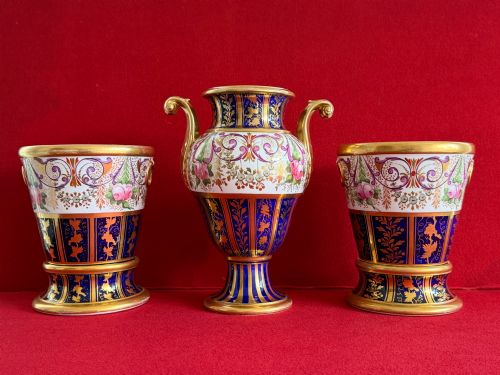
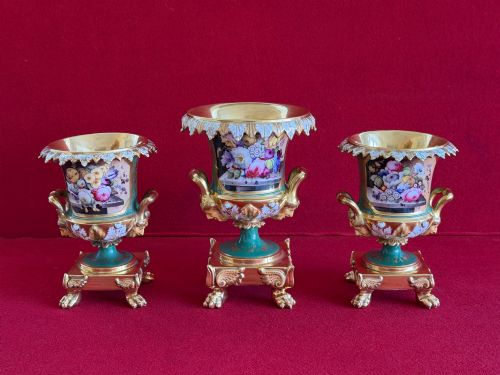
- A set of matching decorative vases or urns designed to be displayed together on a mantelpiece or sideboard. They typically consist of a central large vessel flanked by two smaller matching pieces.
- Sèvres
- A famous French porcelain manufactory known for high-grade ceramic production and distinct ground colours. Many nineteenth-century makers produced pieces in the Sèvres style to emulate this aesthetic.
- Medici vase
- A bell-shaped classical urn form featuring a footed base and flared rim, frequently utilised in nineteenth-century porcelain production. The shape originates from antiquity and enjoyed revivals during the Renaissance and nineteenth century.
Gilded Porcelain Mantel Urns: Frequently Asked Questions
What is a garniture set?
A garniture set is a coordinated grouping of three or more vases designed to sit together symmetrically on a mantelpiece. These sets usually feature one central tall urn paired with two matching smaller side vases.
During the nineteenth century, makers produced these arrangements in porcelain and ormolu to provide a balanced focal point for formal drawing rooms.
How were mantel urns used?
Mantel urns served primarily as ornamental display pieces placed on fireplace mantels, console tables and sideboards. They demonstrated the owner's taste and wealth through fine ceramic painting and precious metal gilding.
While some functioned as clock cases or lidded vessels for pot pourri, most remained purely decorative accents within wealthy interiors.
How do I care for gilded porcelain?
Gilded porcelain requires gentle maintenance using a soft, dry cloth to remove dust from the surface and crevices. Avoid chemical cleaners, water or abrasive materials that can damage delicate enamel painting and wear away thin gold leaf.
When moving the pieces, lift them by the ceramic body rather than relying on decorative handles or ormolu mounts, which can loosen over time.
How do I distinguish nineteenth-century styles?
Nineteenth-century pieces often reflect historical revival movements, ranging from the asymmetrical curves of Rococo Revival to the strict symmetry of Louis XVI Style and Neoclassicism. Examining the shape, palette and secondary metal mounts helps indicate the specific design influence.
Factory marks, painter signatures and baseline potting characteristics further assist in separating early nineteenth-century Regency works from later Victorian and Edwardian productions.