



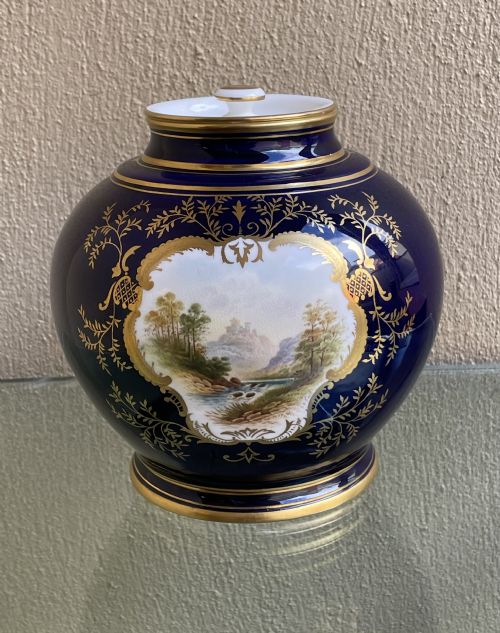


Gilded Porcelain Lidded Urns
These gilded porcelain lidded urns bring nineteenth-century hand-painted panels and heavy gilding into domestic rooms.
Gilded Porcelain Lidded Urns
Gilded porcelain lidded urns comprise covered vessels produced in European and Japanese kilns, frequently taking forms intended for display on mantelpieces and pedestals. The selection spans nineteenth-century Victorian and Edwardian periods alongside later twentieth-century studio output.
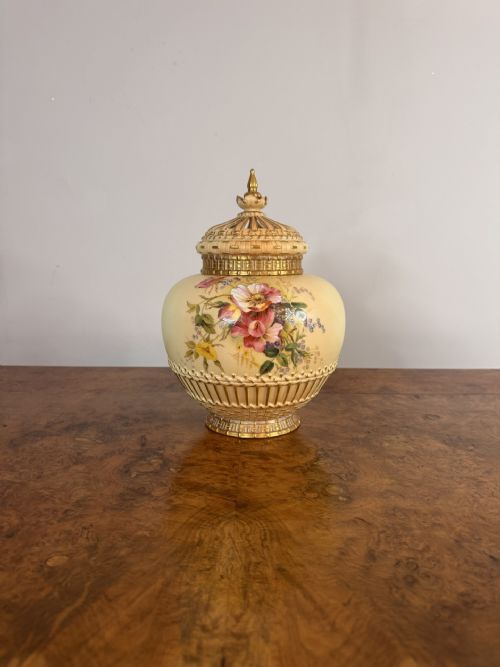
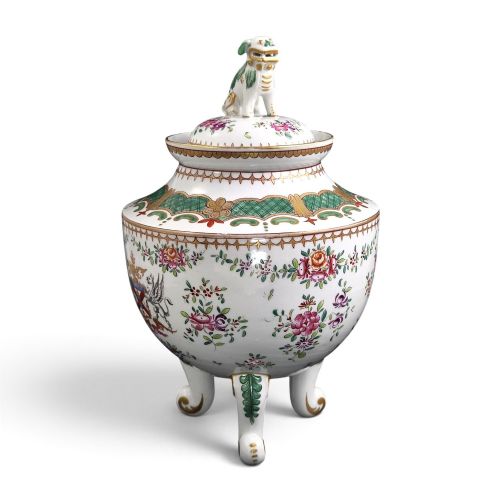
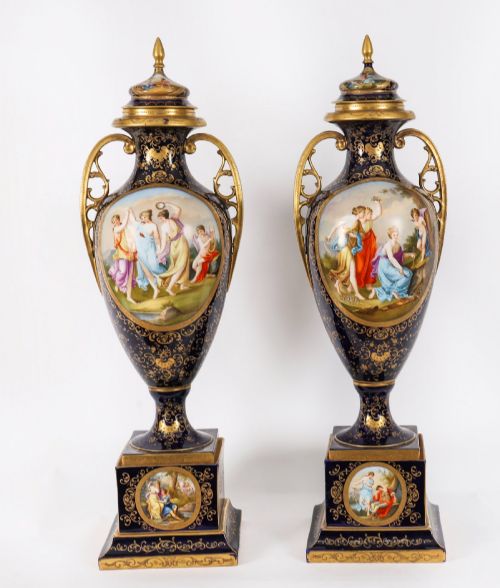
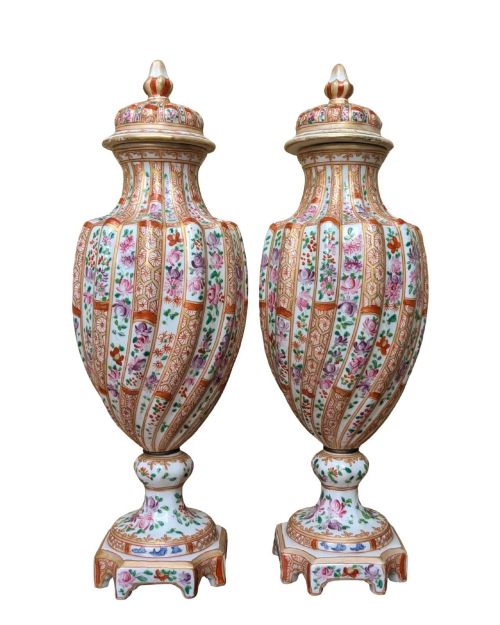
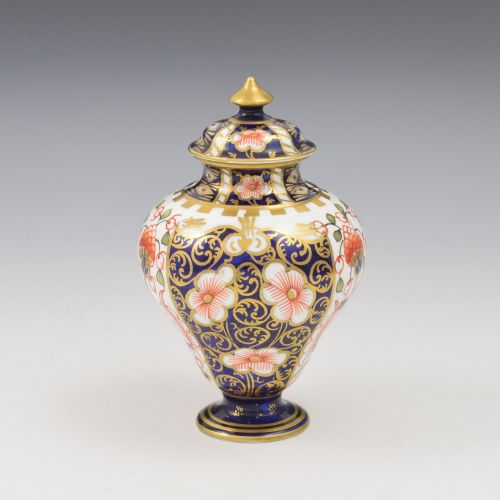
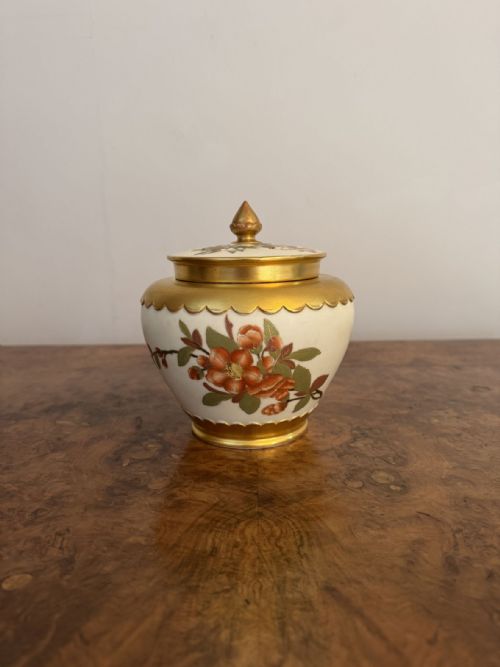
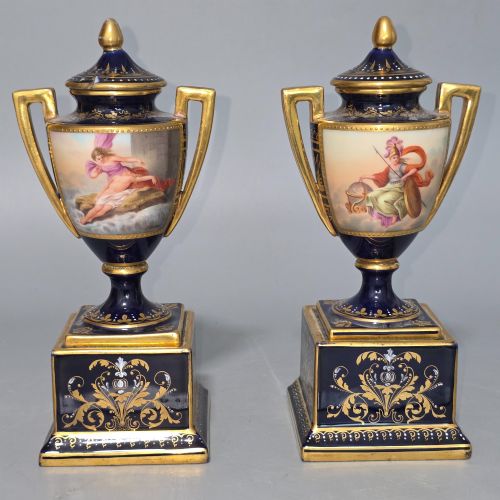
Most examples appear as pairs decorated with hand-painted scenes, armorial motifs, or Imari patterns framed by extensive gilding. Forms range from classical amphora shapes to ginger jars and potpourri pots with pierced covers.
How They Were Made
Potters shaped the bodies from ceramic clay and porcelain pastes before applying enamel colours and gold leaf or liquid gilding by hand. Kiln firing fixed the pigments and metals onto the glazed surfaces.
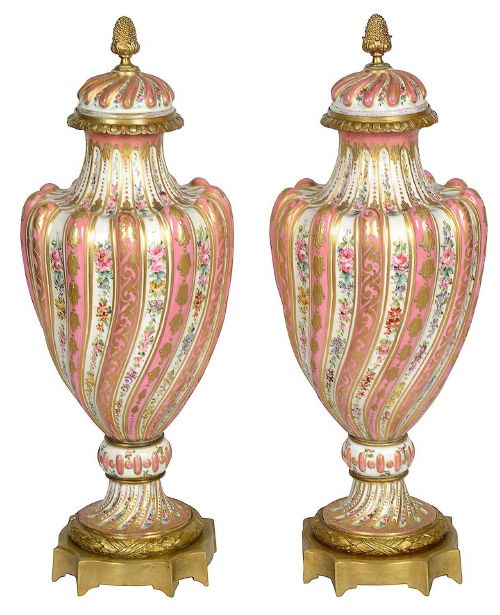
Mounts in ormolu and gilt bronze occasionally supplement the porcelain bodies, particularly on French and Viennese pieces from the nineteenth century.
Gilded Porcelain Lidded Urns Retail Price Guide 2026
Typical asking prices for gilded porcelain lidded urns among the pieces listed under this phrase on Sellingantiques today, from the lower quarter to the upper quarter. They describe what is for sale here now, not the wider market.
Storks occasionally wade through gilt marshlands on nineteenth-century pedestal jars.
What Varies in Quality
The precision of the hand-painted brushwork sets superior examples apart, especially on pieces featuring detailed portraits, Watteau scenes, or fruit studies by named artists. Standard output relies on transfer-printed outlines filled with flat colour.
The depth and application of the gilding also distinguish the work, with heavy raised gold leaf demonstrating greater skill than thin painted washes that wear with handling.
Edme Samson·Royal Crown Derby·Royal Worcester·Coalport·Fielding s Crown Devon·Augustas Rex
The Gilded Porcelain Lidded Urns Glossary
- Gilding
- The application of gold leaf or powdered gold to the ceramic surface. This technique highlights rims, handles, and raised relief moulding.
- Potpourri
- A jar or urn with a pierced cover designed to hold dried scented plant material. These vessels feature perforated lids to diffuse fragrance into a room.
- Imari
- A Japanese decorative style featuring iron red, underglaze blue, and extensive gilding. European factories frequently copied these patterns.
- Amphora
- A two-handled vase with a narrow neck, modelled on ancient Greek and Roman storage vessels. These forms appear frequently in nineteenth-century neoclassical revival pieces.
- Armorial
- A porcelain decoration displaying a family coat of arms or crest. These bespoke commissions identify the original owning household.
Gilded Porcelain Lidded Urns: Frequently Asked Questions
How were lidded urns used?
These covered vessels served primarily as decorative garniture on mantelpieces, sideboards, and pedestals within formal rooms. Examples with pierced lids functioned specifically to hold scented potpourri.
Larger specimens acted as architectural centrepieces for nineteenth-century interior displays rather than utilitarian containers.
How do I identify Vienna porcelain?
Vienna porcelain from the nineteenth century often displays classical figures, rich gilding, and shield marks painted under the glaze. The forms lean towards neoclassical amphora shapes and campana urns.
Many later pieces copy these eighteenth-century aesthetics under the designation of Vienna style.
What is Satsuma ware?
Satsuma ware consists of Japanese earthenware and porcelain decorated with finely detailed enamel and heavy gilding over a crackle glaze. Nineteenth-century production frequently targeted Western export markets with elaborate narrative scenes.
These pieces show distinct crackled glaze patterns beneath densely packed pictorial designs.
How do I care for gilded porcelain?
Dust these surfaces gently with a soft, dry brush to protect fragile gold leaf and enamel decoration. Avoid using water or chemical cleaners, which can lift delicate gilding from the glaze.
Keep pieces away from direct sunlight to prevent fading on hand-painted enamel panels.