


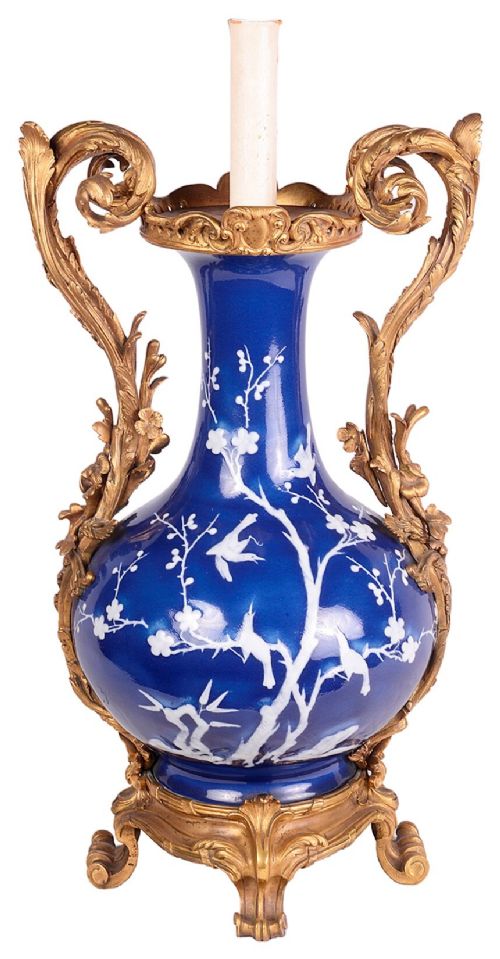


French Chinoiserie Porcelain Vases
French chinoiserie porcelain vases combine European mounts with Eastern motifs to bring colour and decorative weight to a room.
French Chinoiserie Porcelain Vases
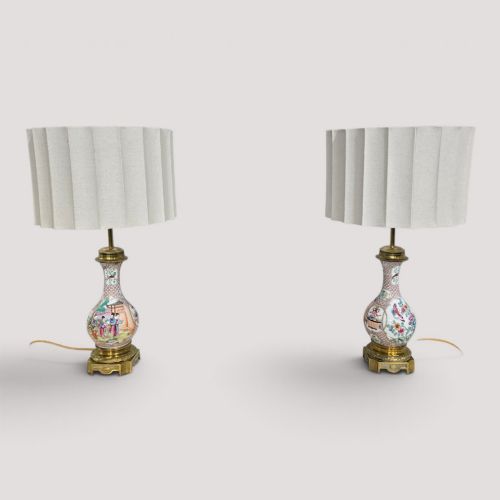
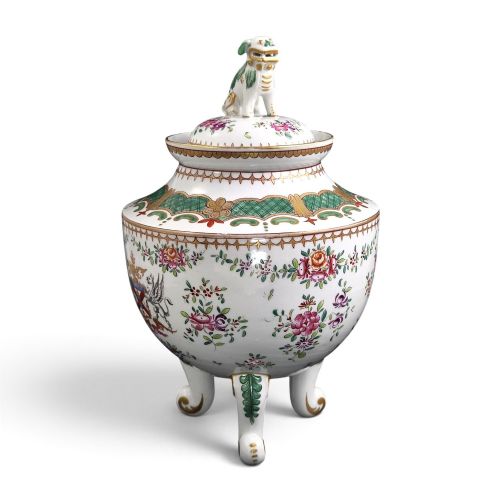
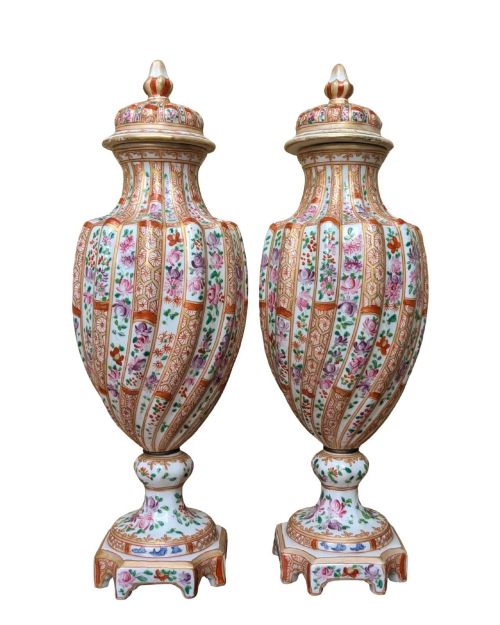
French chinoiserie porcelain vases represent an intersection of European decorative arts and Eastern ceramic traditions, appearing frequently as nineteenth-century pieces or later adaptations. Buyers searching for french chinoiserie porcelain vases encounter items spanning the Victorian era, the nineteenth century, and nineteen thirty, often taking the form of table lamps, lidded urns, and converted vase forms.
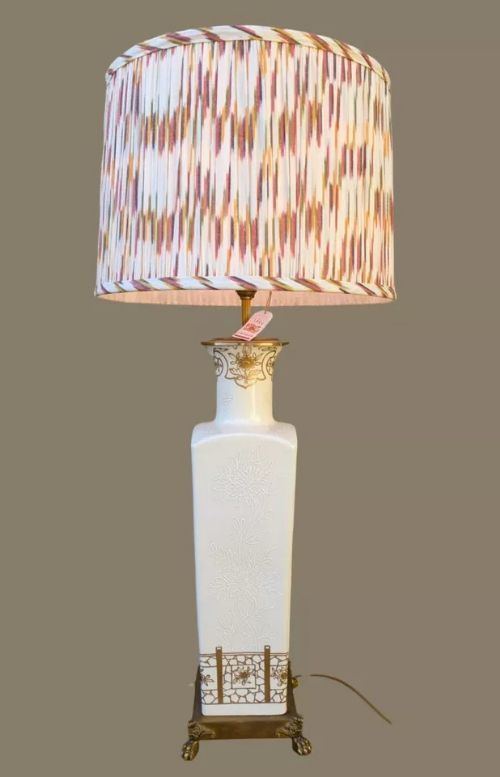
The objects on this page bridge the gap between traditional display vessels and functional lighting, with many examples having been adapted into lamp bases while retaining their original ceramic bodies. These pieces draw upon specific aesthetic lineages including Chinese export styles, Canton patterns, and the famille rose palette.
Makers such as Edme Samson and Paris workshops produced much of what survives, emulating earlier Qianlong and famille verte aesthetics with hard-paste porcelain. The forms vary from pairs of lidded urns to powder blue and blue and white vessels, frequently fitted with ormolu, brass, or gilt bronze mounts.
Materials and construction
The foundation of these pieces lies in hard-paste porcelain, painted with enamel and highlighted with gold leaf or detailed in famille rose and famille verte palettes. Artisans employed traditional ceramic techniques to shape the bodies before applying intricate hand-painted motifs that mirrored or interpreted Chinese export designs.
Metalwork plays a structural and decorative role, with ormolu, brass, and gilt bronze mounts secured to the porcelain bases, rims, and covers. Fabric elements appear alongside these rigid materials where pieces have been converted into table lamps with custom shades.
French Chinoiserie Porcelain Vases Retail Price Guide 2026
Typical asking prices for french chinoiserie porcelain vases among the pieces listed under this phrase on Sellingantiques today, from the lower quarter to the upper quarter. They describe what is for sale here now, not the wider market.
Several vases on this page spent their second lives volunteering as lamps, trading flowers for lightbulbs.
Assessing quality and execution
Quality in these vases rests on the precision of the hand-painted enamel work and the crispness of the porcelain body, distinguishing careful studio production from simpler output. The depth of the colour palette, from delicate famille rose tones to rich powder blue, indicates the skill applied to the firing and glazing processes.
The integration of the metal mounts dictates the refinement of the finished piece, with chased ormolu and gilt bronze fitting snugly to the ceramic contours rather than masking irregularities. The fidelity of the chinoiserie interpretation and the weight of the hard-paste porcelain further separate standard decorative items from finer works.
Edme Samson·Samson Paris
The French Chinoiserie Porcelain Vases Glossary
- Hard-paste porcelain
- A durable, vitreous ceramic fired at high temperatures using kaolin and petuntse. This material forms the solid white body underneath the enamel decoration of the vases.
- Ormolu
- Gilt brass or bronze applied to furniture and ceramics for decorative effect. It frames the porcelain bodies and provides structural mounts on nineteenth-century pieces.
- Chinoiserie
- European artistic interpretations of Chinese and East Asian artistic traditions. This style guides the painted scenes, flora, and fauna found across the ceramic surfaces.
- Canton
- A style of Chinese export porcelain characterised by detailed green and rose-coloured panels depicting figures and nature. Pieces in this tradition heavily influenced French nineteenth-century interpretations.
French Chinoiserie Porcelain Vases: Frequently Asked Questions
What are french chinoiserie porcelain vases?
They are ceramic vessels created in Europe or inspired by Eastern aesthetics, featuring hand-painted enamels and often mounted in metal.
Many surviving examples from the nineteenth century were later adapted into table lamps while preserving their original decorative bodies.
How were these vases used originally?
They served as decorative garnitures, lidded urns, and display pieces in grand nineteenth-century interiors, showcasing status and taste.
Over time, numerous examples were converted to hold electrical components for lighting without losing their ceramic character.
How do I style french chinoiserie porcelain vases at home?
Their strong colours and gilded mounts make them natural focal points on sideboards, mantels, or as statement table lamps.
They pair well with traditional and eclectic interiors where their painted motifs and metallic details can catch the light.
How do I distinguish nineteenth-century pieces from later ones?
Examination of the hard-paste porcelain body, the wear on the gilt bronze or ormolu mounts, and the brushwork of the enamels helps indicate age.
Nineteenth-century workshops like those in Paris often utilised specific paste compositions and palette tones distinct from twentieth-century reproductions.