


Gilded Porcelain Candle Holders
These gilded porcelain candle holders bring bright light and intricate modelling to a mantelpiece, combining rich gilding with soft ceramic bodies.
Gilded Porcelain Candle Holders
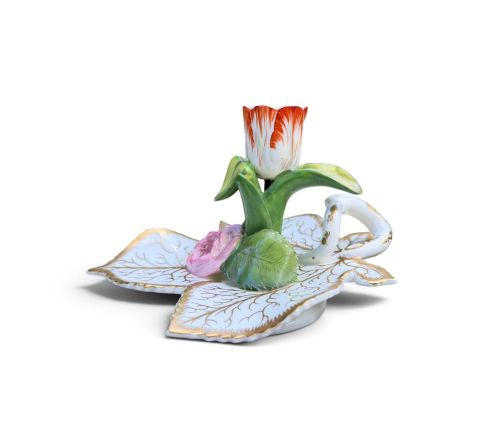
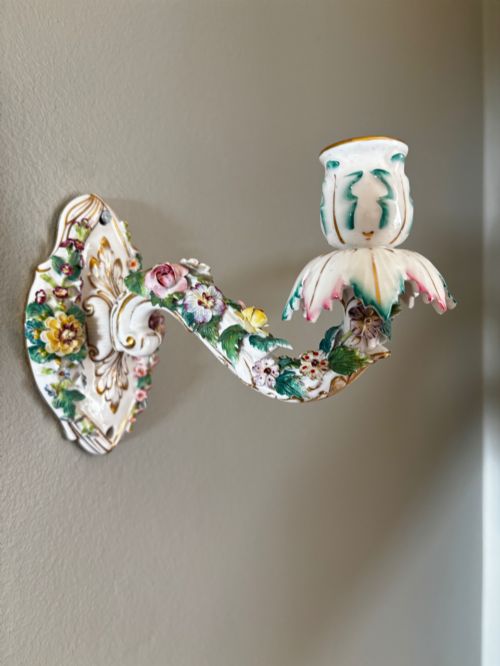
Gilded porcelain candle holders appear in forms such as candlesticks, candelabra, chambersticks and wall sconces, spanning the eighteenth, nineteenth and early twentieth centuries. These pieces encompass English and continental factories, showing styles from simple Georgian shapes to exuberant Rococo Revival and Neoclassical designs.
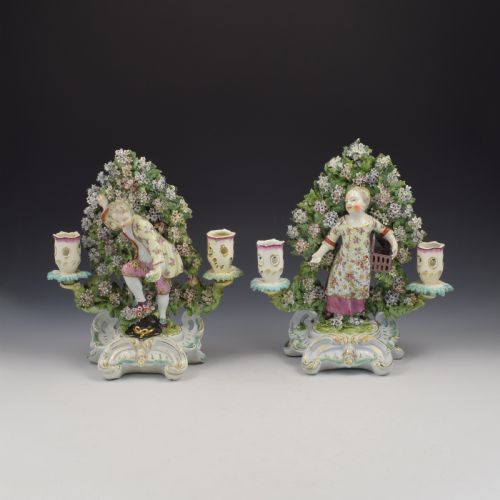
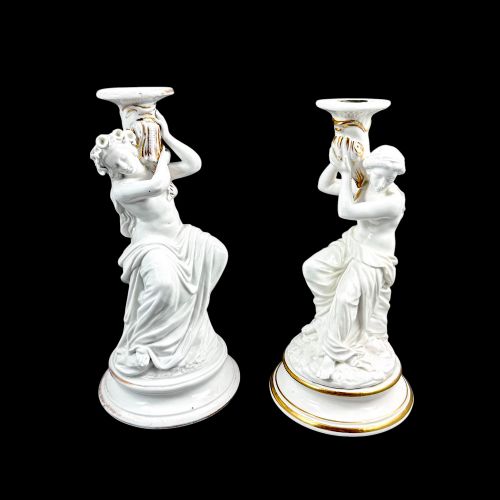
The buyer most frequently meets figures modelled as children, musicians or allegorical representations, often framed by bocage foliage or mounted in gilt bronze and ormolu. These table lights served to illuminate rooms while demonstrating the sculptural skill of European potteries.
Materials and construction
Factories utilised hard-paste porcelain, soft-paste porcelain and biscuit porcelain, shaping them into figures, shafts and drip pans. Artisans applied ceramic enamel and gold leaf or surface gilding to highlight moulded details.
Metal mounts in gilt bronze and ormolu frequently secure porcelain figures or form branches for candelabra, combining ceramic bodies with cast metal components.
The inventory spans the eighteenth, nineteenth and twentieth centuries, featuring English and continental porcelain bodies adorned with enamel and gold leaf.
Assessing quality
The refinement of the porcelain modelling and the crispness of the enamel painting determine the distinction between average and exceptional examples. Finer pieces show delicate facial expressions in figural work and precise hand-applied gilding.
The complexity of the form influences the standing of a piece, particularly where intricate bocage leaves surround figures or where multiple candle arms demand balanced mounting in gilt bronze.
Meissen·Derby·Chelsea·Bow·Spode·Minton·Royal Worcester·Dresden·Volkstedt
The Gilded Porcelain Candle Holders Glossary
- Bocage
- Applied ceramic foliage and flowers that frame figural porcelain groups. This background work requires careful hand-assembly before firing.
- Candelabra
- Candle holders featuring multiple branches springing from a single stem. They allow several candles to burn simultaneously.
- Chamberstick
- A low candle holder fitted with a handle and a saucer base for carrying around a house. They were used before electric lighting made fixed wall switches common.
- Biscuit porcelain
- Unglazed ceramic fired to a matte, tactile finish that resembles fine marble. It highlights sculptural detail without the distraction of a glossy glaze.
- Ormolu
- Finely chased bronze finished with a gold-mercury amalgam. It provides structural support and decorative mounts for porcelain bodies.
Gilded Porcelain Candle Holders: Frequently Asked Questions
How do I clean gilded porcelain?
Dust these pieces gently with a soft, dry brush to protect the delicate enamel and gold leaf surfaces. Avoid liquid cleaners that might dissolve water-soluble pigments or abrade the gilding.
Keep them away from direct sunlight and heat sources to preserve the colours and prevent stress on the ceramic body.
Were these used for daily lighting?
These decorative items often served in formal reception rooms and parlours rather than routine tasks. Their elaborate figural designs made them display pieces as much as practical light sources.
Today, they suit mantlepieces, sideboards and display cabinets where their colours and gilding catch natural light.
How do I date a porcelain candlestick?
Examine the style of the modelling, base construction and any factory marks hidden underneath the glaze. Georgian pieces tend to show simpler rococo or neoclassical lines, while Victorian examples often embrace heavier revival ornamentation.
Compare the enamel palette and gilding technique with known factory periods to narrow down the decade of manufacture.
What is the difference between a candlestick and a sconce?
Candlesticks stand independently on flat surfaces like tables and mantels, supported by a weighted base. Wall sconces mount directly onto vertical wall surfaces to project light outward into a room.
Both types utilise porcelain bodies combined with metal fittings to secure the candles safely.