



Gilded Pedestal Urns
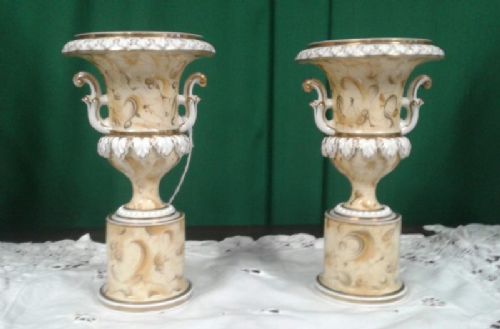
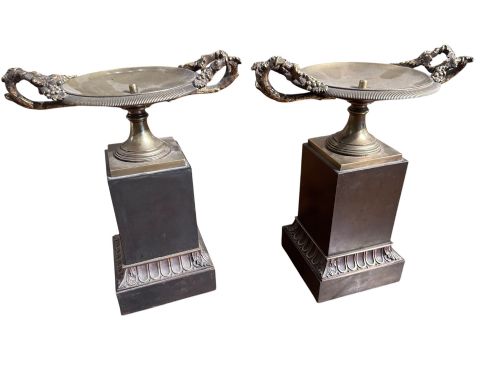
These gilded pedestal urns combine classical form with rich surface ornamentation, offering a striking focal point for a traditional interior.
Gilded Pedestal Urns
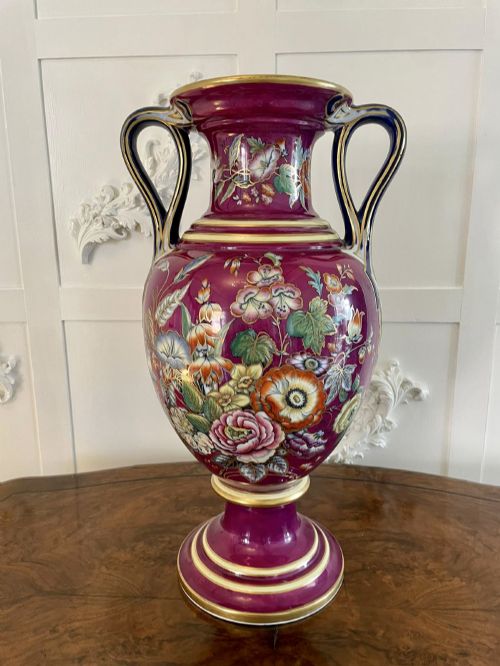
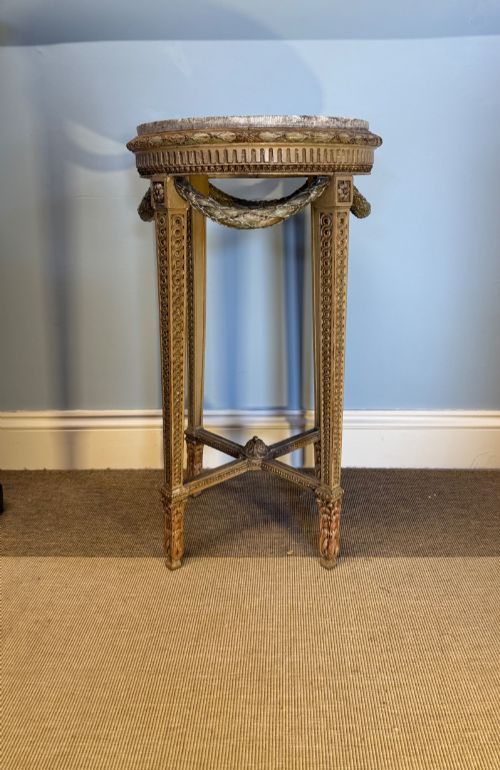
When you search for gilded pedestal urns, you encounter a selection spanning the nineteenth century, including Georgian and Edwardian examples. These pieces frequently manifest as campana vases, lidded vessels, and decorative jardinieres mounted on elevated bases.
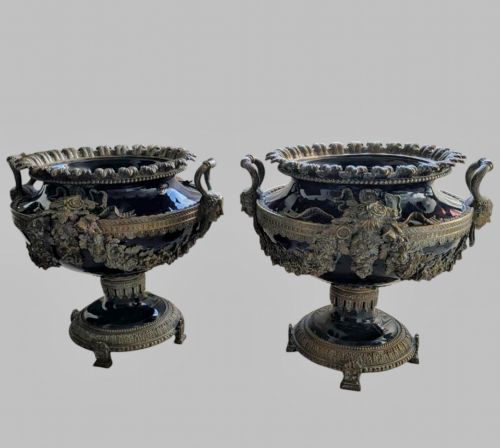
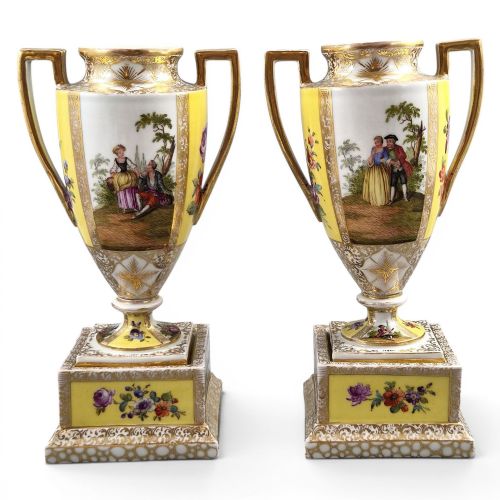
The objects derive from diverse European and Asian traditions, encompassing French Empire, Vienna, and Worcester porcelain alongside Italian bronze and marble. Pairs feature prominently across the selection, often designed for mantelpieces or decorative furniture placement.
Many items adopt classical architectural proportions influenced by Grand Tour travels and neoclassical revivals. Porcelain bodies and cast metals dominate the forms, frequently enriched with painted reserves or applied gilt decoration.
Materials and Method
Potters and bronze-founders utilised hard-paste porcelain, cast bronze, and statuary marble as principal structural bodies. Artisans applied gold leaf, liquid gilding, and ormolu mounts to highlight handles, rims, and botanical motifs.
Ceramic bodies underwent high-temperature kiln firing before receiving hand-painted polychrome scenes and meticulous enamel work. Metal components required casting via the lost-wax method followed by chiselling and chemical gilt finishing.
Several Victorian urns feature hand-painted bird studies, including surprisingly stern-looking cock pheasants and wandering storks.
Quality and Execution
The refinement of the hand-painted decoration and the crispness of the gilt chasing distinguish finer examples from standard production. Superior porcelain bodies display smooth glazes and delicate translucency without firing flaws.
The weight and assembly of ormolu mounts and bronze elements indicate the standard of craftsmanship. High-grade pieces maintain structural integrity in their pedestals and unified artistic execution across matched pairs.
Royal Worcester·Vienna Porcelain·Meissen Porcelain·Hadley's Worcester·Helena Wolfsohn
The Gilded Pedestal Urns Glossary
- Campana
- A bell-shaped vessel with a flared rim and footed base, frequently cast in bronze or formed in porcelain.
- Ormolu
- Finely ground high-carat gold applied to a bronze base through mercury amalgamation, or modern electroplating.
- Garniture
- A set of three or more matching decorative vases or urns designed to be displayed together on a mantelpiece.
- Jardiniere
- An ornamental pot or stand designed to hold plants or floral arrangements within an interior space.
- Polychrome
- Decoration employing multiple distinct colours, commonly used in hand-painted ceramic scenes and floral reserves.
Gilded Pedestal Urns: Frequently Asked Questions
How were pedestal urns used historically?
These vessels served primarily as decorative ornaments on mantelpieces, sideboards, and dedicated stands within formal reception rooms.
Some larger examples functioned as indoor plant holders or potpourri containers designed to scent domestic interiors.
How do I identify nineteenth-century porcelain?
Nineteenth-century porcelain often bears underglaze factory marks, painter initials, or registration numbers specific to European potteries.
Close examination of the gilding wear and enamel vibrancy also helps establish the age of the piece.
Where should I place an urn at home?
Pedestal urns suit prominent display locations such as entrance halls, console tables, and empty fireplace hearths.
Pets and heavy traffic areas should be avoided to protect delicate porcelain handles and marble bases.
What distinguishes French Empire style?
French Empire pieces incorporate severe classical motifs inspired by ancient Roman and Greek archaeology.
They rely heavily on symmetrical forms, rich ormolu mounts, and contrasting dark bronze or vibrant porcelain bodies.