






Gilded Lacquer Table
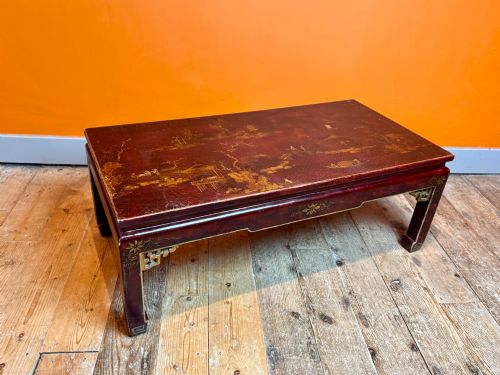
A gilded lacquer table brings luminous surface and intricate Chinoiserie storytelling into a room, offering both practical surface space and decorative depth.
Gilded Lacquer Table
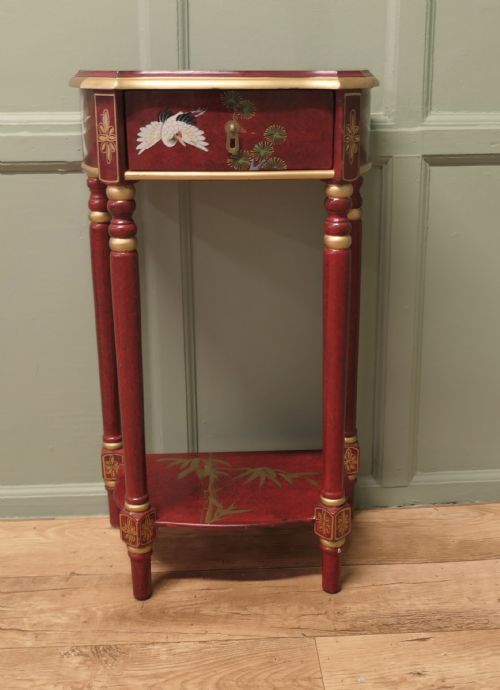
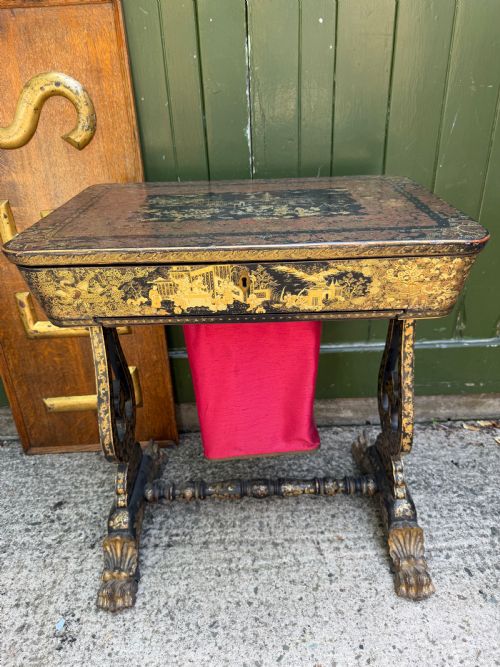
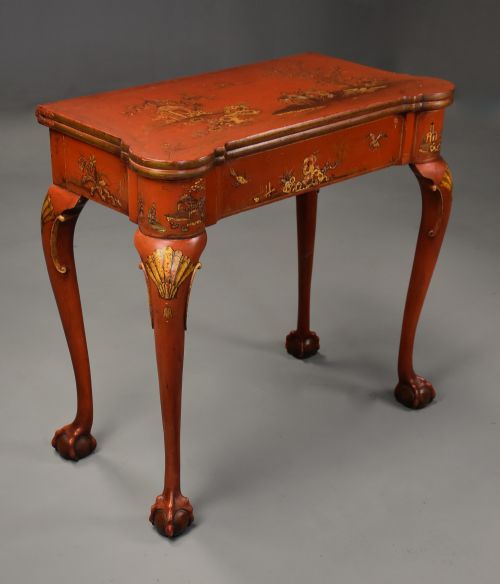
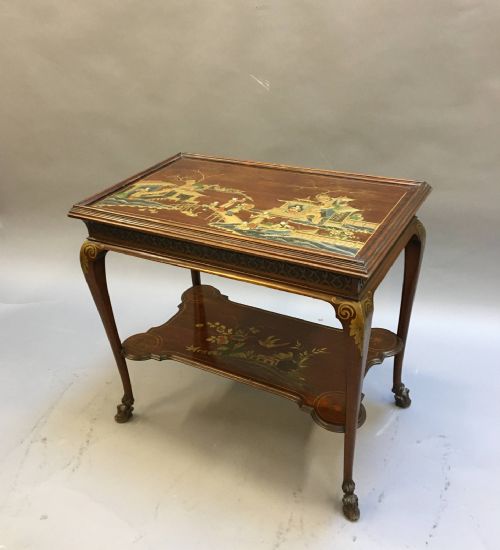
A gilded lacquer table combines hard resin finishes with metallic leaf and painted scenes, spanning periods from the eighteenth century through the twentieth century. These pieces appear in forms such as occasional tables, coffee tables, nests of tables, and side tables.
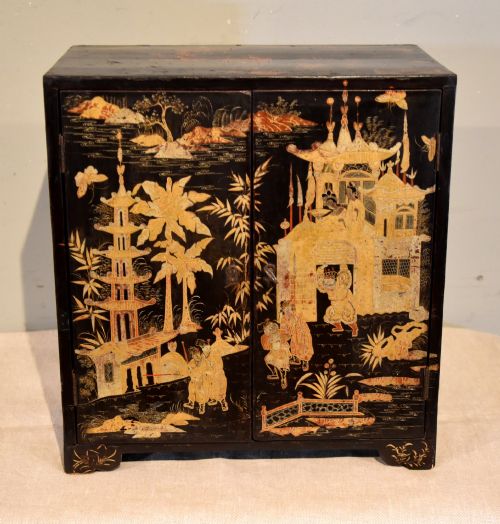
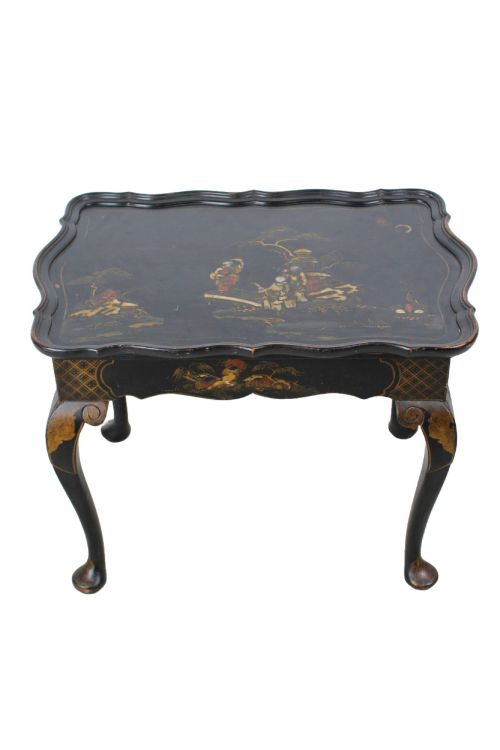
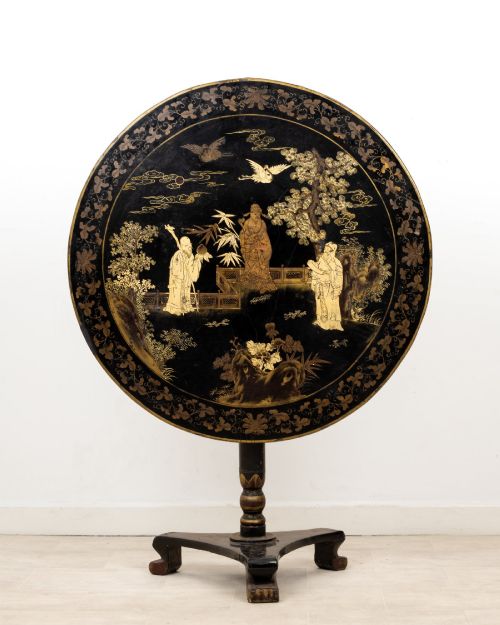
The aesthetic draws heavily on Chinoiserie and Chinese Export traditions, alongside Regency and Victorian interpretations. Makers apply detailed oriental motifs, figures, and landscapes over dark or red lacquered wood and papier-mâché.
Buyers encounter variations ranging from nineteenth-century work-tables and folding card tables to early twentieth-century nests and tray tables on stands. Each version utilises painted or gilded ornamentation to create a reflective, decorative centrepiece.
How they were made
Construction relies upon seasoned wood, papier-mâché, or tole as foundational substrates, built to support multiple layers of resin-based lacquer. Craftsmen polish these coats repeatedly to achieve a smooth, hard ground before applying any decoration.
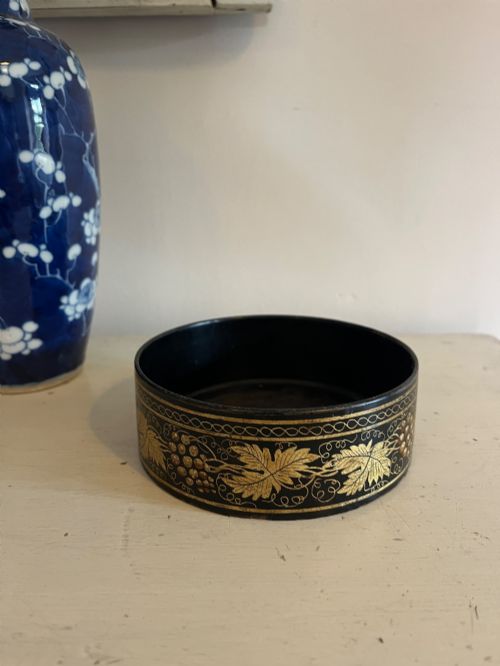
Decoration involves gold leaf, paint, and fine gilding to build up raised or flat Chinoiserie scenes depicting figures, pavilions, and foliage. Artisans seal the metallic details with clear varnishes to protect the fragile gold work from daily wear.
Gilded Lacquer Table Retail Price Guide 2026
Typical asking prices for gilded lacquer table among the pieces listed under this phrase on Sellingantiques today, from the lower quarter to the upper quarter. They describe what is for sale here now, not the wider market.
Listings feature items spanning the eighteenth, nineteenth, and twentieth centuries, utilising lacquer, wood, gold leaf, and papier-mâché.
What varies in quality
The standard of a gilded lacquer table rests on the depth of the lacquer layers and the precision of the hand-painted gold detail. Superior examples display crisp, articulate brushwork and subtle relief work that retain their lustre across centuries.
Structural integrity of the underlying wood, papier-mâché, or stand dictates the piece's endurance. Better pieces maintain original surfaces without extensive modern repainting, preserving the authentic tonal shifts of aged gold leaf and lacquer.
Jennens & Bettridge·Henry Clay
The Gilded Lacquer Table Glossary
- Chinoiserie
- European decorative style reflecting Chinese artistic influences. It employs whimsical scenes of figures, pagodas, and landscapes rendered in gold and paint upon dark lacquer.
- Lacquer
- Durable resin finish derived from natural saps or applied varnishes. It provides a hard, glossy surface that protects the wood beneath.
- Papier-mâché
- Composite material made from paper pulp or layers of paper bound with glue. It is moulded and hardened to form smooth trays and table tops before lacquering.
- Gold leaf
- Metal beaten into extremely thin sheets used for gilding. It gives tables their luminous metallic highlights.
- Japanned
- European imitation of East Asian lacquerwork. It involves layered varnishes and heat-treatments to mimic oriental finishes.
Gilded Lacquer Table: Frequently Asked Questions
How do I clean a gilded lacquer table?
Dust gently with a soft, dry microfibre cloth to protect the delicate gold leaf and lacquer surface.
Avoid chemical sprays, damp cloths, and abrasive cleaners, which strip the historic varnish and degrade the painted details.
Can I use a lacquer table daily?
These tables function well for holding light objects, drinks on coasters, or decorative items.
Keep them away from direct sunlight, excessive heat, and moisture to prevent the lacquer from cracking or lifting.
What is a tray table on stand?
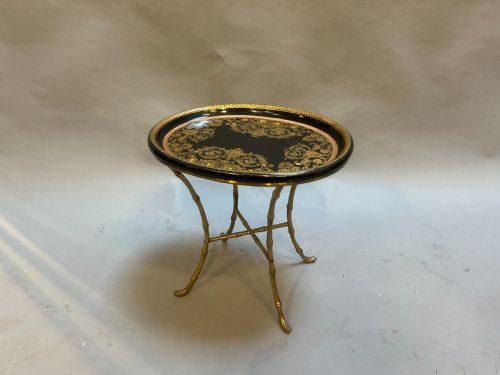
A tray table on stand consists of a removable serving tray placed atop a folding or fixed wooden frame.
This form became popular during the Regency period, allowing functional trays to double as low occasional tables.
How do I spot nineteenth century work?
Examine the wear patterns, hand-mixed pigments, and the composition of the wood or papier-mâché substrate.
Nineteenth-century pieces often display fine craquelure in the lacquer and authentic gold leaf oxidation rather than modern metallic paint.