



Gilded Japanese Earthenware Vase
These gilded Japanese earthenware vases bring intricate hand-painted detail and dense gold leaf to interiors, rooted primarily in the Meiji period.
Gilded Japanese Earthenware Vase
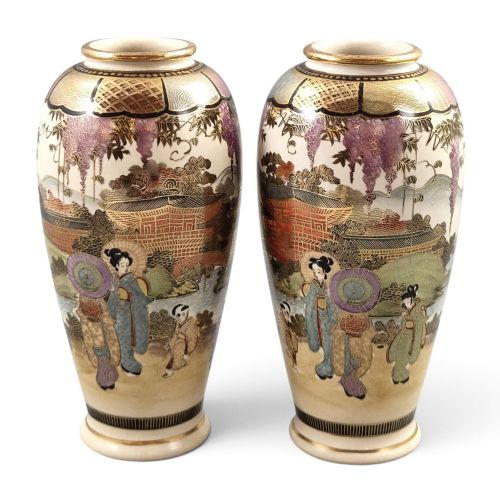
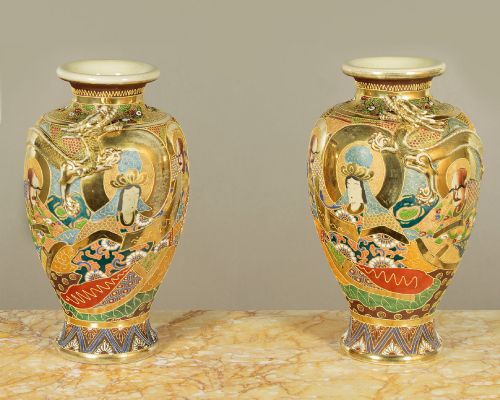
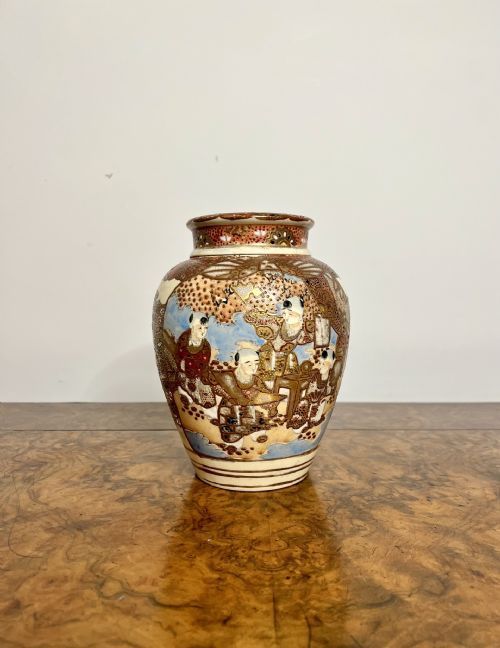
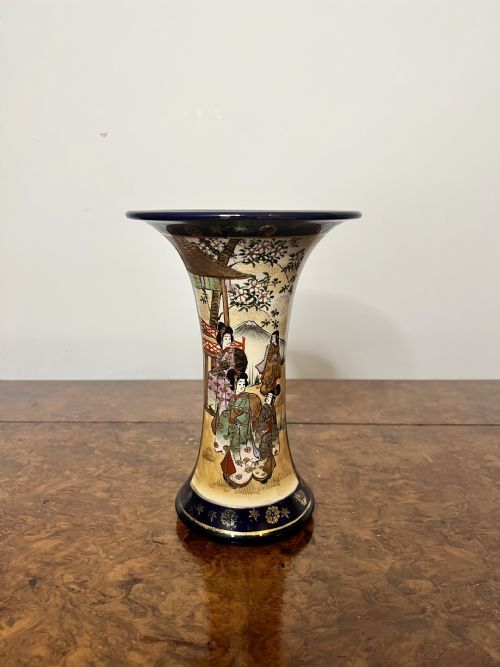
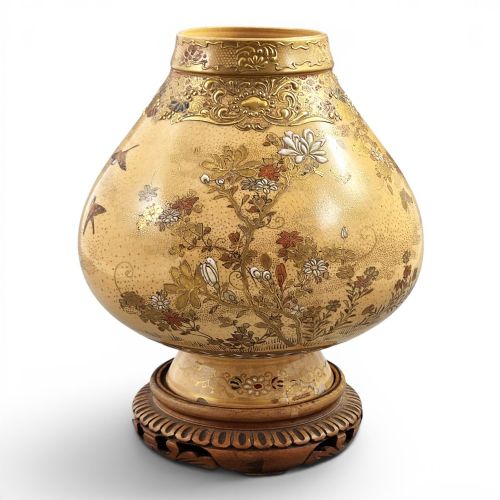
A gilded Japanese earthenware vase combines traditional regional pottery forms with elaborate surface decoration, frequently taking the shape of Satsuma ware. These items emerge predominantly from the 19th century and the Meiji period, alongside later examples from the Edwardian and early twentieth-century eras. Common vessel forms include tall display vases, lidded ginger jars, hexagonal shapes, and bottle vases.
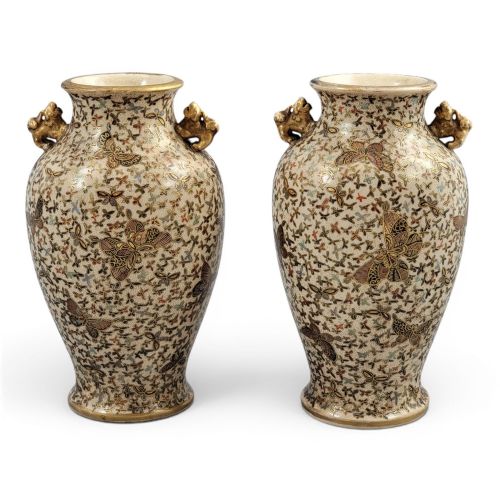
Most pieces encountered on this page belong to the Satsuma tradition, originating from Kyoto and other pottery centres. Makers decorated these earthen bodies with detailed scenes depicting court figures, landscapes, thousand butterflies, and religious figures such as Rakan and Arhats. Buyers find both individual vessels and matched pairs designed for mantelpieces and large display tables.
How they were made
Potters shaped fine earthenware bodies, which were then fired before receiving complex surface decoration utilising enamel paints and gold leaf or gilt. Artisans applied raised enamel work, known as moriage, to create tactile textures across robes, borders, and floral motifs.
Painters used fine brushes to render microscopic figures and intricate geometric backgrounds, sealing the colours with glossy glazes before adding heavy gold highlights. Workshops often signed these vessels with artist marks or family crests, such as the Shimazu mon, painted directly onto the base.
Several Meiji period vases pack over a thousand individually painted arhats and butterflies onto a single ceramic surface.
What varies in quality
Quality rests upon the precision of the hand-painted brushwork and the density of the gilding applied across the earthenware surface. Superior examples display exceptionally crisp court scenes, complex moriage relief work, and well-known workshop signatures such as Kinkōzan or Hododa.
The scale of the vessel and the preservation of the delicate enamel and gold leaf also divide standard production pieces from exhibition-quality works. Heavier gilding and balanced composition across large or monumental forms indicate advanced craftsmanship from major Kyoto kilns.
Shozan·Kinkōzan·Kinzan·Hotoda·Chosei·Shuzan·Seiko-en Chokei·Yamashu·Tagawa·Hayakawa
The Gilded Japanese Earthenware Vase Glossary
- Satsuma ware
- Earthenware pottery originating from Satsuma province and later produced extensively in Kyoto, characterised by a crackle-glaze finish and elaborate polychrome and gilt decoration. Collectors prize these pieces for their detailed narrative panels depicting historical and mythical figures.
- Moriage
- A decorative ceramic technique using piped clay or thick enamel to build up raised surface patterns and textures. This method creates a tangible, three-dimensional effect beneath the gilding on robes and floral borders.
- Meiji Period
- The era of Japanese history spanning from 1868 to 1912, marked by significant artistic production directed at Western export markets. Pieces from this time demonstrate extraordinary technical precision in painting and gilding.
- Shimazu mon
- The heraldic badge or crest of the Satsuma clan, typically featuring a cross within a circle. Finding this mark on a piece indicates a direct connection to the ruling lords of the region.
- Garlic head vase
- A ceramic vessel featuring a bulbous body and a neck that swells near the top before flaring at the rim, resembling a bulb of garlic. This specific silhouette appears frequently among larger export vases.
Gilded Japanese Earthenware Vase: Frequently Asked Questions
What is Satsuma ware?
Satsuma ware is a specific type of Japanese earthenware featuring a distinct cream-coloured crackle glaze. Artisans decorated these surfaces with detailed hand-painted scenes and heavy gold leaf.
Originally produced for regional use, production shifted during the Meiji period toward elaborate decorative items made for international export.
Where were these vases made?
While the style originated in the Satsuma province of Kyushu, many of the finest pieces on this page were produced in Kyoto workshops. Major studios employed skilled painters who specialised in intricate figures and landscapes.
Kyoto became a central hub for export ceramics during the late nineteenth century.
How should I display a large vase?
Large vases and matched pairs require stable placement on sturdy side tables, mantelpieces, or dedicated pedestals. Because many pieces are heavy earthenware with delicate surface gilding, placing them away from high-traffic walkways prevents accidental knocks.
Positioning them near natural light helps reveal the microscopic detail in the enamel work.
How do I identify a workshop signature?
Workshop and artist signatures appear as handwritten Japanese characters in gold or black pigment on the unglazed base of the vessel. Names such as Kinkozan or Hododa often accompany specific family crests or exhibition stamps.
Translating these marks requires checking against established records of Meiji period ceramic artists.