
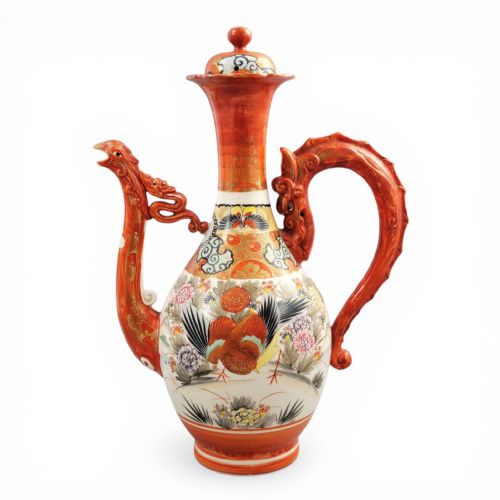


Gilded Handle Ceramic Vase
A gilded handle ceramic vase brings metallic lustre and painterly detail to the nineteenth-century interior, pairing porcelain or earthenware with applied metallic enrichments.
Gilded Handle Ceramic Vase
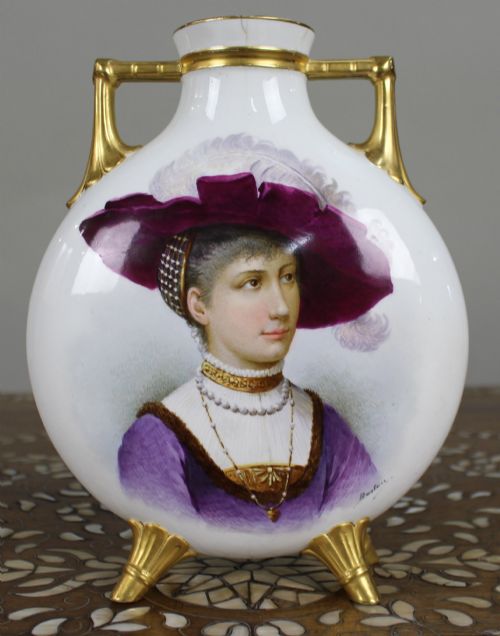
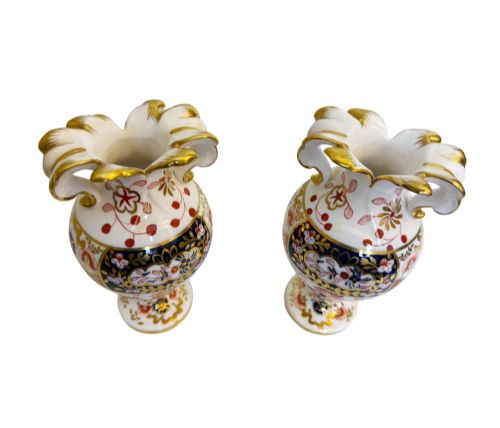
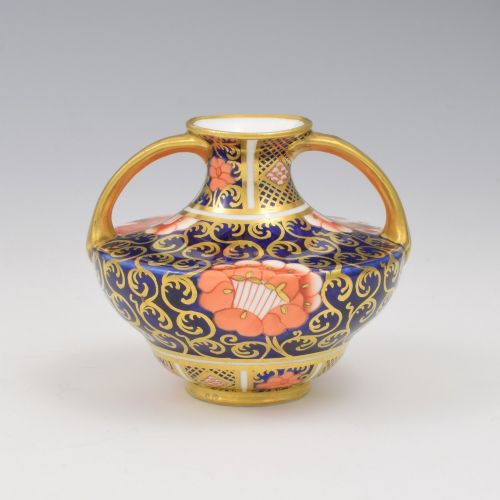
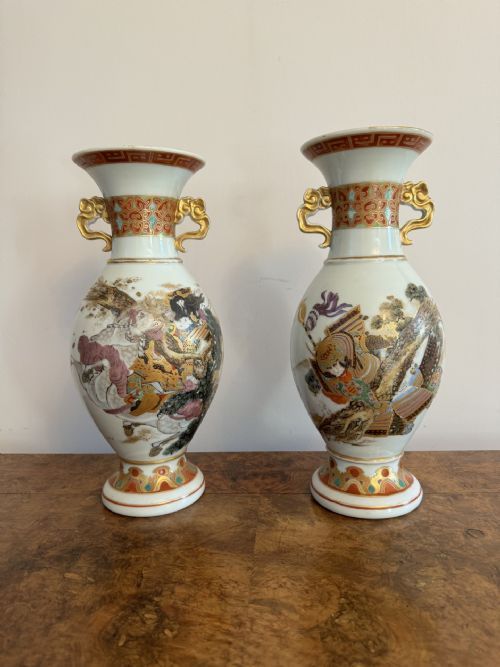
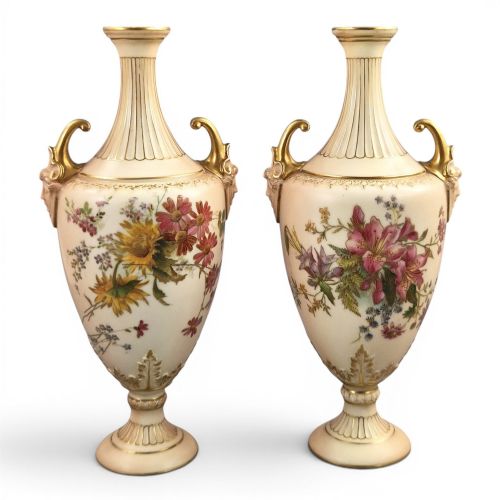
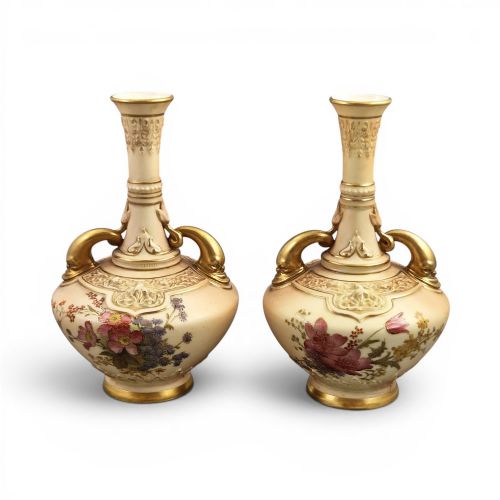
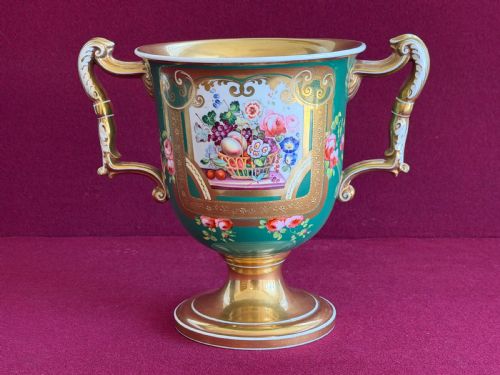
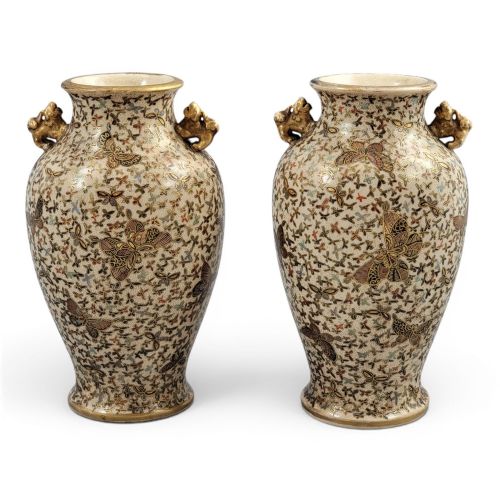
A gilded handle ceramic vase combines traditional pottery forms with metallic embellishment, ranging from nineteenth-century English porcelain urns to Japanese Satsuma and Kutani vessels. These items function primarily as decorative centrepieces, featuring twin handles shaped as dolphins, elephants, or lions alongside painted floral or figural scenes.
The pieces appearing on this page span the Victorian, Edwardian, and Meiji periods, encompassing European factories such as Royal Worcester, Spode, and Minton alongside East Asian imports. Buyers encounter moon flasks, twin-handled vases, and lidded urns that demonstrate the late-nineteenth-century taste for elaborate gilding and hand-painted motifs.
How they were made
Makers shaped these vessels from porcelain, bone china, earthenware, and ironstone, often building complex forms with applied twin handles. Potters utilised moulding and throwing techniques before applying white glazes, blush ivory grounds, or coloured enamels.
Artisans executed surface decoration through hand-painting, transfer printing, and pâte-sur-pâte, followed by the application of gold leaf, gilt, or gilding to highlights, rims, and handles. Firing processes fixed these metallic elements onto the ceramic body to achieve a durable, lustrous finish.
What varies in quality
The standard of a gilded handle ceramic vase rests upon the crispness of the modelled handles and the skill evident in the hand-painted details. Works featuring named artists or established manufactories display superior control over the polychrome enamels and the precision of the gilding.
Proportion and execution distinguish standard production wares from exhibition-grade pieces. Finer examples maintain balanced forms where the metallic highlights complement rather than overwhelm the underlying ceramic body.
Spode·Royal Crown Derby·Royal Worcester·H & R Daniel·Minton·Royal Doulton·William Moorcroft·Hadley's Worcester·Grainger's Worcester·Coalport
The Gilded Handle Ceramic Vase Glossary
- Gilding
- The application of gold leaf or powdered gold to ceramic surfaces and handles. This technique adds reflective metallic highlights to the finished vessel.
- Blush ivory
- A soft, creamy ceramic ground developed by manufactories like Royal Worcester to mimic the tone of unglazed ivory. It typically serves as a backdrop for delicate hand-painted floral motifs.
- Moon flask
- A flattened circular vase featuring a short neck and two loop handles connecting the neck to the body. This shape draws inspiration from traditional pilgrim flasks.
- Pâte-sur-pâte
- A method of porcelain decoration where layers of liquid clay are built up to create a low-relief cameo effect before firing. The resulting design stands out in subtle contrast against a coloured background.
- Moriage
- A Japanese ceramic technique using slip trailing to create raised dots and decorative patterns. This method produces a heavily textured surface often seen on Satsuma wares.
Gilded Handle Ceramic Vase: Frequently Asked Questions
How were antique ceramic vases with gilded handles used originally?
These vessels served primarily as decorative items for drawing rooms, mantelpieces, and cabinet displays during the nineteenth century. Wealthy households utilised them to showcase artistic taste, often placing pairs of urns or twin-handled vases on pedestals.
Certain forms, such as potpourri jars and cachepots, combined aesthetic display with the practical function of holding dried scented petals or live plants. Their robust porcelain and earthenware construction meant they remained purely ornamental rather than functional tableware.
How can I tell the difference between English and Japanese nineteenth-century vases?
English pieces from this era typically exhibit neoclassical or botanical designs influenced by European manufactories, utilising refined porcelain bodies with blush ivory or cobalt grounds. Signatures, when present, point to specific domestic artists or factory pattern numbers.
Japanese Satsuma and Kutani wares display distinctive crackle-glaze earthenware or dense porcelain decorated with intricate figural scenes, butterflies, and raised moriage work. Their motifs reflect Eastern artistic traditions, and signatures frequently name individual studio artists or specific periods.
How do I care for a ceramic vase with delicate gilding?
Cleaning requires only a soft, dry feather duster or a gentle microfibre cloth to remove surface dust without disturbing the metallic leaf. Moisture and chemical cleaning agents must be avoided entirely, as they can lift or tarnish fragile gilt highlights.
Placement should be away from direct sunlight and areas of heavy vibration to protect the painted enamel and the structural integrity of the applied handles.