


Gilded Frame Animal Art
Gilded frame animal art captures the nineteenth and early twentieth-century fascination with domestic and farmyard creatures, presented in ornate metallic surrounds.
Gilded Frame Animal Art
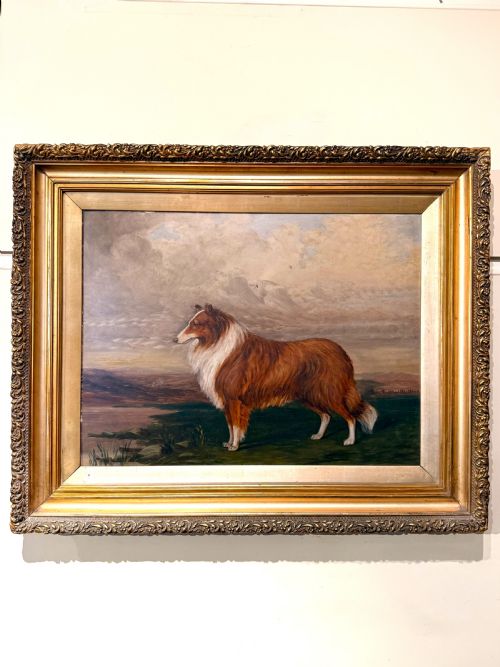
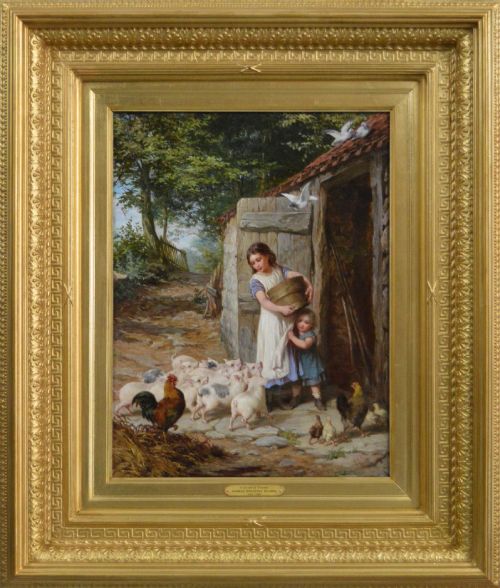
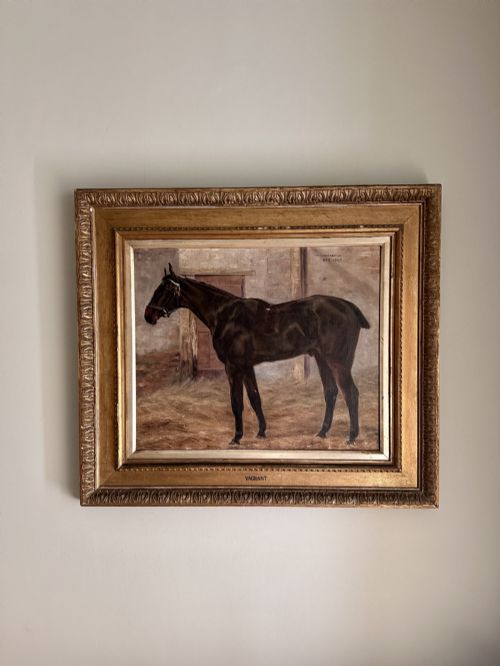
Gilded frame animal art encompasses oil paintings, etchings and framed prints produced primarily across the nineteenth and early twentieth centuries. These works record farmyard livestock, working dogs, kittens and wildlife within decorative wooden housings finished in gold leaf or gesso. Victorian and Edwardian portrayals dominate the selection, showing subjects ranging from solitary equine portraits to bustling agricultural scenes.
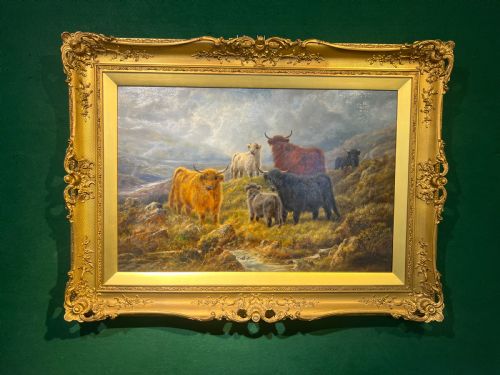
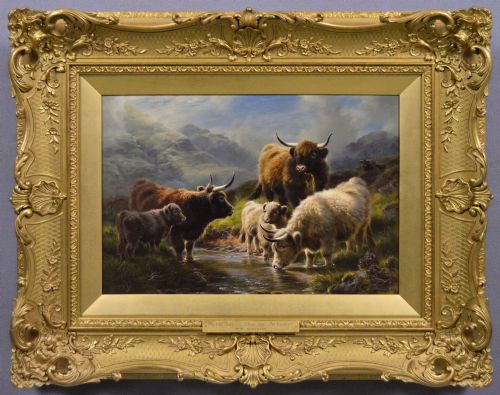
The physical presentation relies on heavy, reflective borders designed to catch domestic candlelight and daylight. Such pieces emerge from various British and European traditions, including realist sporting art and pastoral genre painting. Buyers encounter everything from small cabinet panels of terrier studies to large canvas depictions of highland cattle beside lochs.
How they were made
Makers built the support structures using wooden panels or stretched canvas, applying oil paint with fine brushes to render fur, feathers and landscape backgrounds. Etchings on paper also appear, offering linear precision through inked metal plates. Artists layered pigments to achieve tonal depth in animal coats and natural light.
The surrounding mouldings rely on carved wood or moulded gesso coated in gold leaf and gilt finishes. Artisans applied thin layers of metal leaf over prepared grounds, sometimes burnishing specific areas to create contrast against matte sections of the frame.
Gilded Frame Animal Art Retail Price Guide 2026
Typical asking prices for gilded frame animal art among the pieces listed under this phrase on Sellingantiques today, from the lower quarter to the upper quarter. They describe what is for sale here now, not the wider market.
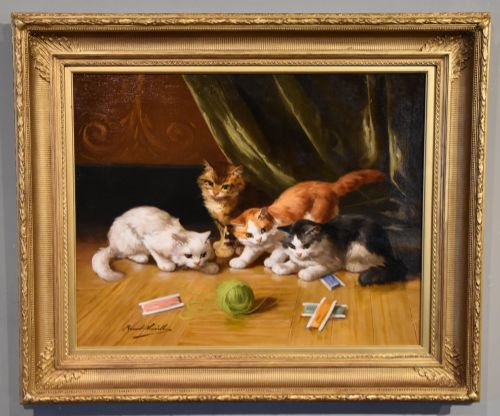
Several canvases capture mischievous kittens caught mid-play and terriers standing guard over a trapped rat.
What varies in quality
Quality rests in the anatomical accuracy of the subject and the hand of the artist, distinguishing skilled observation from formulaic studio production. Works by named painters exhibit nuanced handling of light on animal fur and convincing spatial depth in the landscape background. Lesser examples display rigid postures and repetitive composition.
The execution of the surrounding housing also dictates overall merit, separating hand-carved, gilded wooden mouldings from later or simpler replacements. Original frames show integrated wear that matches the age of the canvas, whereas mismatched combinations alter the visual balance of the artwork.
George Augustus Holmes·Fred Fitzpatrick·William Watson Jnr·Alfred Arthur Brunel de Neuville·Henry Schouten·Margaret Maitland Howard·Henry Robinson Hall·Herbert Dicksee·Franz van Severdonck·George Lance·John Frederick Herring Jnr·Sir Edwin Landseer·Agnes Augusta Talboys·Claude Cardon·Eugene Verboeckhoven·Constant Ludovic Artz·Edgar Hunt·J L Van Leemputten·Henry Cheadle·Francisco Jose Domingo y Marques·Charles Bilger Spalding·Benedict Angell Hyland·William Sidney Cooper·Louis Marie Dominique Robbe·Thomas Sidney Cooper
The Gilded Frame Animal Art Glossary
- Gesso
- A plaster-like mixture applied to wooden frames as a smooth base before gilding. It allows artisans to carve or mould intricate decorative details.
- Giltwood
- Timber that has been coated with gold leaf or a gold-coloured finish. This material provides the primary reflective border for nineteenth-century oil paintings.
- Genre painting
- Artwork depicting scenes from everyday life, often featuring domestic animals, farmyard poultry and human figures in cottages. These pieces capture the social and domestic habits of the period.
- Etching
- A printmaking technique where an artist uses acid to cut lines into a metal plate, which is then inked and pressed onto paper. This method produces fine, linear detail.
- Provenance
- The documented history of ownership of an artwork, tracing its path from the original gallery or estate to the present day. Such records establish the authenticity of listed pieces.
Gilded Frame Animal Art: Frequently Asked Questions
What subjects appear in gilded frame animal art?
These works display a wide variety of creatures, including highland cattle, farmyard chickens, working dogs, horses and playful kittens. Artists captured both domestic pets and agricultural animals within pastoral or interior settings.
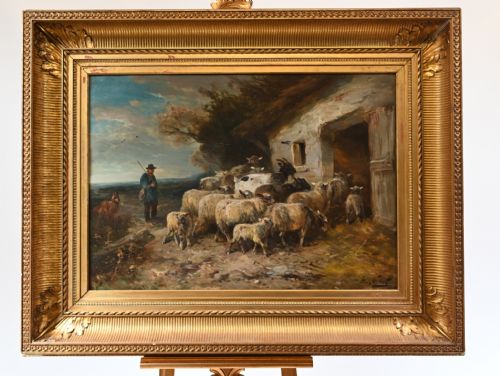
Many pieces reflect Victorian rural life, pairing the animals with figures in cottages, river banks or open landscapes. The selection ranges from solitary portraits of hounds to complex multi-species farmyard groupings.
How do I date a framed animal painting?
Dating relies on stylistic clues within the brushwork, the clothing of any figures present, and the construction methods of the canvas and stretcher. Victorian and Edwardian works often carry distinct realism techniques and subject preferences.
The frame itself offers further chronological markers, as moulding profiles and gilding styles shifted between the mid-nineteenth century and the 1930s. Signatures, dates inscribed on the canvas, and historical labels on the reverse provide definitive periods.
Where should I hang these artworks at home?
These pieces suit traditional study walls, living rooms or hallways where the warm tones of the gold leaf can interact with natural light. Smaller cabinet panels fit narrower wall spaces, while large equine or cattle portraits anchor a main room.
Protection from direct sunlight and damp environments preserves both the oil paint and the gilded wooden frame. Positioning them away from direct heat sources prevents the gesso from cracking.
Are the frames original to the paintings?
Many listings retain their period frames, showing matching wear patterns between the canvas and the gilded wood. The finish on the frame often ages in tandem with the varnish on the oil painting.
Some pieces have been reframed over the decades to suit changing interior tastes. Examining the rabbet and the fit of the stretcher helps determine whether the pairing is contemporary to the creation of the artwork.