



Rural Landscape Watercolour
When you search for a rural landscape watercolour, you are looking at original paintings capturing British countryside life from the Victorian and Edwardian eras.
Rural Landscape Watercolour
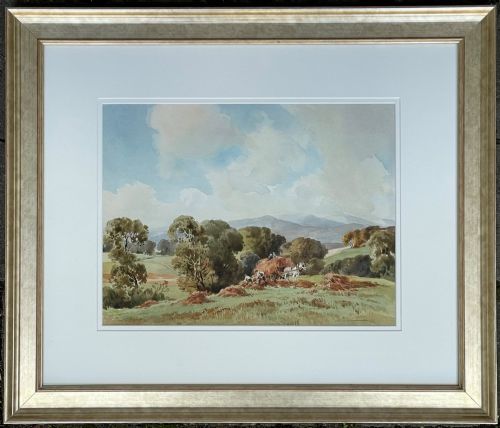
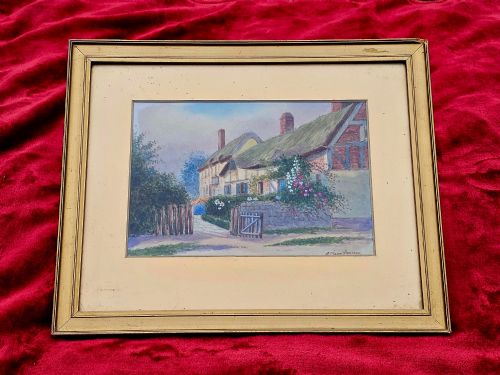
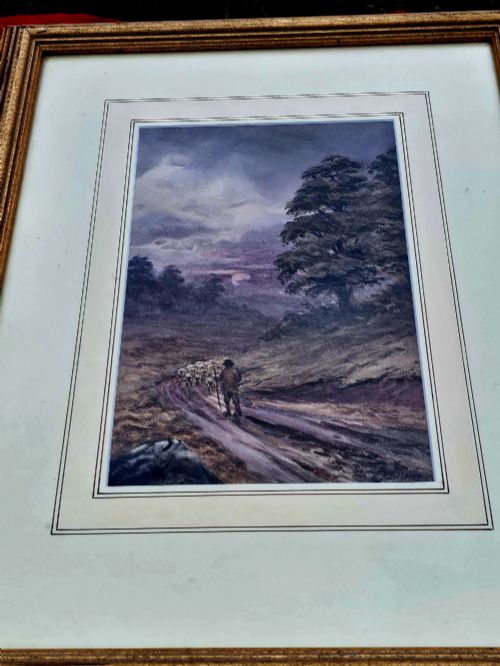
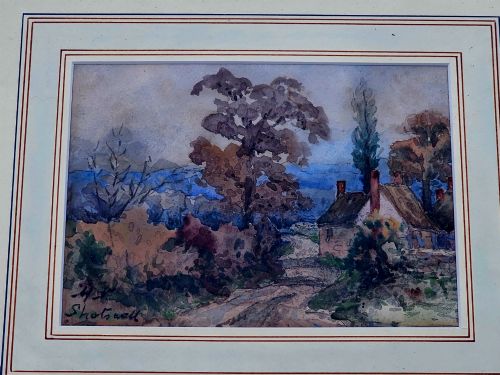
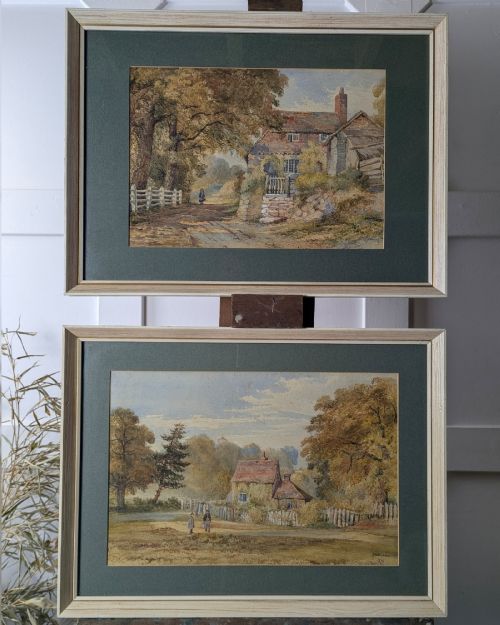
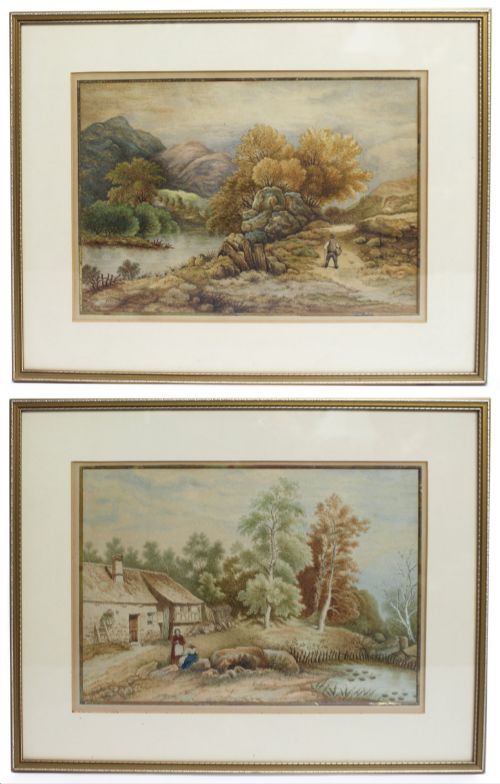
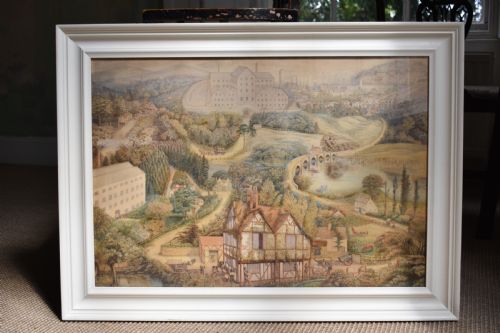
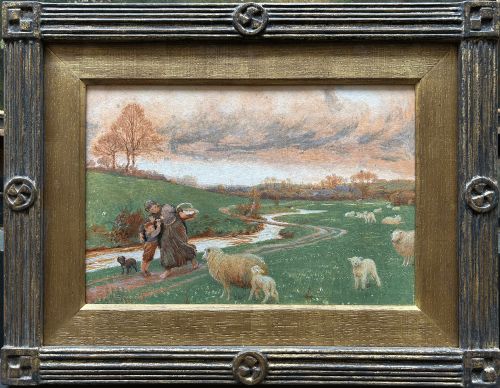
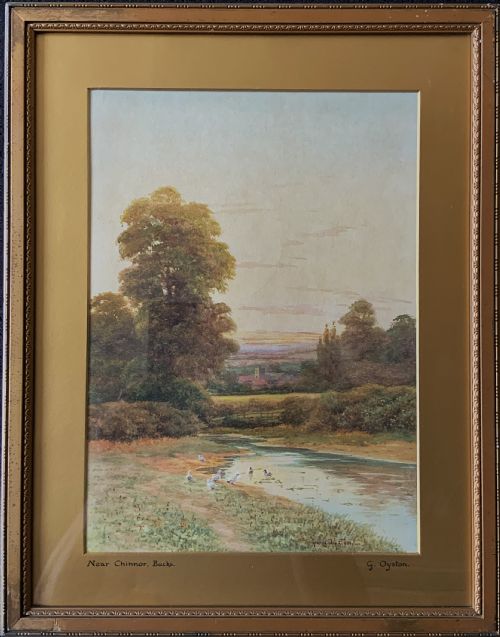
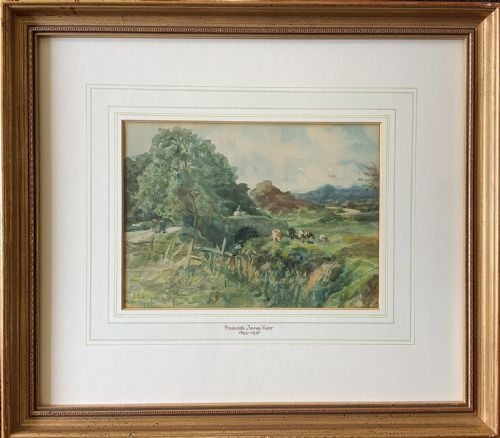
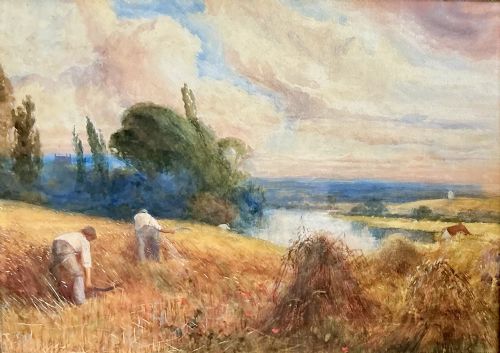
A rural landscape watercolour typically portrays agrarian scenes, farmyards, harvest fields, and quiet country lanes across Britain. These works record pastoral life, featuring figures herding sheep, hauling hay carts, or working near rivers and cottages.
The pieces available span from the nineteenth century into the early twentieth century, encompassing Victorian and Edwardian pastoral styles as well as British Impressionism. Most examples on this page are framed original paintings executed on paper.
Collectors encounter named artists alongside unsigned works attributed to regional British schools. The subjects range from Yorkshire dales and Norfolk countryside to Dorset lanes and Welsh villages.
Materials and technique
Artists painted these scenes using watercolour pigment and water-soluble paint applied to absorbent paper sheets. This medium allowed painters to capture transient effects of light, weather, and atmosphere across open fields.
Many surviving works retain their period framing, utilising wood, gilt wood, and glass to protect the delicate painted surface. Some pieces incorporate subtle touches of bodycolour or pencil underdrawing to define architectural details and figures.
Several Victorian paintings carefully record ducks, geese, and nesting birds supervising the daily chores of rural farm life.
Distinctions in quality
Quality rests upon the artist's ability to handle light, atmosphere, and spatial depth within a translucent medium. Stronger works display confident brushwork and a balanced composition that brings vitality to everyday agricultural labour.
The handling of pigment density and the preservation of the paper support further differentiate the examples. Superior paintings maintain vibrant tonal ranges without excessive fading from past exposure to light.
Percy Lancaster·A. Marie Parsons·John McDougal·George Oyston·Frederick James Kerr·Herman S Melville·Frederick Hines·Edgar Woollatt·Oswald Garside·Henry Charles Fox·Fred Lawson·James William Booth·Ernest Pile Bucknall·James Orrock·James Hardy Junior·John Atkinson·Colin H Greenwood·Henry Bailey·Linnie Watt·Robert Winchester Fraser·George Soper·William Joseph Boyes·John Edward Bale·William Stephen Coleman·Horace Augustus Mummery
The Rural Landscape Watercolour Glossary
- Watercolour
- A painting method where natural pigments are suspended in a water-based solution and applied to paper. It relies on the white of the paper showing through translucent washes of colour.
- Gilt wood
- Wood carved and coated with a thin layer of gold leaf or metallic gilt paint. It is commonly found on period frames enclosing nineteenth-century art.
- Pastoral
- A genre of art depicting rural life, shepherds, and agricultural landscapes in an idealized or picturesque manner. These scenes focus on harmony between inhabitants and the countryside.
- Bodycolour
- Watercolour paint mixed with a white pigment to make it opaque rather than transparent. Artists utilised this technique to add highlights to clouds, water, or clothing.
Rural Landscape Watercolour: Frequently Asked Questions
How should I hang a watercolour painting?
Watercolours are sensitive to direct sunlight, which can cause the pigments to fade over time. Position your framed artwork on an interior wall away from strong, direct illumination.
Ensure the room maintains stable humidity levels to protect both the historic paper and the wooden frame from moisture damage.
What subjects appear in these paintings?
The compositions focus primarily on the British countryside, capturing haymaking, livestock herding, and rural cottages. Artists frequently recorded local agricultural workers and seasonal farm labour across various English and Welsh counties.
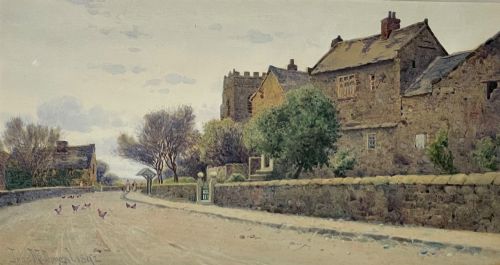
Scenes range from quiet riverbanks and snowy dales to busy village streets and pastoral valleys.
How do I identify the period of a watercolour?
Dating often relies on artist signatures, framing styles, and costume details worn by the figures depicted. Nineteenth-century works frequently feature heavier Victorian gilt frames and more formal compositional structures.
Later pieces from the early twentieth century often show looser brushwork influenced by British Impressionism and changing landscape traditions.
Are these paintings original works?
The listings consist entirely of original hand-painted watercolours rather than modern reproductions or prints. Each piece is a unique creation executed directly on paper by the artist's hand.
Signatures, monograms, or historical framing often provide additional verification of their origin.