


Agricultural Scene Painting
An agricultural scene painting captures rural labour, livestock and harvesting traditions across the nineteenth and twentieth centuries.
Agricultural Scene Painting
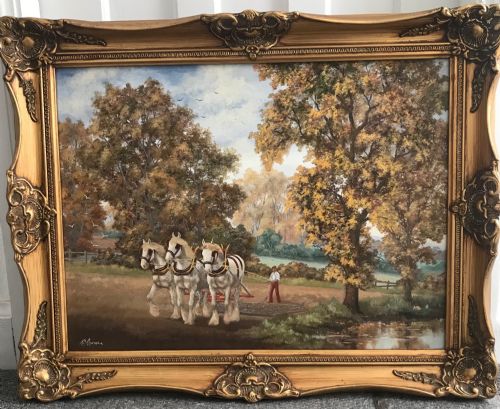
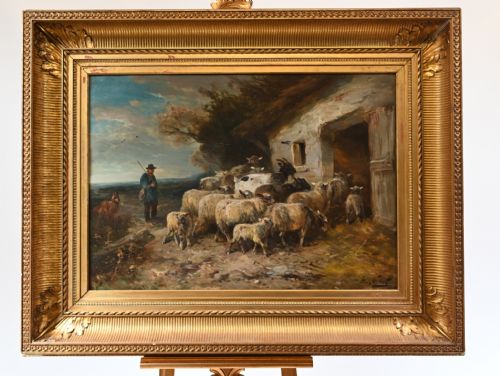
An agricultural scene painting depicts rural life, focusing on farmworkers, ploughing teams, haymaking and livestock in fields and farmyards. These works capture the rhythms of the countryside during the Victorian, Edwardian and later periods.
Buyers encountering this search phrase will regularly find traditional country watercolours and framed oil paintings on canvas depicting horses, cattle, and harvest fields. The compositions range from detailed nineteenth-century realism to early twentieth-century British impressionist landscapes.
How They Were Made
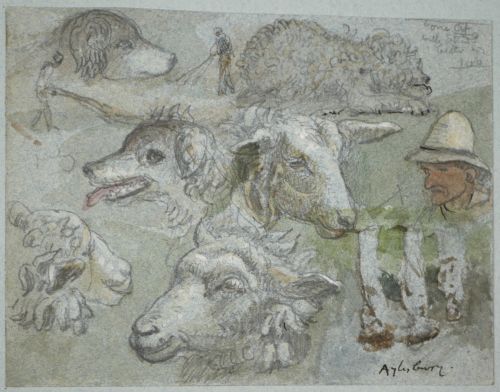
Artists executed these works primarily using oil paint on canvas or watercolour on paper, framed in wood or ebonised surrounds. The pigment application varies from smooth academic rendering to textured, impressionistic brushwork.
Preparation involved stretching canvas over wooden frames or mounting watercolour paper behind glass, often within period burr or moulded wooden frames that protect the fragile medium.
Several hardworking farm dogs make cameo appearances in the fields, keeping a watchful eye on the ploughmen and sheep.
What Varies in Quality
Quality rests upon the artist's handling of light, anatomical precision in depicting working horses and cattle, and compositional balance within the landscape. Superior examples demonstrate a confident mastery of atmosphere and movement, whereas lesser works remain stiff and formulaic.
The integration of human figures and animals into the surrounding pastoral environment dictates the artistic merit of each piece. Stronger paintings convey genuine depth and narrative weight through considered brushwork and tonal harmony.
James Smetham·Henry Schouten·Raimond Louis Lecourt·James Kyd·James William Booth·Henry Bailey·Percival Glenfern·John Atkinson·George Soper·Arthur Winter Shaw·Arthur Charles Dodd·Herbert Royle·Rowland Henry Hill·Joseph Kirkpatrick·Joseph Paulman·Frederick William Jackson·John Percy Cooke·Arthur Claude Strachan·Ernest Higgins Rigg·Walter Duncan·George Hamilton Constantine·George Cole·William Greaves·Owen Bowen·William Kay Blacklock
The Agricultural Scene Painting Glossary
- Oil painting
- A work created using pigments bound in a drying oil, typically applied to canvas or wood panels. This medium allows for rich colour blending and layered textures.
- Watercolour painting
- A method where water-soluble pigments are applied to paper, producing luminous and translucent effects. It requires a swift and decisive hand.
- Canvas
- A heavy woven fabric stretched across a wooden frame to serve as a durable support for oil paint. It provides a flexible surface with a distinct textile grain.
- Ebonised frame
- A wooden picture frame treated with a dark finish to imitate ebony wood. This traditional framing technique highlights the tones within pastoral artworks.
Agricultural Scene Painting: Frequently Asked Questions
What subjects appear in these paintings?
The works depict traditional rural activities including ploughing teams, haymaking, milking time, and livestock resting in barns or pastures. Farmers and farmhands feature prominently alongside working horses and cattle.
These depictions reflect historical agricultural practices across British and European landscapes during the nineteenth and twentieth centuries.
How should I frame and display them?
Most pieces retain their original wooden, ebonised or burr frames, which complement the traditional pastoral subject matter. Hang them away from direct sunlight to protect watercolours on paper and oil pigments on canvas.
Ensure wall fixings securely support the weight of larger framed canvas works and glazed watercolours.
How do I identify the period of a painting?
Dating relies on stylistic clues, clothing styles of the farmworkers, framing materials, and artist signatures documented in historical records. Victorian and Edwardian works often exhibit specific academic or early impressionist techniques.
Examine the reverse of the canvas or paper backing for period inscriptions, gallery labels, and artist notes.
What is the difference between oil and watercolour?
Oil paintings utilise pigment bound in oil on canvas or wood, offering a heavier texture and deep colour saturation. Watercolours apply translucent pigment onto paper behind glass, creating lighter, more luminous effects.
Both mediums were widely used to record rural life but require different conservation environments.