




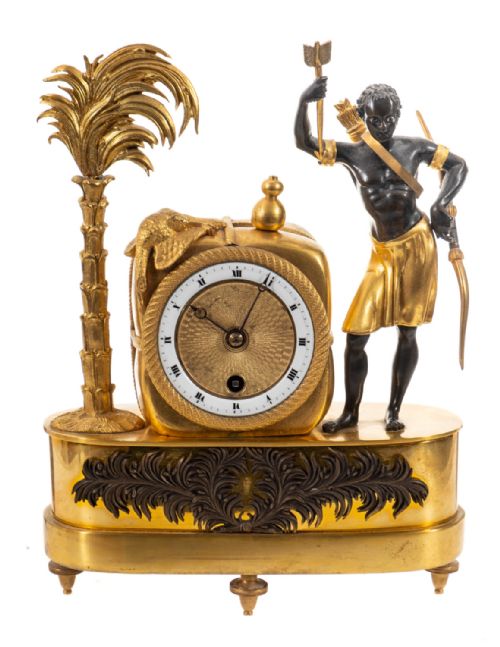


Gilded Figural Clock
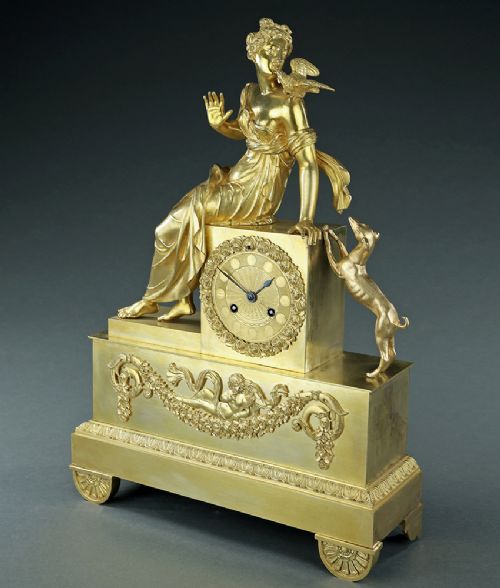
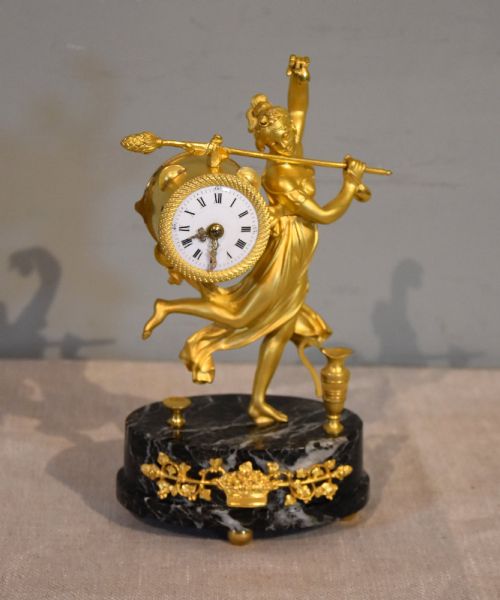
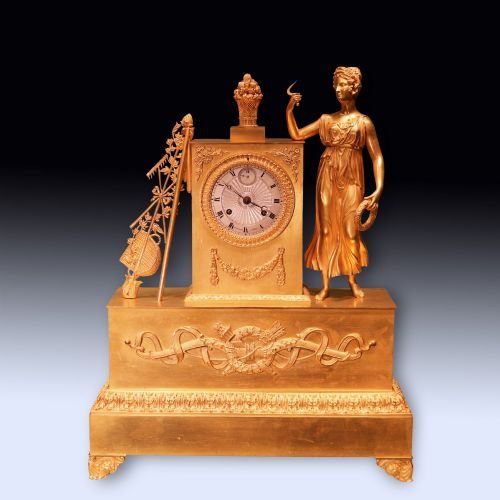
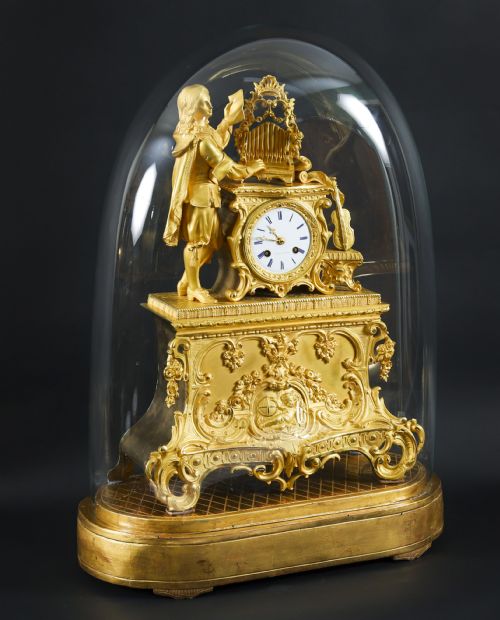
A gilded figural clock brings mythological figures, cherubs and classical deities into domestic rooms through cast metalwork and dial movements.
Gilded Figural Clock
A gilded figural clock combines timekeeping with sculptural subjects ranging from classical deities such as Diana to allegorical figures representing love and fidelity. These domestic timepieces sit on mantelpieces and tables, framed by stylistic influences from the French Empire, Regency and Rococo Revival periods.
The most common examples on this page are French mantel clocks dating across the nineteenth century, often pairing cast bronze and ormolu with contrasting elements of white marble or green marble. Many incorporate specific figural motifs, including cherubs, lions, goats or human representations modelled in the Turkish taste.
Makers and makers' marks frequently appear on the movements or dials, pointing to Parisian workshops and London clockmakers working in the Regency and Victorian eras. These objects range from compact table pieces to large garnitures accompanied by matching side ornaments.
Materials and construction
Makers constructed the primary bodies of these timepieces using cast bronze, gilt metal and ormolu, applying mercury gilding or electroplating to achieve a bright golden surface. Patinated bronze often provides a contrasting dark tone for figural elements, while green and white marble supply solid plinths.
Movements rely on brass gear trains, driven either by pendulum mechanisms with bell striking or by fusee chain systems housed within the clock body. Dial faces incorporate white enamel with Roman or Arabic numerals, frequently protected behind curved glass bezels.
A gilt bronze figure of chastity points firmly toward a font of holy water while the clock keeps time.
Assessing quality and execution
The integration of the movement with the sculptural case also separates standard production from superior work. Makers who signed their movements, such as Japy Freres or Deniere et Fils, generally produced balanced assemblies where the clock dial, case and figural components form a unified artistic composition.
Canaillor of Paris·Japy Freres·Leroy Paris·Deniere Et Fils·Baetens London·Bently and Beck London·Freres Raingo·P.H. Mourey·Gillion
The Gilded Figural Clock Glossary
- Ormolu
- Finely ground high-carat gold applied to a bronze base using a mercury amalgamation technique. This historic process creates a durable, warm metallic lustre characteristic of nineteenth-century French metalwork.
- Garniture
- A set comprising a central clock flanked by matching ornamental pieces such as vases or candelabra. These matched groupings were designed to sit symmetrically on a mantelpiece.
- Fusee
- A conical pulley used in clock movements to maintain an equal pull on the gear train as the mainspring unwinds. This mechanism improves timekeeping accuracy.
- Enamel
- A glassy substance fused to a copper or metal dial face through high-temperature firing. Enamel dials provide a smooth, white background for painted numerals.
Gilded Figural Clock: Frequently Asked Questions
What periods do these clocks come from?
The pieces span the nineteenth century, with examples originating from the Regency era, the French Empire period and later Victorian decades.
Stylistic markers help identify the date, including Neoclassical motifs from earlier decades and more ornate Rococo Revival designs from the later nineteenth century.
How do fusee movements work?
A fusee movement uses a conical drum and a chain to regulate the power delivered from the mainspring to the clock gears.
This system ensures that the force remains constant as the spring unwinds, resulting in more accurate timekeeping.
What materials make up the cases?
Cases are built from cast metals including ormolu, gilt bronze, patinated bronze and gilt metal.
Many designs incorporate architectural bases made from white or green marble, sometimes complemented by glass domes.
Where were these clocks made?
The majority of the pieces originate from Parisian workshops and factories, reflecting French stylistic tastes in bronze work and horology.
A smaller number of pieces feature movements and signatures from London makers operating during the Regency period.