


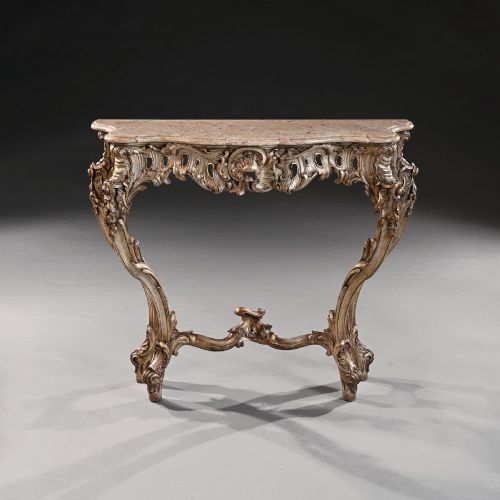
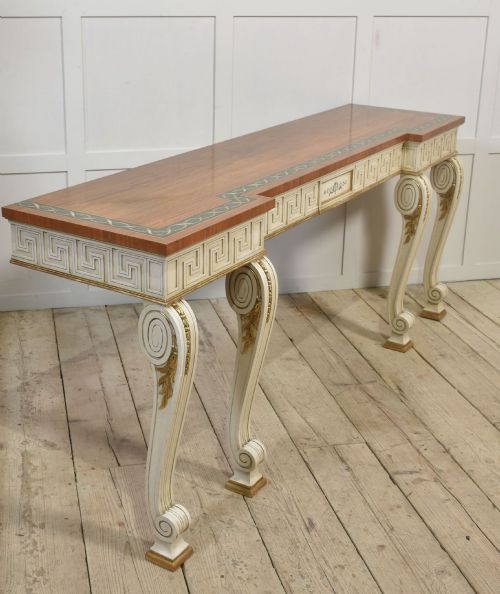
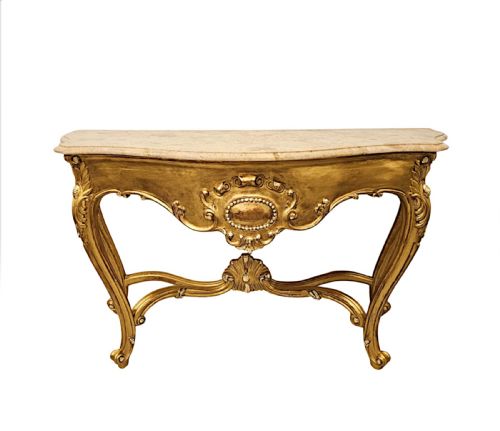
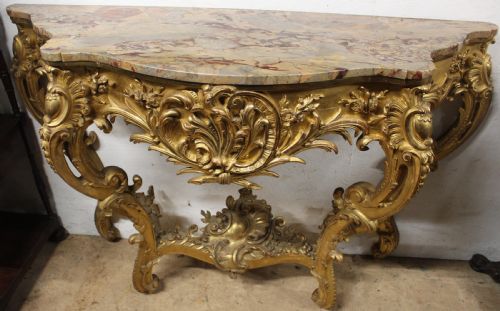
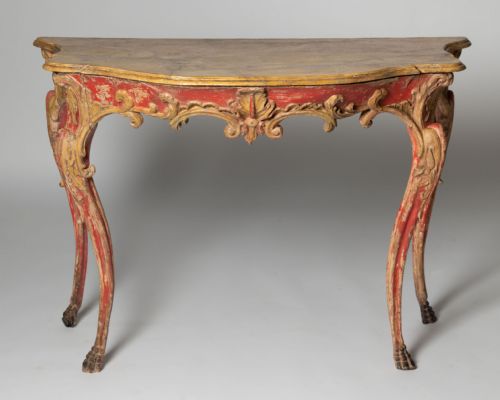


Gilded Entry Table
A gilded entry table brings sculptural presence to a hallway, offering a decorative surface shaped by historic European craftsmanship.
Gilded Entry Table
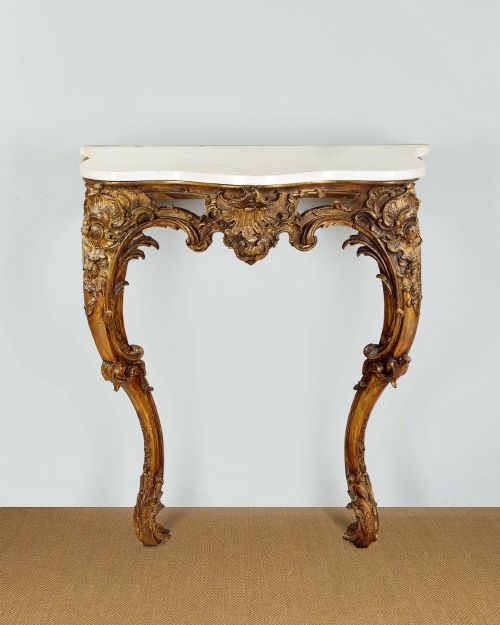
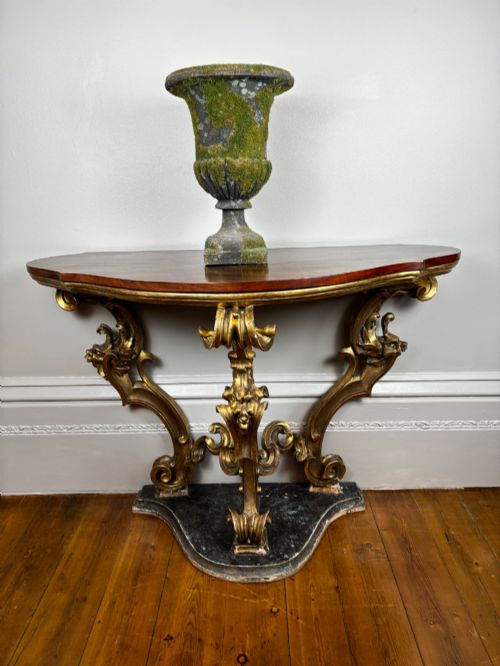
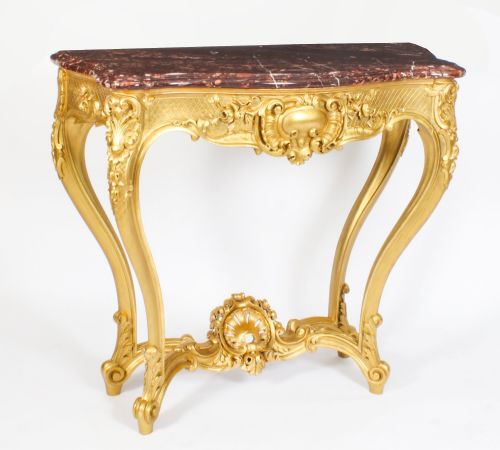
When you search for a gilded entry table, you encounter console tables and centre tables shaped across the eighteenth, nineteenth, and early twentieth centuries. These pieces predominantly originate from French and Italian workshops, reflecting classical and revival aesthetics.
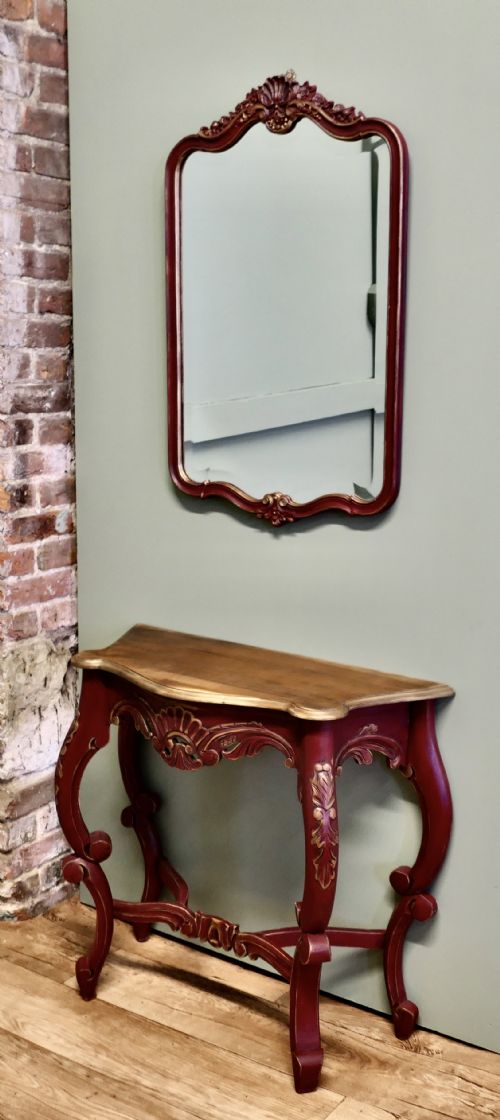
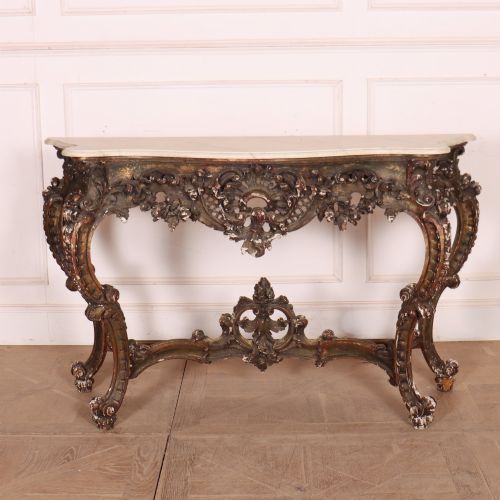
The console table is the form most frequently met on this page, often paired with matching mirrors or topped with shaped marble. They range from compact hall tables to large architectural consoles designed for grand interiors.
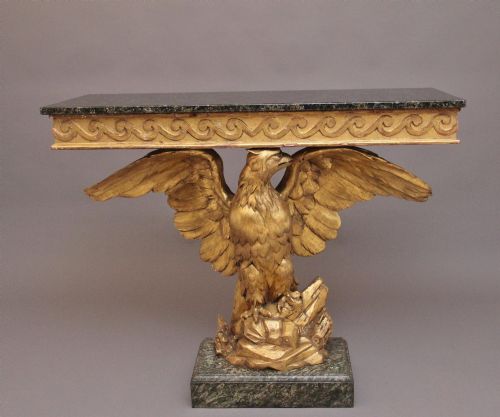
Examples span several distinct stylistic movements, including Rococo, Neoclassical, and Regency. Each period brings specific proportions and ornamentation to the form, from restrained classical lines to exuberant carved flourishes.
Materials and construction
The construction of these pieces relies on carved wood, giltwood, and gesso applied to a timber carcass, often finished with gold leaf or silver gilt. Artisans shaped the wooden frames by hand before applying layers of preparation to receive the gilding or paint.
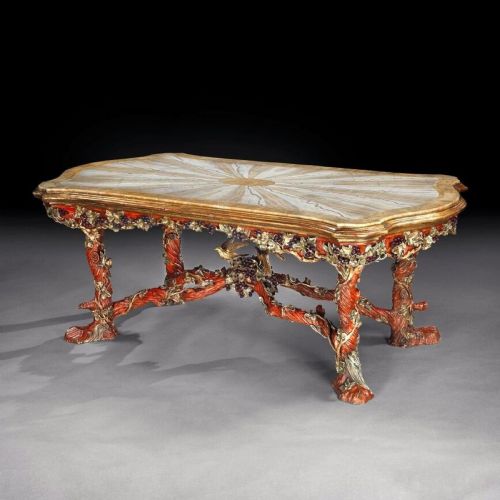
Heavy stone surfaces define a large portion of the selection, with marble and onyx forming the primary tabletops. These stone slabs rest upon the gilded bases, frequently featuring shaped edges and varied veining.
Gilded Entry Table Retail Price Guide 2026
Typical asking prices for gilded entry table among the pieces listed under this phrase on Sellingantiques today, from the lower quarter to the upper quarter. They describe what is for sale here now, not the wider market.
Listings combine eighteenth, nineteenth, and early twentieth-century eras, uniting French and Italian design traditions through giltwood, marble, and carved wood.
Judging the work
Depth and precision in the hand-carved wooden ornament separate standard pieces from exceptional examples. Finer tables display crisp undercut foliage, figures, or scrollwork rather than soft, moulded details.
The application of the gold leaf and the preservation of original polychrome or paint layers dictate the visual impact of the surface. Superior execution shows harmonious wear and meticulous preparation beneath the metallic leaf.
Amleto Bertoni
The Gilded Entry Table Glossary
- Giltwood
- Wood that has been coated with gold leaf over a prepared gesso ground. This technique creates a luminous metallic finish characteristic of formal antique furniture.
- Console table
- A table designed to stand against a wall, frequently secured with brackets or resting on frontal legs. They serve as decorative side pieces in hallways and reception rooms.
- Gesso
- A plaster-like mixture applied to wood to create a smooth surface for gilding or painting. It allows artisans to carve intricate relief details before applying gold leaf.
- Centre table
- A freestanding table intended to be viewed from all sides rather than placed against a wall. These pieces often feature finished backs and central placement in larger spaces.
- Serpentine front
- A furniture front curving inward in the centre and outward at the sides, or vice versa. This contour adds dynamic movement to the silhouette of a console.
Gilded Entry Table: Frequently Asked Questions
What is a gilded entry table used for?
These tables provide a decorative surface in a hallway or reception room for displaying decorative objects. Their narrow profiles allow them to sit flush against walls without obstructing pathways.
Historically, they served as formal architectural furniture to display wealth and artistic taste upon entering a home. Today, they function as striking focal points in modern or traditional entryways.
How do I style a marble top console?
Pair the reflective surface of the table with a matching wall mirror or hang artwork above it to anchor the composition. Keep items on the marble minimal to let the stone and carved gilding remain visible.
Avoid overloading the surface with small objects; instead, choose single sculptural pieces or balanced arrangements that complement the period style of the frame.
How can I tell a Rococo table from a Neoclassical one?
Rococo pieces display asymmetrical curves, C-scrolls, and exuberant naturalistic carvings of foliage and shell motifs. The overall movement is fluid and theatrical.
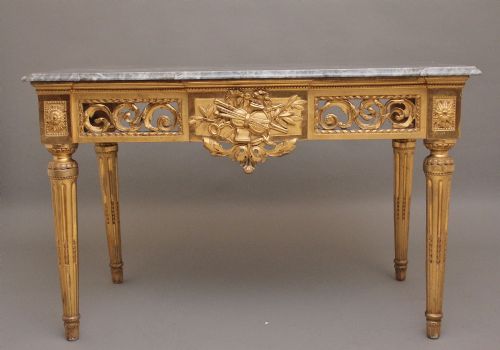
Neoclassical tables feature symmetrical geometries, straight tapered legs, fluting, and classical architectural details inspired by antiquity. The lines are controlled and balanced.