
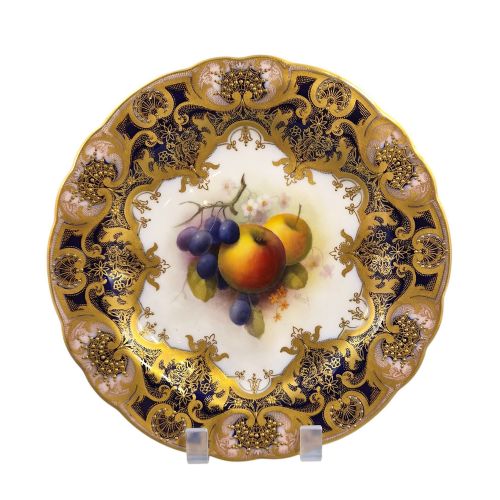
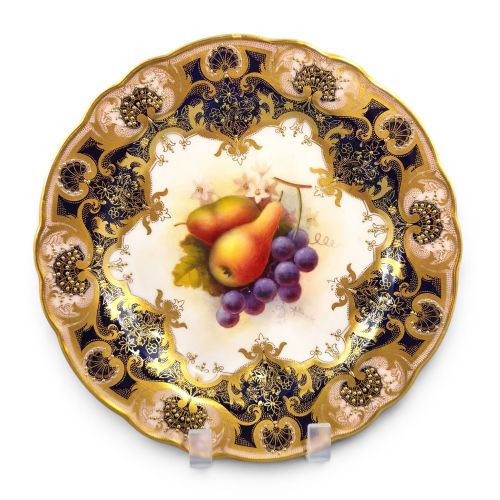
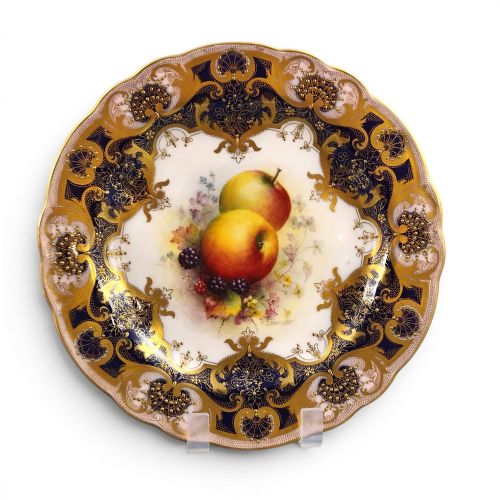
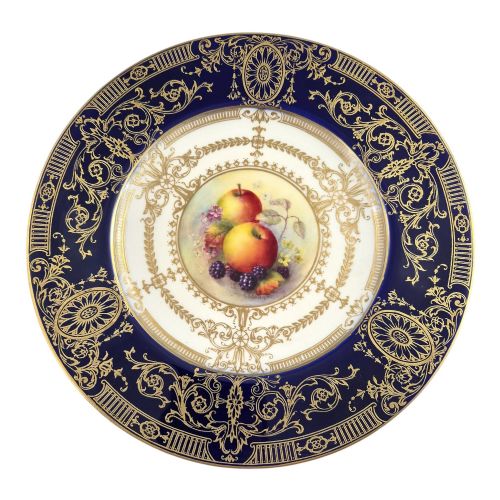


Gilded Cobalt Cabinet Dish
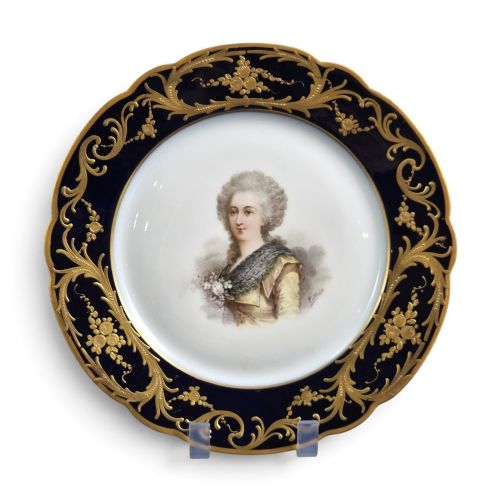
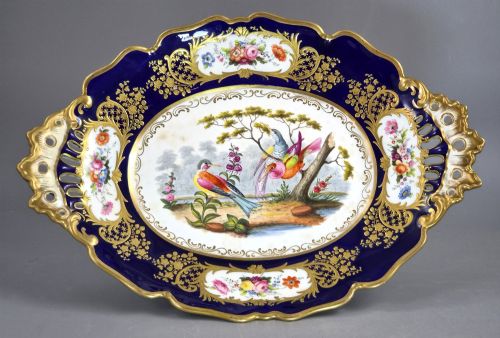
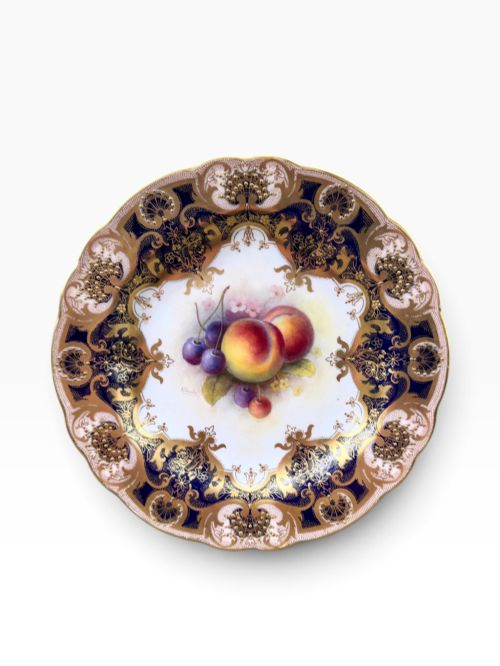
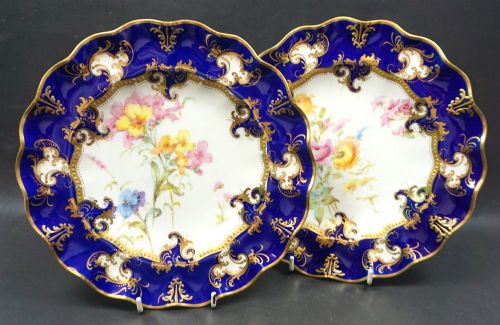
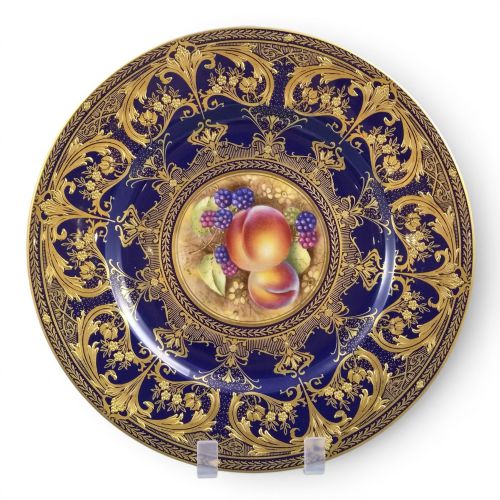
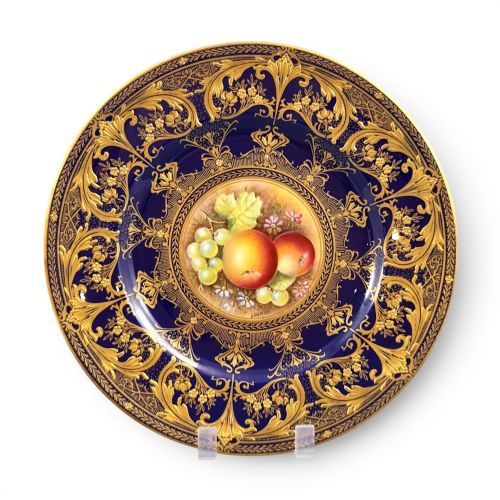
These gilded cobalt cabinet dishes combine deep blue glazes with intricate gold decoration, offering a striking centrepiece for a display cabinet or table.
Gilded Cobalt Cabinet Dish
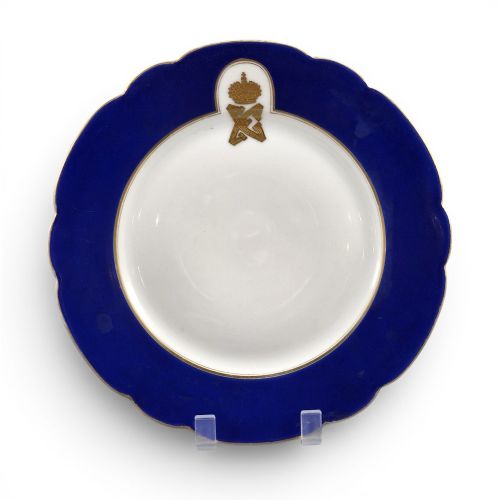
A gilded cobalt cabinet dish is primarily encountered as an ornate porcelain plate or serving dish designed for display rather than daily dining. These pieces emerge across nineteenth and twentieth century periods in Victorian, Edwardian, and Neoclassical styles.
The selection ranges from French Sèvres-style portrait plates and English factory wares by Coalport and Royal Worcester to Japanese Imari plates. Forms include round cabinet plates, oval dishes, and soup dishes featuring deep cobalt glaze fields paired with heavy gilding.
How they were made
The foundation of each piece is hard-paste or bone china porcelain, painted with cobalt glaze to achieve a rich, deep blue background. Artisans then applied gold leaf or liquid gilding, often tooling the metal surface to create contrasting matte and polished highlights.
Many examples incorporate hand-painted enamel portraits, botanical studies, or pastoral scenes, requiring multiple kiln firings to set the pigments and fix the precious metals to the ceramic body.
The selection spans the nineteenth and twentieth centuries, encompassing Victorian, Edwardian, and Art Deco styles.
What varies in quality
Quality rests upon the precision of the hand-painted details and the depth of the cobalt glaze beneath the gold leaf. Pieces bearing the signatures of known ceramic artists command greater interest than standard factory output.
The weight and purity of the gilding, alongside the crispness of any relief moulding or pierced borders, distinguish standard production wares from exhibition-grade cabinet pieces.
Royal Worcester·Coalport·Royal Crown Derby·Royal Vienna·Chamberlain Worcester·Meissen
The Gilded Cobalt Cabinet Dish Glossary
- Cobalt glaze
- A metallic oxide pigment applied under the glaze to produce a stable, deep blue colour during high-temperature firing. This intense blue provides the contrasting background essential for the application of gold leaf.
- Gilding
- The application of gold leaf or powdered gold to the ceramic surface to create decorative borders and highlights. Tooling is frequently used on the metal to introduce texture.
- Cabinet plate
- A decorative ceramic dish intended for display in a cabinet or on a wall rather than for practical table use. These items typically feature elaborate hand-painted scenes and rich gilding.
- Armorial
- A design incorporating a family crest, coat of arms, or heraldic badge painted onto the ceramic surface. These commissions were often produced for specific aristocratic households.
- Enamel
- Opaque glass-like pigments applied over the fired glaze to add detailed polychrome imagery. These colours require a separate, lower-temperature firing to fuse with the surface.
Gilded Cobalt Cabinet Dish: Frequently Asked Questions
What is a gilded cobalt cabinet dish?
These pieces are decorative ceramic plates and dishes featuring rich blue cobalt grounds accented with gold leaf or gilding. They were produced primarily for display in nineteenth and twentieth century drawing rooms.
Potteries across Europe and Asia utilised this colour combination to create visually striking items that showcased the technical skill of their painters and gilders.
How were these dishes used originally?
Cabinet dishes were rarely used for serving food, functioning instead as ornamental items displayed on shelves, sideboards, or inside glass-fronted cabinets.
Wealthy households collected them to demonstrate taste and sophistication, often mounting them on specialist stands or hanging them directly on walls.
How do I care for antique gilded porcelain?
Display these dishes away from direct sunlight to protect hand-painted enamel colours from fading over time. Dust them gently with a soft, dry brush.
Avoid washing them in dishwashers or using abrasive cleaners, as harsh chemicals will damage the delicate gold leaf and overglaze enamel work.
How can I tell different factory periods apart?
Factories stamped, painted, or impressed specific backstamps and factory marks onto the underside of the porcelain. Cross-referencing these marks with historical records reveals the active dates of production.
Stylistic shifts also help date pieces, moving from early nineteenth century botanical studies to elaborate Victorian hand-painted portraits and twentieth century signed artist works.