





Gilded Cobalt Blue Glass
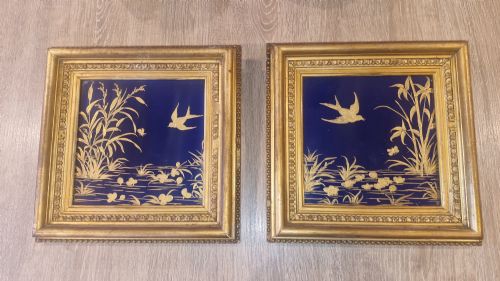
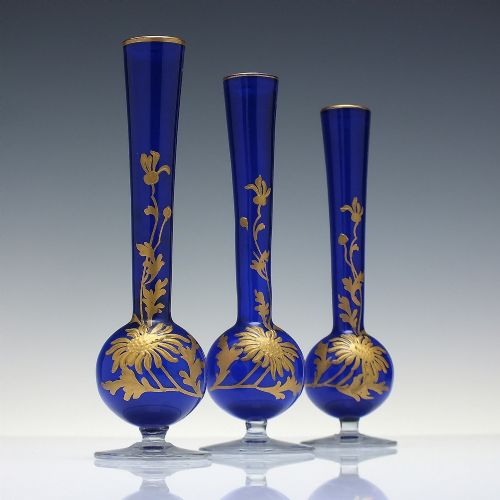
These pieces of gilded cobalt blue glass combine deep mineral colour with applied metallic decoration, offering a striking addition to any room.
Gilded Cobalt Blue Glass
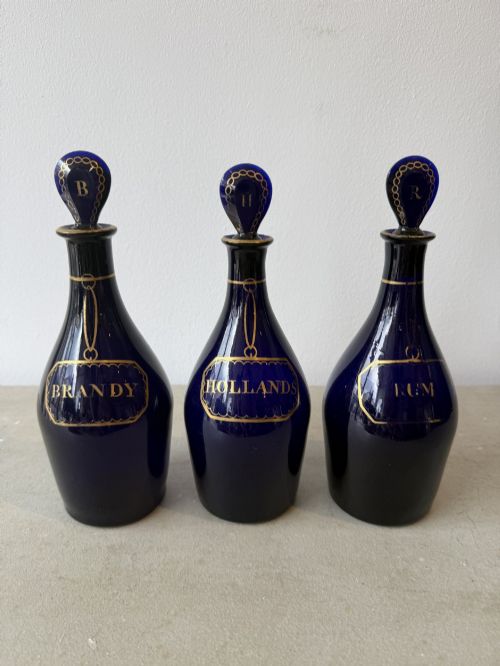
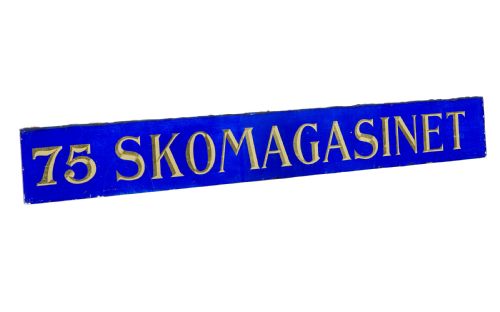
Vessels and decanters dominate the forms, alongside vases, tea sets, comports, and occasional wall signs. You are most likely to meet Victorian and Bohemian examples on this page, reflecting the popularity of deep blue glass during the nineteenth century.
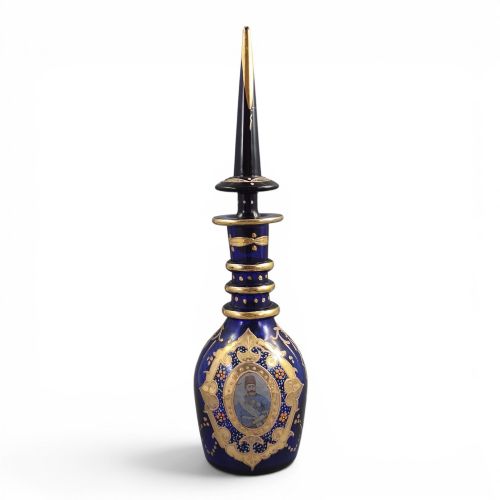
Origins stretch across Britain, Bohemia, Scandinavia, and the Middle East through trade markets such as the Persian Qajar export channel. Each piece demonstrates how different regional workshops interpreted the combination of intense blue glass and applied gilding.
Materials and Construction
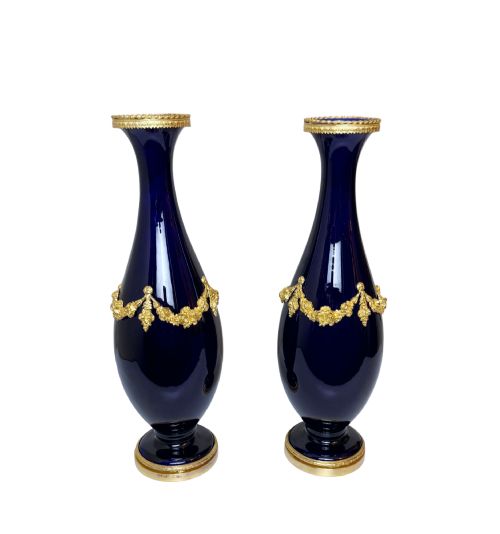
The foundation of these pieces is cobalt glass, a deep blue material created by adding cobalt oxide to the glass batch during melting. Artisans shaped this glass into decanters, vases, and ewers, sometimes pairing the material with gilt bronze or ormolu mounts.
Decoration relied heavily on gold leaf and enamel applied to the cooled glass surface, often fixed through a secondary firing process. Hand-painted details appear alongside raised gilding, creating a textured contrast against the smooth blue body.
Gilded Cobalt Blue Glass Retail Price Guide 2026
Typical asking prices for gilded cobalt blue glass among the pieces listed under this phrase on Sellingantiques today, from the lower quarter to the upper quarter. They describe what is for sale here now, not the wider market.
Listings feature periods from the Georgian era through to 1930, utilising materials such as cobalt glass, gold leaf, enamel, and gilt bronze.
Assessing Quality and Execution
Quality in these objects rests upon the precision of the hand-gilding and the depth of the cobalt colour within the glass. Finer pieces display crisp, intricate brushwork or raised gold detailing that remains largely intact after decades of handling.
The integration of secondary materials also dictates the standard of the piece, particularly where gilt bronze trim or hand-enamelled floral motifs are present. Superior examples maintain a clean balance between the rich blue glass and the applied metallic ornament without crowding the surface.
Moser
The Gilded Cobalt Blue Glass Glossary
- Cobalt glass
- A deep blue glass coloured using metallic cobalt. This material forms the primary body for decanters and vases across various nineteenth-century periods.
- Gilding
- The application of gold leaf or gold paint to a surface. On these objects, it provides metallic highlights and patterns over the blue glass.
- Mell decanter
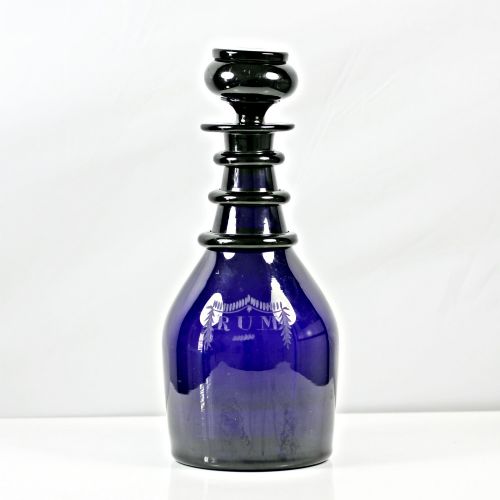
- A specific bottle shape with a tapering body used for spirits. Georgian makers produced these in rich blue glass for Irish whiskey and rum.
- Ewers
- Large jugs with wide spouts and handles, often used for decorative display. Some examples on this page are adapted as table lamps with gilt bronze fittings.
- Comport
- A decorative dish or bowl raised on a stem and foot. They serve as centrepieces on dining tables and are occasionally found in figural glass forms.
Gilded Cobalt Blue Glass: Frequently Asked Questions
What is cobalt glass?
Cobalt glass is a deep, rich blue glass produced by introducing cobalt oxide into the molten mixture. This intense colour became highly fashionable during the Georgian and Victorian periods.
Makers utilised this striking background to highlight applied gold leaf and enamel decoration.
How were old decanters used?
Decanters served to store and pour spirits such as rum, whiskey, and wine at the dining table. Their rich blue colour helped protect light-sensitive contents while adding elegance to the room.
Many retain their original ring necks designed for secure handling during pouring.
How do I date these pieces?
Dating relies on examining the manufacturing techniques, the style of the gilding, and the specific form of the object. Georgian and William IV pieces often display distinct bottle shapes and hand-painted details.
Later Victorian and Bohemian examples introduce heavier enamelling and Aesthetic Movement motifs.