



Gilded China Tea Service
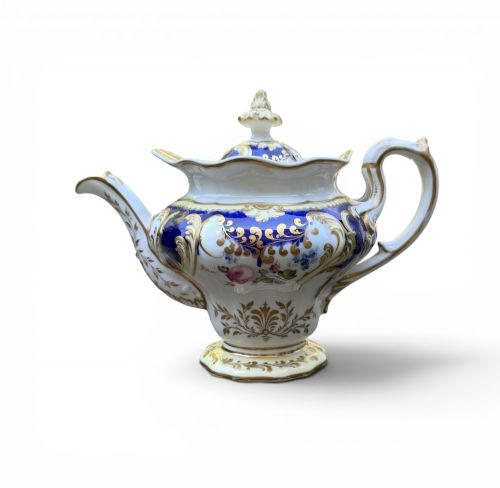
Theseilded china tea service sets bring Regency, Victorian, and later tables alive with gold leaf and hand-painted porcelain.
Gilded China Tea Service
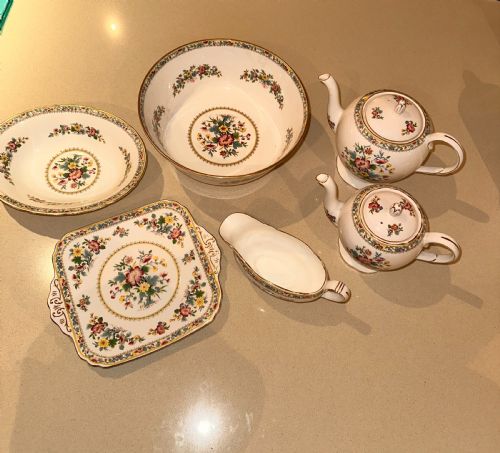
A gilded china tea service brings together matched or complementary porcelain vessels designed for formal entertaining. When you search for a gilded china tea service, you encounter sets spanning the Georgian, Regency, Victorian, Edwardian, and Art Deco periods. These assemblages typically comprise teapots, sucriers, cream jugs, and multiple cups and saucers.
The selections on this page range from small afternoon tea sets and miniature solitaire sets to extensive multi-piece dinner and tea combinations. Makers such as Derby, Spode, Coalport, Minton, and Royal Crown Derby dominate the traditional English output. Forms vary from rococo revival shapes to bat wing patterns and Imari designs.
Some configurations include breakfast sets and specialised pieces like toy dinner services alongside standard tea wares. Materials shift from early bone china and porcelain to ironstone ceramic bodies decorated with enamel and gold gilt. Each set reflects the social rituals of its specific decade, from 18th-century drawing rooms to 1930s parlours.
How They Were Made
Potters shaped these wares using fine porcelain, bone china, or ironstone ceramic bodies, often thrown or moulded into rococo and traditional English forms. Artisans then applied hand-painted pigments and enamel details before embellishing the surfaces with gold leaf, gilt, and gilding. High-temperature kilns fused the metallic decoration to the glaze, ensuring lasting brilliance across centuries of use.
Specialised factories utilised specific transfer-printing and hand-painting techniques to achieve distinctive motifs like bat wing patterns and Kakiemon designs. Gilders applied gold paste by hand around rims, handles, and panels, subsequently burnishing the metal to a high shine. The integration of ceramic body preparation, enamel painting, and gold application defined the premier English potteries of the Georgian and Victorian eras.
The inventory ranges from 18th-century Georgian teapots to 1930s Art Deco tea sets and extensive children's toy dinner services.
What Varies in Quality
Quality rests upon the precision of the hand-painted brushwork and the thickness and burnishing of the gold leaf decoration. Superior services demonstrate crisp enamel placement and finely detailed motifs that remain sharp across every component of the set. Lesser examples exhibit heavier, less refined gilding and simpler, hurried enamel application.
The integrity of the porcelain body and the completeness of the matching service further distinguish top-tier examples from ordinary sets. Pieces originating from esteemed potteries like Derby, Spode, and Minton often show superior ceramic formulation and more ambitious moulded forms. The harmony between the original gilding and the underlying ceramic body dictates the overall standing of any tea service.
Derby Porcelain·Spode Porcelain·Hicks Meigh Johnson·Royal Crown Derby·Coalport·Minton·Wileman Foley Shelley·Gladstone potteries
The Gilded China Tea Service Glossary
- Sucrier
- A covered sugar bowl or sugar box used in tea and coffee services. These vessels often match the teapot and cream jug in pattern and gilding.
- Bone china
- A type of soft-paste porcelain containing bone ash, developed in England to create a durable, translucent ceramic body suitable for intricate tea wares.
- Imari
- A decorative style inspired by Japanese export porcelain, characterised by underglaze blue, iron red, and abundant gold highlights. It remained popular across various Victorian and later English potteries.
- Gilt
- A thin layer of gold applied to the surface of porcelain or ceramic wares. It provides the characteristic metallic gleam found on handles, rims, and painted panels.
- Bat wing
- A specific decorative pattern featuring stylised panel motifs, commonly found on early 20th-century English porcelain tea sets.
Gilded China Tea Service: Frequently Asked Questions
What pieces are included in a standard tea service?
A standard tea service typically includes a teapot, a sucrier for sugar, a cream jug, and matching cups with saucers. Larger sets expand to include side plates and larger serving platters.
Depending on the maker and period, configurations vary from intimate breakfast sets to extensive services designed for larger gatherings.
How do I identify Regency period tea wares?
Regency tea wares often feature neoclassical shapes, refined handles, and distinct patterns influenced by classical antiquity and early porcelain experiments. Look for specific factory marks and refined ceramic bodies typical of the early 19th century.
Makers from this era frequently employed hand-painted enamel and delicate gold gilt on porcelain and bone china.
Can I use antique gilded china for daily tea?
Antique gilded china requires gentle hand washing to preserve the delicate gold leaf and hand-painted enamel decoration. Dishwashers and microwaves will damage the historic metallic surfaces.
Treating these porcelain pieces with care ensures the enamel and gilding remain intact for future generations.
What is the difference between porcelain and bone china?
Porcelain is a hard, vitrified ceramic fired at high temperatures, known for its bright white body and durability. Bone china incorporates animal bone ash into the paste, creating a lighter, more translucent material with a warm tone.
Both materials served as the primary canvas for hand-painted and gilded English tea services.
How do I date a Victorian tea set?
Dating a Victorian tea set involves examining the pottery marks stamped or painted on the base of the porcelain. Stylistic clues such as rococo revival moulding and heavy gold gilt also point toward the Victorian era.
Comparing pattern numbers and factory histories helps narrow the production window within the 19th century.