
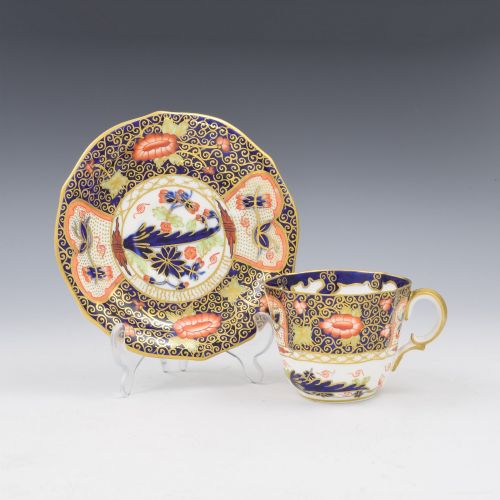


Edwardian Teacups and Saucers
Edwardian teacups and saucers bring delicate china and intricate gilded patterns straight from the early twentieth century to your morning tea.
Edwardian Teacups and Saucers
When you search for edwardian teacups and saucers, you encounter fine porcelain and bone china vessels produced during the Edwardian period and adjacent early decades. These sets often arrive as individual teacups and saucers, tea trios, or complete tea services intended for formal afternoon gatherings.
You are most likely to meet pieces bearing classic floral hand-painted motifs, delicate gilding, and traditional English naturalist styles. The selection ranges from single demitasse cups to expansive twenty-piece tea sets spanning the early 1900s through to the 1940s.
How they were made
Maker workshops shaped these items primarily from porcelain and bone china, forming thin-walled vessels designed for refined service. Artisans applied hand-painted enamels directly to the ceramic body, creating botanical and abstract motifs across the surface.
Gilding technique involved the application of gold leaf, gold gilt, and intricate gilt highlights to rims, handles, and saucers. Certain exceptional sets also integrated sterling silver mounts and components, adding substantial metal weight to the ceramic form.
Listings feature items spanning the Edwardian period, 1910, 1920, 1930, and 1940 in porcelain, bone china, gold leaf, and enamel.
What varies in quality
The degree of artistic execution separates standard production ware from finer studio output. Hand-painted details executed by skilled decorators show greater precision and depth than simpler printed transfers.
The preservation of the original gold leaf and gilding dictates the overall visual integrity of a set. Weight and thinness of the bone china also indicate the ambition of the original maker.
Royal Crown Derby·Coalport·Royal Worcester·Royal Albert Crown China·Wileman Foley Shelley·Gladstone potteries
The Edwardian Teacups and Saucers Glossary
- Bone china
- A type of soft-paste porcelain containing bone ash, known for its high strength, chip resistance, and translucent finish. This material forms the base of many fine English teacups.
- Demitasse
- A small cup used to serve Turkish coffee or espresso. These companions to traditional teacups appear frequently in early twentieth-century ceramic sets.
- Gilding
- The decorative application of gold leaf or gold powder onto the surface of porcelain. It provides the bright metallic rims and handles characteristic of Edwardian tableware.
- Imari
- A style of ceramic decoration featuring deep underglaze blue and iron red, accented with gold. This aesthetic heavily influenced British porcelain manufacturers.
- Tea trio
- A matching set comprising a teacup, a saucer, and a corresponding side plate for small cakes or bread. They formed the standard place setting for formal afternoon tea.
Edwardian Teacups and Saucers: Frequently Asked Questions
What is a tea trio?
A tea trio consists of a matching teacup, saucer, and small plate designed for individual use during afternoon tea.
These pieces allowed hosts to serve guests a complete set of matching ceramic tableware for light refreshments.
How do I care for antique bone china?
Antique bone china requires gentle hand washing in warm water using mild soap to protect the delicate porcelain body.
Avoid abrasive sponges and dishwashers, as harsh cycles will wear away hand-painted enamel and gold gilding over time.
Were these cups used daily?
Most fine porcelain and bone china sets were reserved for formal entertaining, guests, and special afternoon tea rituals.
Everyday dining typically utilised heavier, more durable ironstone or earthenware rather than thin-walled decorative porcelain.
Can I use them for hot drinks?
These cups handle hot tea and coffee safely, though thermal shock from boiling water poured into ice-cold china should be avoided.
Due to their age and hand-painted details, many owners prefer to use them for gentle occasional service rather than daily routines.