


Victorian Porcelain Tea Set
A victorian porcelain tea set brings the refined rituals of nineteenth-century hospitality directly to the modern table.
Victorian Porcelain Tea Set
A victorian porcelain tea set comprises matching vessels for serving hot beverages, frequently incorporating teapots, cups, saucers, and sugar bowls produced during the nineteenth century. These collections range from intimate bachelor and solitaire settings designed for single drinkers to large afternoon services intended for ten or more guests.
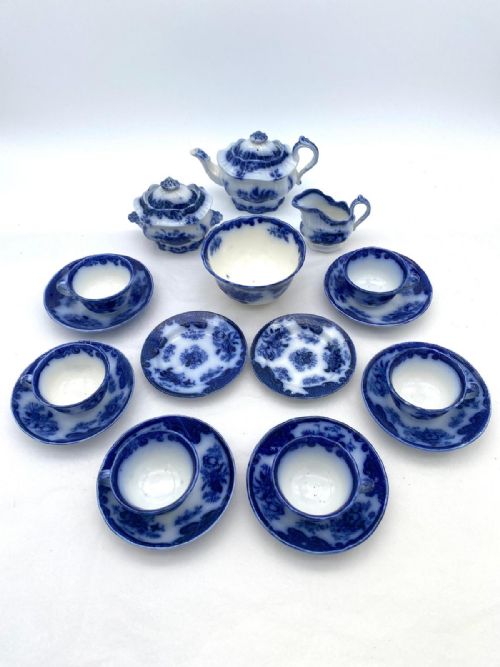
The objects appearing on this page extend beyond standard adult tea services to include children's toy services, miniature dinner sets, and specialised breakfast or coffee configurations. Production spans across the decades of the Victorian era, showing shifts from mid-century earthenware and ironstone to delicate late-century bone china and porcelain.
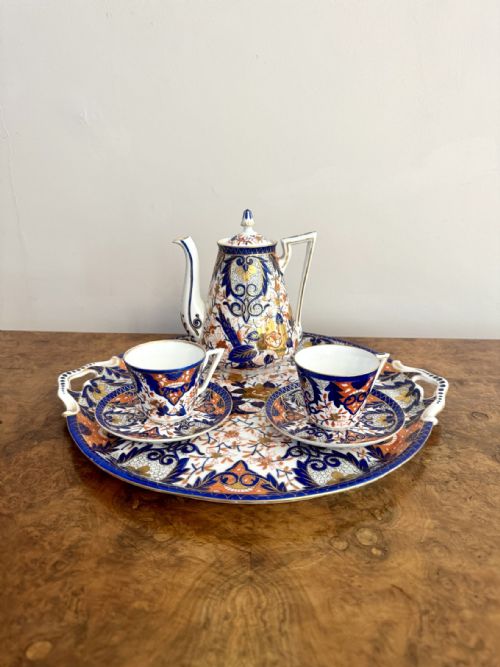
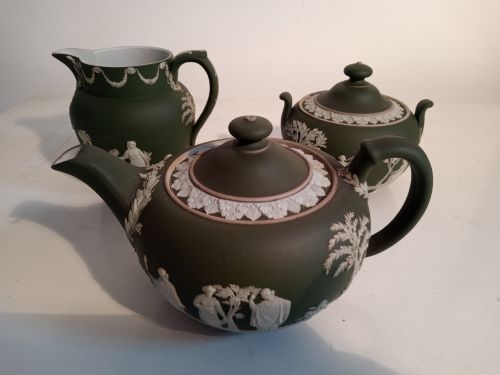
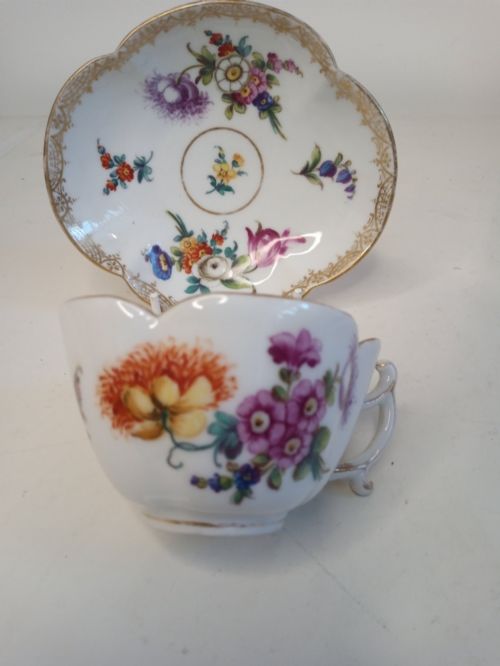
Buyers encounter diverse stylistic influences within these listings, including traditional Imari palettes, neoclassical motifs, and Kakiemon revival designs. Flow blue decorations and hand-painted floral motifs also feature prominently among the available options.
Materials and methods
Makers shaped these wares using fine porcelain, bone china, earthenware, and patent ironstone, forming the structural body of each cup, saucer, and pot. Artisans then applied detailed hand-painted pigments and intricate enamel work to decorate the surfaces.
Many items incorporate gold leaf, gilt, and gold gilt highlights, applied to rims, handles, and motifs to catch the light. Flow blue transfer printing techniques created distinctive blurred cobalt designs across entire child and adult services.
Miniature toy services allowed Victorian children to practice proper afternoon tea etiquette long before they were permitted near the family china.
Distinctions in quality
Quality in these services rests upon the fineness of the ceramic body and the precision of the hand-painted decoration. Superior sets display crisp brushwork, balanced gilding, and perfectly matched components that remain uniform across every piece in the service.
The complexity of the pattern and the prestige of the manufacturing house also elevate a set's standing. Intricate subject matter, such as detailed Kakiemon revival motifs or extensive multi-person settings, demonstrates higher ambition than simple monochrome transfer prints.
Wedgwood·Copeland·Royal Worcester·Royal Davenport·Coalport·Minton·Masons·Wileman Foley Shelley·Royal Crown Derby
The Victorian Porcelain Tea Set Glossary
- Bone china
- A type of soft-paste porcelain that incorporates bone ash, producing a strong, highly translucent material popular for nineteenth-century teaware.
- Flow blue
- A cobalt-blue transfer printing method where the colour intentionally bled slightly into the white glaze during firing, creating a misty, soft-edged effect.
- Kakiemon
- A style of Japanese enamelled porcelain decoration featuring asymmetrical floral and animal motifs, which British potteries frequently revived during the Victorian period.
- Ironstone
- A durable type of earthenware patented in the nineteenth century to provide a tough, utilitarian alternative to delicate porcelain.
- Solitaire set
- A small tea service designed for one person, typically consisting of a single teapot, cup, saucer, and sometimes a matching tray or jug.
Victorian Porcelain Tea Set: Frequently Asked Questions
How do I care for a Victorian tea set?
Wash each component by hand using warm water and a mild detergent, avoiding dishwashers entirely to protect fragile enamel and gold gilt.
Store cups and pots separately with adequate padding between stacked saucers to prevent chipping on the historic ceramic edges.
Were these sets used daily or saved?
Victorian households utilised these porcelain services primarily for formal afternoon gatherings, receiving visitors, and special social occasions.
More modest earthenware or ironstone sets saw regular household use, while delicate bone china and heavily gilt services remained in cabinets between formal events.
What is a bachelor tea set?
A bachelor tea set is a compact, integrated service designed for a single person to use independently without domestic assistance.
These configurations typically stack the teapot on top of the cup and saucer to save space on a small table.
How can I date a tea set?
Examine the base of the porcelain for factory stamps, registry marks, and specific patterns that correspond to known nineteenth-century production periods.
Stylistic cues such as heavy Victorian neoclassical borders or late-century blush ivory finishes also help narrow down the decade of manufacture.