
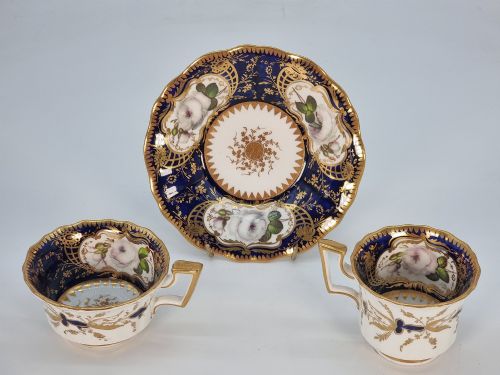


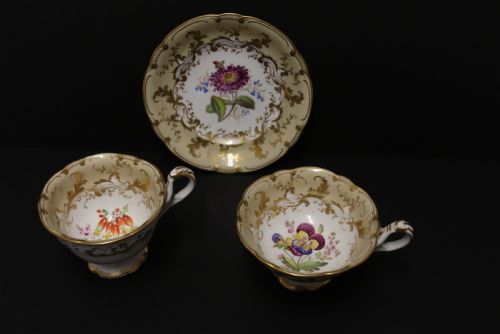


Bone China Trio Set
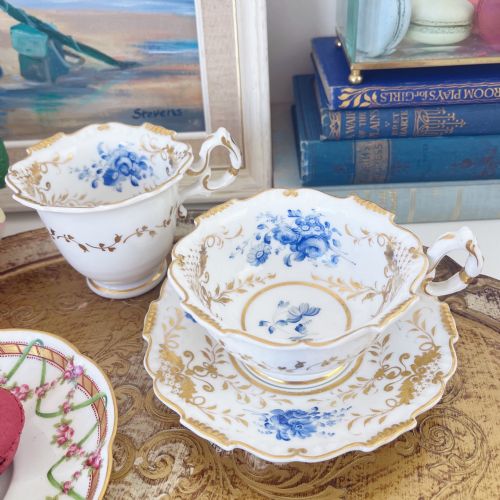
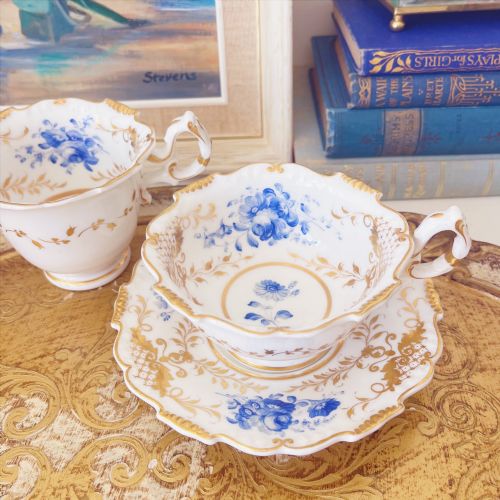
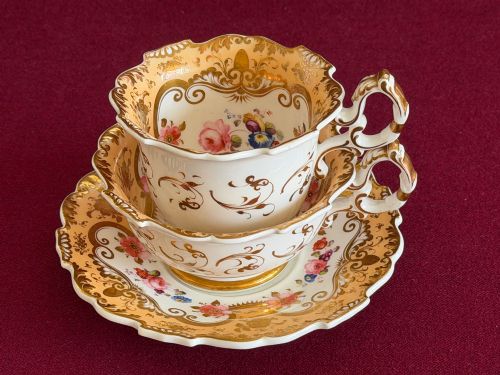
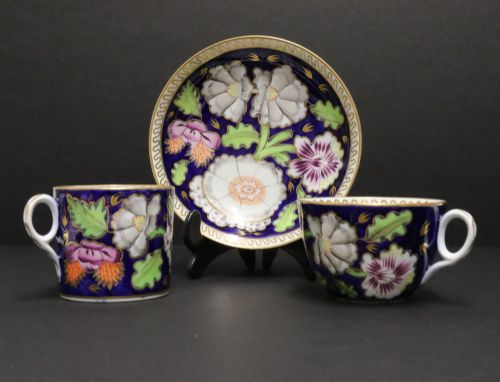
These bone china trio set pieces are matching cups, saucers, and plates designed for morning tea.
Bone China Trio Set
A bone china trio set brings together a teacup, saucer, and matching plate for a unified tea service at the table. These matching formations appear across the eighteenth century, nineteenth century, and Edwardian periods in a range of traditional English styles.
The objects listed here include cabinet trios, teacups and saucers, and larger tea services originating from historic British potteries. Regency examples and early nineteenth century pieces form a significant portion of what buyers encounter in this selection.
Materials and production methods
Potters produced these items using fine bone china and porcelain body compositions, finished with enamel glazes for durability and lustre. Skilled artisans applied handpainted details and gold gilding by hand to accentuate the moulded forms.
Firing techniques across the Georgian, Victorian, and Edwardian eras relied on traditional kilns to set both the body and the delicate surface decoration. Gold leaf and enamel glaze additions required secondary firings to bond the metallic and coloured elements to the porcelain.
The documented styles span Georgian, Regency, Victorian, Edwardian, and Art Deco design aesthetics.
Quality factors in traditional trios
The refinement of the porcelain body and the precision of the throwing or moulding process determine the baseline standard of a set. Thinner walls and more translucent bone china represent higher skill in shaping the clay before firing.
The complexity and preservation of handpainted motifs and gold gilding distinguish finer examples from standard production. Intricate patterns that retain their original colour intensity and metallic shine indicate superior craftsmanship during manufacture.
H & R Daniel·Newhall·Coalport·Davenport·Minton·Spode·Wileman Foley Shelley·Gladstone Potteries
The Bone China Trio Set Glossary
- Bone china
- A type of soft-paste porcelain incorporating bone ash, which creates a strong, white, and translucent ceramic body.
- Cabinet trio
- A decorative teacup, saucer, and plate grouping intended for display in a cabinet rather than daily use.
- Gilding
- The application of gold leaf or gold paint to the surface of ceramics for decorative enrichment.
- Enamel glaze
- A fused glassy layer coloured with metallic oxides, applied to pottery to provide a glossy and protective coating.
Bone China Trio Set: Frequently Asked Questions
What is included in a trio set?
A traditional trio set consists of three matching pieces for tea service: a teacup, a saucer, and a matching side or dessert plate. These matched items were designed to present a cohesive appearance on the table during afternoon tea.
Most historic examples originate from British potteries operating during the eighteenth and nineteenth centuries. Collectors often seek complete sets that retain their original factory patterns and gilding.
Can I use these sets for daily tea?
While these pieces were originally created for practical dining, older ceramics benefit from careful handling and limited use. Historic bone china has thinner walls and delicate handles that are susceptible to modern thermal shock and impact.
Many collectors prefer to display cabinet trios or reserve them for special occasions. If you do use them for tea, pour hot water into the cup gradually to temper the porcelain before adding boiling liquids.
How do I identify the period of a set?
Dating a ceramic trio involves examining the shape, paste composition, and any maker marks stamped or painted on the underside. Stylistic cues such as Regency curves or Victorian floral motifs also offer strong indicators of the era of manufacture.
Reference books and specialised pottery guides help match pattern numbers to specific production years. Comparing the style of the handle and the type of gilding provides additional clues for precise dating.