


Gilded Bronze Napoleon
Gilded bronze napoleon pieces bring French 19th-century elegance and weight to a room through finely cast metal and decorative detail.

Gilded Bronze Napoleon
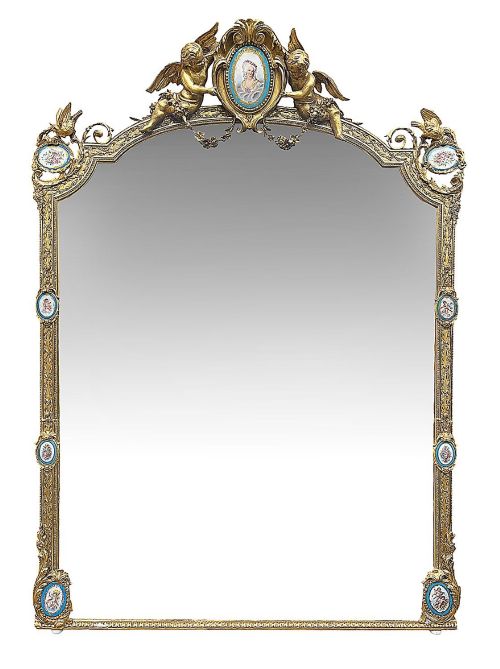
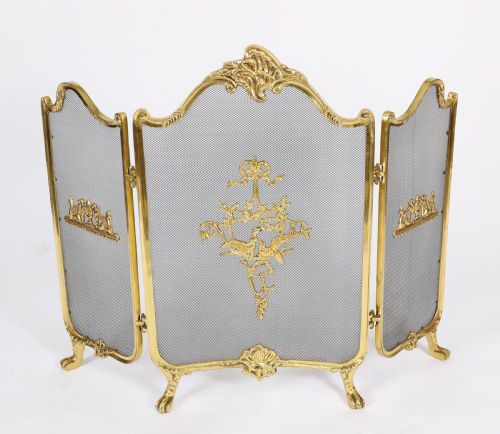
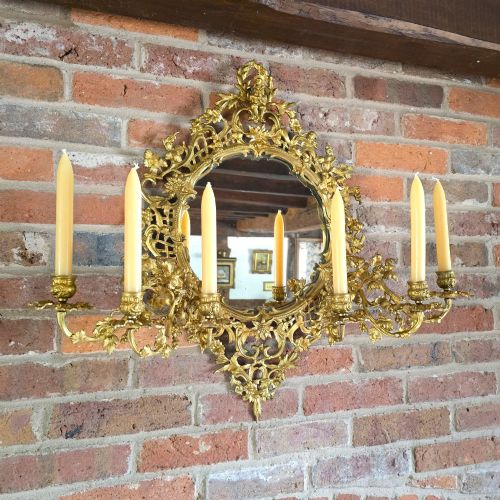
When searching for gilded bronze napoleon, a buyer encounters a range of 19th-century French decorative objects spanning mantel clocks, centrepieces, and picture frames. These pieces stem predominantly from the Victorian era and the Napoleon III period, often bearing the stylistic hallmarks of French Empire or Rococo Revival design.
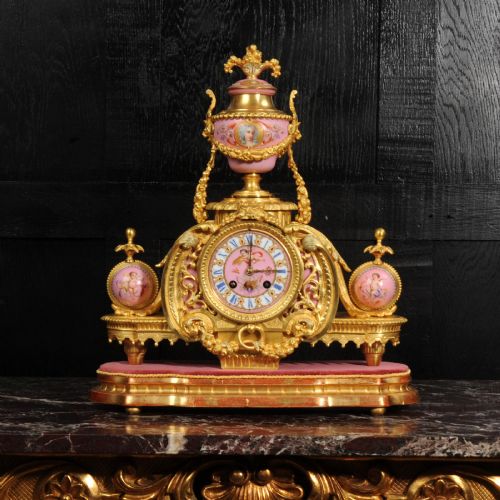
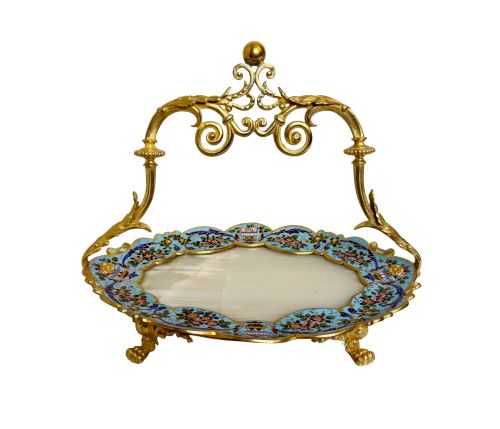
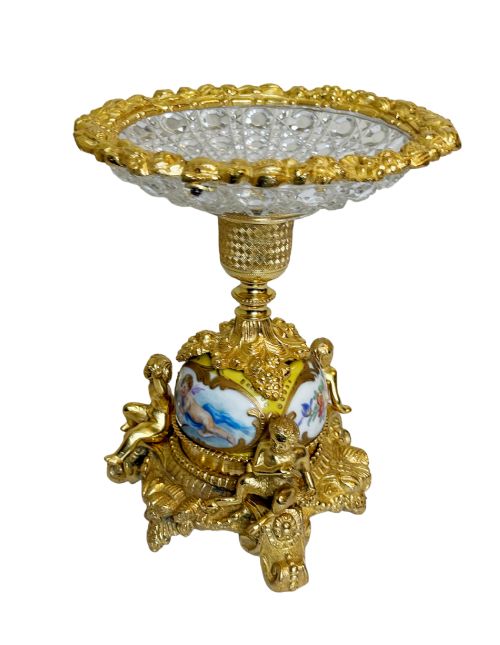
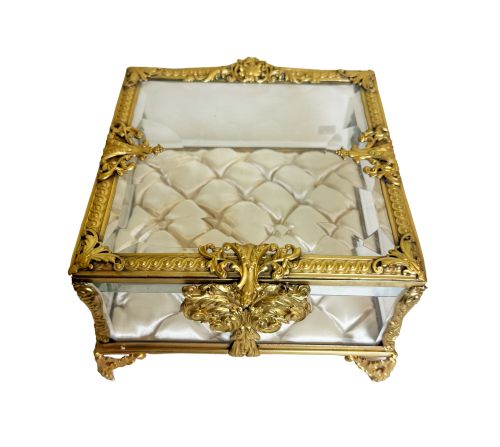
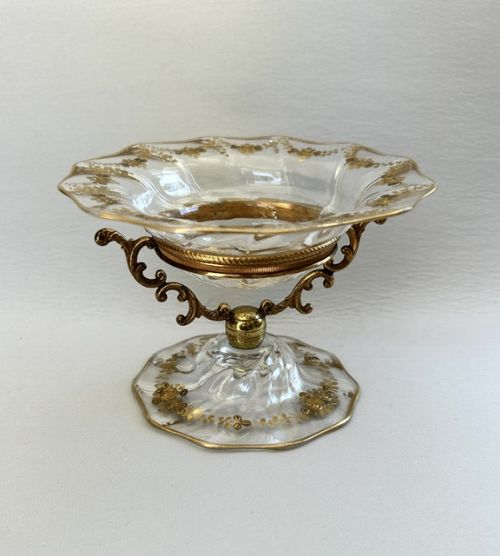
The most common forms on this page include elaborate mantel clocks, often paired with candelabra or set with porcelain plaques, alongside gilt bronze photograph frames decorated with Napoleonic bees. Centrepieces and trays combining cast metal with glass, crystal, or champlevé enamel also appear frequently among the listings.
How They Were Made
Craftsmen utilised bronze casting and mercury gilding, commonly known as ormolu, to achieve a durable and luminous finish on these decorative items. Metal mounts were frequently combined with imported materials such as Sèvres porcelain, marble, and hand-blown glass domes.
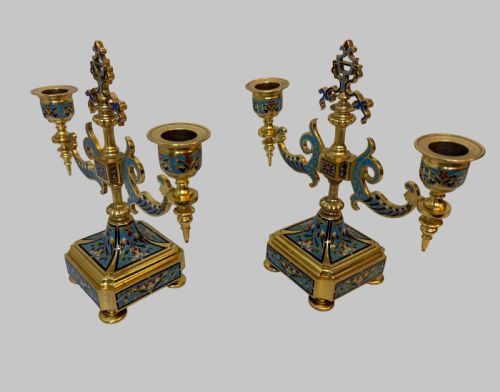
Champlevé enamel work and inset cut crystal add colour and texture to the cast bronze frames, while timber carcases appear in furniture items like pier cabinets and jardiniere stands.
Several photograph frames are adorned with tiny cast bees, Napoleon's personal emblem of industriousness.
What Varies in Quality
Integration of secondary materials also dictates the standing of a piece, where hand-painted porcelain panels from makers like Sèvres or complex champlevé enamel work elevate the object above simpler cast-metal designs.
Achille Brocot·PH Mourey·Japy Frers·Leroy and Fils·A D Mougin·Zwiener Jansen Sucesseur·Christofle Paris
The Gilded Bronze Napoleon Glossary
- Ormolu
- Gilded bronze produced by applying a mercury and gold amalgam to a cast bronze object and heating it until the mercury vaporised. This technique creates a rich, matte gold surface characteristic of 19th-century French decorative arts.
- Champlevé enamel
- A technique where troughs or cells are hollowed out in the surface of the bronze and filled with vitreous enamel paste before firing. The resulting coloured glass areas sit flush with the surrounding metal partitions.
- Cassolette
- A decorative vessel shaped like a vase or urn, often mounted with ormolu, designed to hold perfumes or simply to serve as an ornamental garniture piece.
- Guéridon
- A small round table supported by a single central column or multiple legs, frequently featuring a marble top and gilt-bronze mounts.
- Clock garniture
- A set comprising a central mantel clock accompanied by matching side ornaments such as vases, candelabra, or cassolettes designed to be displayed together on a mantelpiece.
Gilded Bronze Napoleon: Frequently Asked Questions
What is a clock garniture?
A clock garniture is a matched set consisting of a central mantel clock flanked by side pieces such as urns, candelabra, or cassolettes. These sets were designed to create a balanced display on a fireplace mantel or sideboard.
Originating in France during the 19th century, they combine cast bronze and porcelain to match the interior style of the room.
How do I identify Napoleonic motifs?
Napoleonic motifs commonly include the imperial bee, laurel wreaths, and neoclassical eagles cast into the bronze mounts. These symbols link the decorative pieces to the French Empire and the Napoleon III period.
Pictorial plaques and cameo profiles of leaders also indicate this specific historical aesthetic.
Were these clocks made in France?
The vast majority of these mantel clocks and decorative items were manufactured in France, particularly in Paris, during the 19th century. Prominent horologists and bronze-founders produced movements and cases for domestic and international markets.
Signature stamps on the bronze or clock movements often record the workshop of origin.
How should I care for gilt bronze?
Gilt bronze requires gentle maintenance using a dry, soft cloth to remove dust without abrasive cleaners. The delicate gold surface can be worn away by harsh rubbing or chemical polishes.
Keeping pieces away from direct moisture and handling them by the solid metal rather than delicate mounts preserves the finish.