
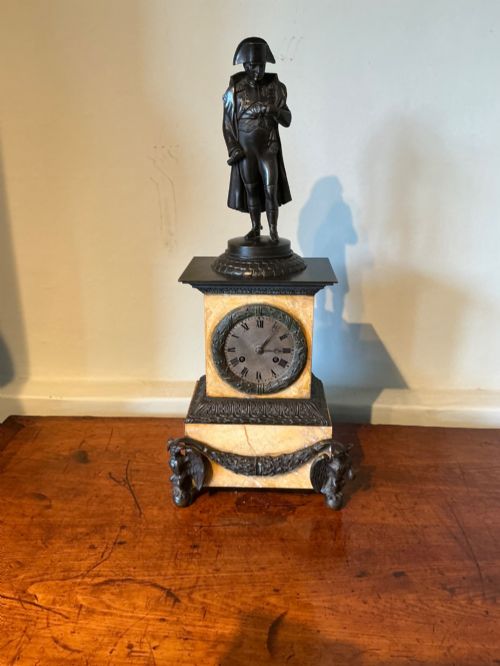
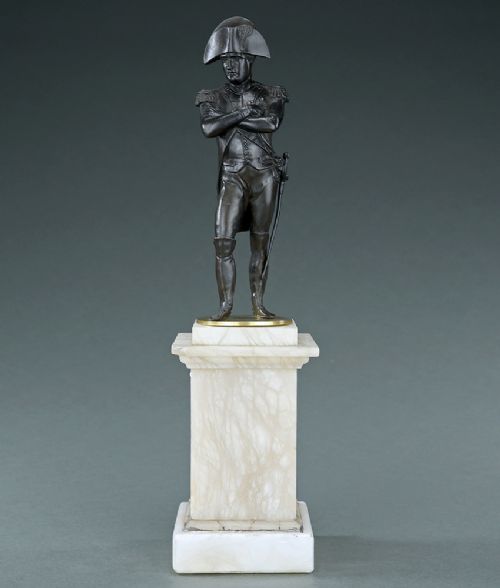
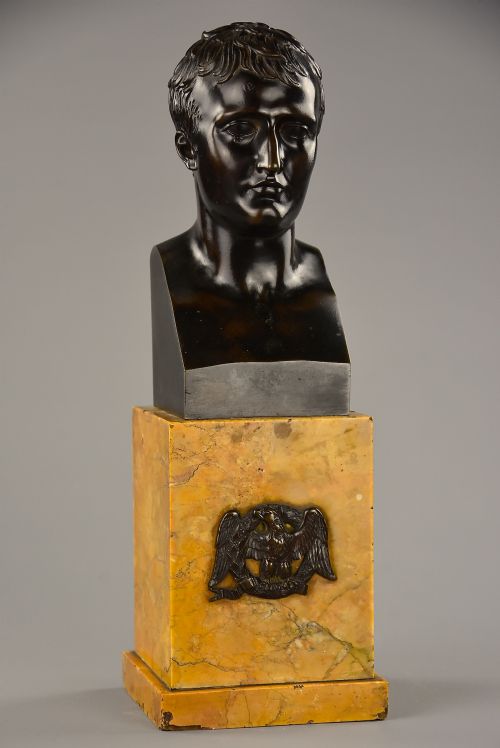


Napoleon Bonaparte Bronze
These pieces of napoleon bonaparte bronze capture the resolute stance of the emperor in heavy patinated metal and marble.
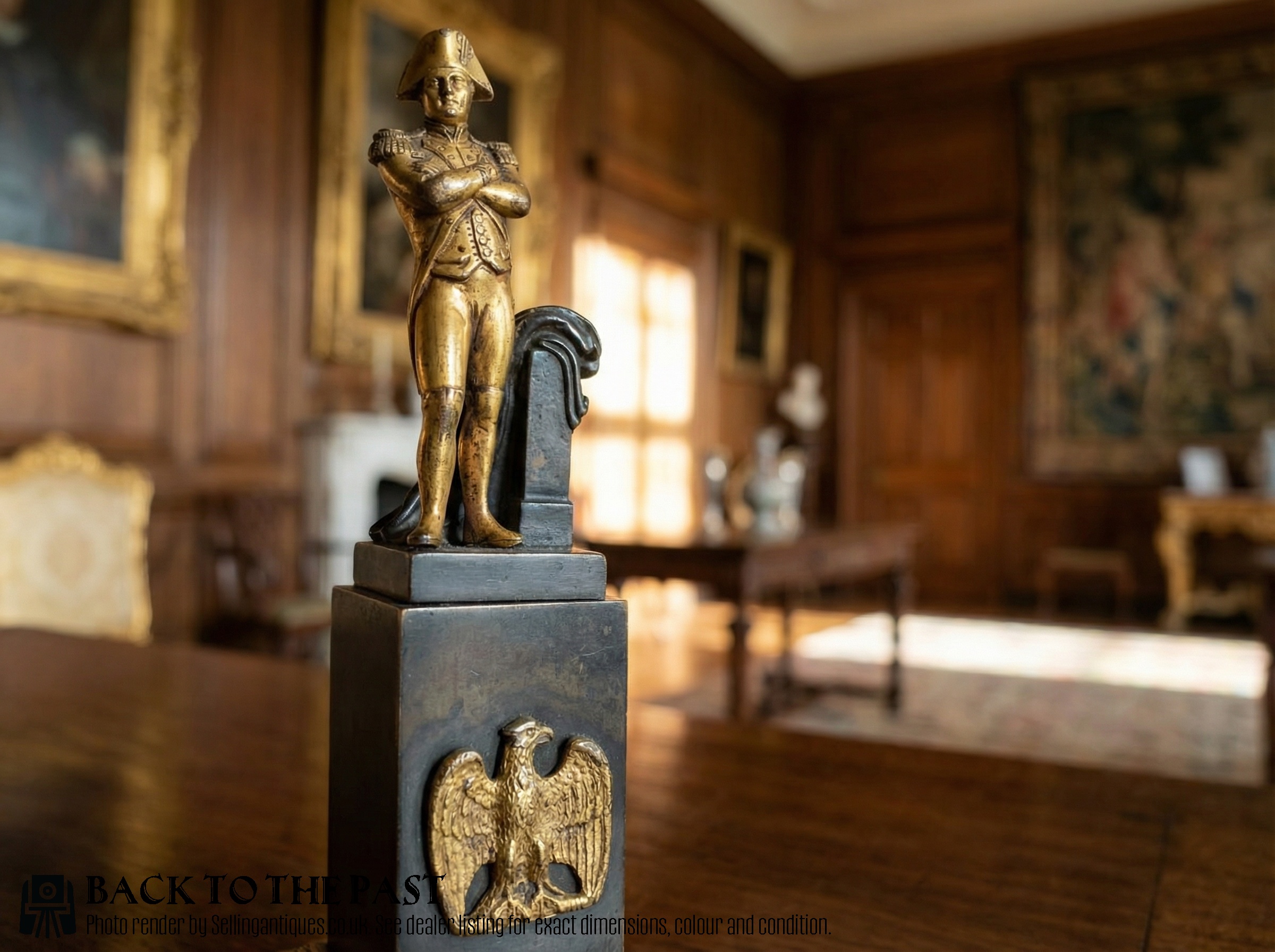
Napoleon Bonaparte Bronze
When you search for napoleon bonaparte bronze, you enter a distinct world of nineteenth-century French foundry work commemorating the emperor in sculpture, clocks and decorative objects. The pieces appearing here span the nineteenth century, including Victorian examples and specific decades such as eighteen-fifty, eighteen-seventy, eighteen-eighty and eighteen-ninety.
You will most frequently encounter standing figures, equestrian statues on horseback, and portrait busts mounted on marble bases. Objects also take the form of mantel clocks featuring the emperor, pairs of lidded Sèvres vases, and framed roundels.
The aesthetic is rooted firmly in French Empire and French Empire Revival styles. These works range from library bronzes designed for desk placement to large exhibition-quality commemorative pieces.
Materials and Techniques
Sculptures and busts are frequently mounted onto heavy plinths or bases fashioned from marble. Other associated materials include porcelain used for commemorative urns, enamel detailing on horological dials, and turned mahogany utilised for roundel frames.
Listings in this category span the nineteenth century, with specific dates recorded from eighteen-fifty, eighteen-seventy, eighteen-eighty, and eighteen-ninety.
Assessing Quality and Execution
The choice and finishing of the mounting materials also mark out the better pieces. Heavy, well-veined marble bases and carefully applied gilding or patination indicate a higher standard of workshop production.
Emile Guillemin
The Napoleon Bonaparte Bronze Glossary
- Patina
- The surface sheen and colour acquired by bronze over time or through artificial chemical treatment. This finish protects the metal and defines the contours of the casting.
- Ormolu
- Gilded bronze applied to decorative arts, particularly popular in French clockmaking and furniture mounts. The technique involves applying a gold amalgam to the bronze surface.
- Equestrian
- A term describing a work of art depicting a rider on a horse. In this category, such pieces show Napoleon mounted on his charger.
- Roundel
- A circular panel or plaque used for relief portraits. These often appear cast in metal and framed in wood.
- First Consul
- The political title held by Napoleon prior to becoming emperor. Bronzes depicting him in this role often show distinct civilian or early military attire.
Napoleon Bonaparte Bronze: Frequently Asked Questions
How do I identify a nineteenth-century bronze?
Nineteenth-century works generally display heavy weight, hand-finished chasing on the metal surface, and patination consistent with age. They are frequently mounted on heavy marble plinths rather than modern synthetic bases.
Examine the underside of the casting where accessible for pin marks, foundry stamps, or screw fittings typical of period manufacturing methods.
What is a library bronze?
Library bronzes are smaller, finely detailed statuettes or busts designed to sit upon a desk or bookshelf. They were produced in considerable numbers during the Victorian era for domestic display.
These pieces typically measure under eighteen inches in height and focus closely on the head and torso of the subject.
Why are some bronzes gilded?
Gilt bronze and ormolu finishes were applied to highlight specific elements of a sculpture or clock case, reflecting the opulent taste of the French Empire style. The technique added a bright, contrasting metallic sheen to the darker patinated areas.
This finish is commonly found on decorative horological cases and military accoutrements within the design.