
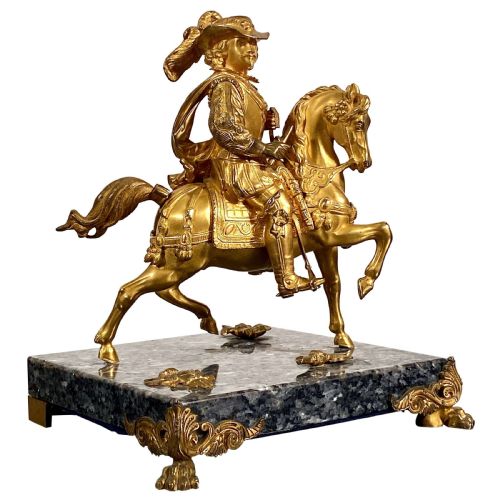


French Empire Statuette
A french empire statuette brings neoclassical weight and bronze gravitas to a mantelpiece, offering collectors tangible connections to nineteenth-century military history.
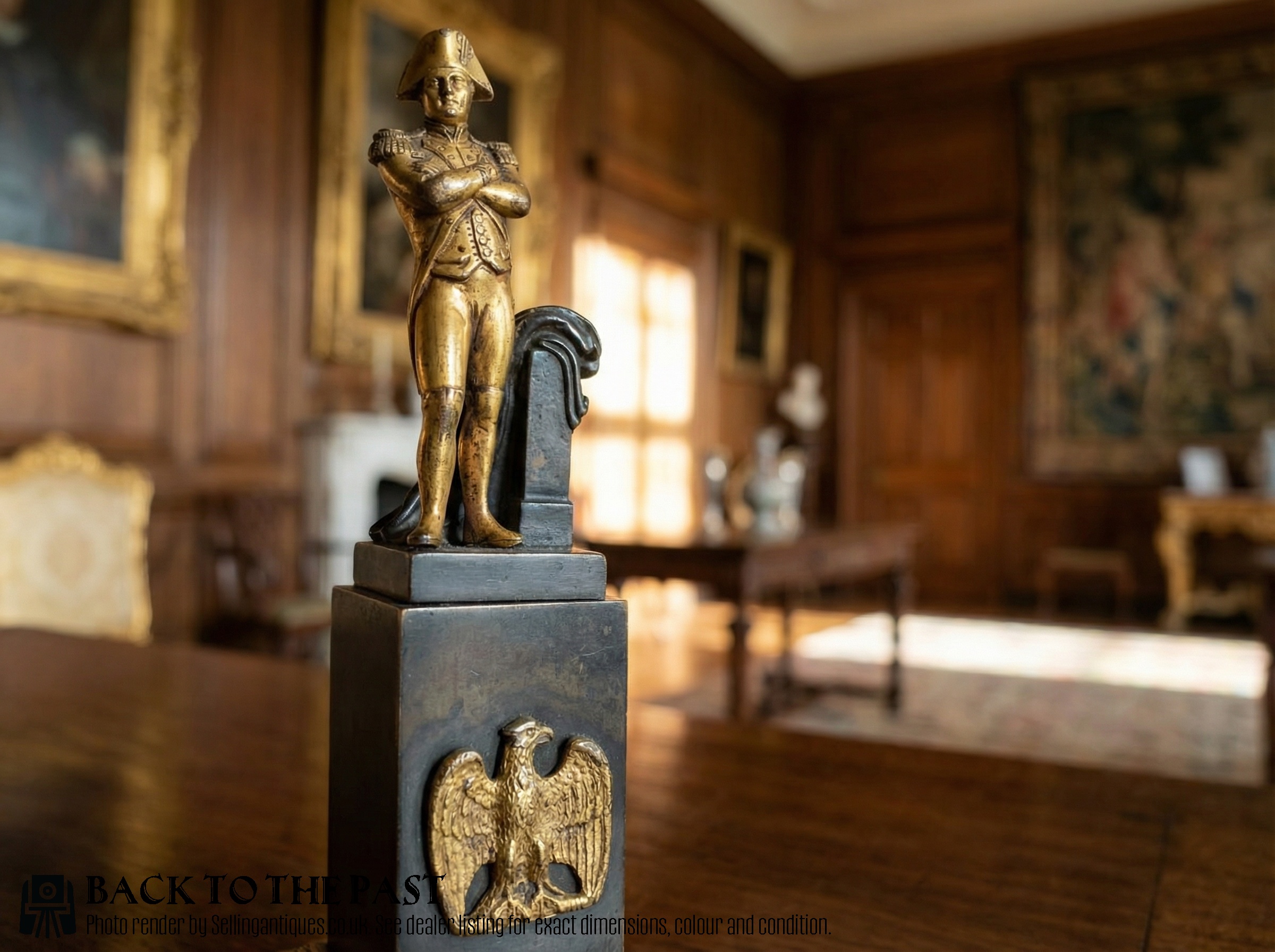
French Empire Statuette
A french empire statuette represents small-scale bronze sculpture rooted in nineteenth-century French taste, often depicting historical figures like Napoleon Bonaparte or Louis Philippe. Buyers browsing this page encounter pieces ranging from military figures on horseback to winged cherubs and eagles.
The objects take several distinct forms beyond standalone figures, including table lamps, inkstands and library ornaments. The pieces appearing here predominantly date from the nineteenth century, including specific decades such as eighteen-seventy and eighteen-eighty alongside Victorian periods.
Makers and subjects frequently draw on classical antiquity and imperial iconography, echoing the French Empire and Second Empire styles. These items serve both decorative and functional roles in domestic interiors, combining sculpture with utilitarian objects like inkwells.
Materials and construction
Foundry work relies heavily on bronze, utilising both patinated bronze and bright gilt bronze or ormolu to create contrast and highlight detail. Cast brass also appears among the listings, providing an alternative metallic medium for smaller decorative elements.
Judging quality in metalwork
The contrast between patinated surfaces and gilding contributes significantly to visual success. Preservation of the original surface finishes, whether dark patination or bright ormolu, maintains the intended aesthetic of the period.
James Pradier
The French Empire Statuette Glossary
- Ormolu
- Gilded bronze produced by applying a mercury-gilding amalgam to cast bronze. This technique creates a rich golden surface finish seen on decorative mounts and statuettes.
- Patinated bronze
- Bronze treated with chemical solutions to produce a darkened surface colour. This finish protects the metal and accentuates sculptural contours.
- Neoclassical
- A style drawing inspiration from the art and culture of classical antiquity. It dominates the design vocabulary of the nineteenth-century pieces gathered here.
- Inkstand
- A desk accessory holding inkwells and writing implements. Several items in this category incorporate portrait busts or sculptural figures.
French Empire Statuette: Frequently Asked Questions
What subjects do these statuettes show?
The subjects predominantly feature historical figures connected to French leadership, notably Napoleon Bonaparte and Louis Philippe shown both standing and on horseback.
Other examples include allegorical figures, cherubs and symbolic animals like eagles cast in bronze or brass.
How were these objects used originally?
Many acted purely as desk ornaments or library pieces intended to display historical allegiance and cultural literacy in private studies.
Others served functional purposes, incorporating lighting components as table lamps or ink reservoirs as desk inkstands.
What metals make up these pieces?
Foundries used bronze as the primary metal, often finishing the figures with dark patination or applying gold-coloured ormolu and gilt highlights.
Cast brass also appears in certain decorative items, occasionally paired with marble bases or oak secondary supports.
Which periods do the listings span?
The available selection concentrates primarily in the nineteenth century, encompassing specific years like eighteen-seventy and eighteen-eighty alongside the Victorian era.
Stylistic influences range across French Empire, Second Empire, and broader nineteenth-century neoclassical revivals.