


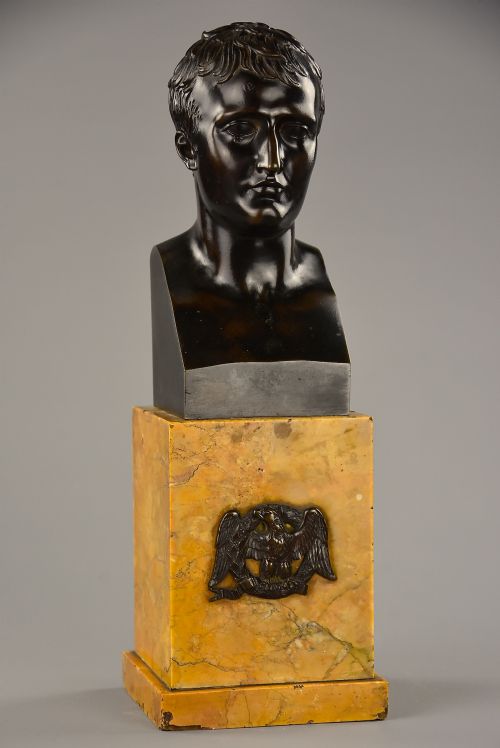


Antique Napoleon Statue
An antique napoleon statue captures the commanding presence of the Emperor in enduring bronze, marble, and ceramic forms.
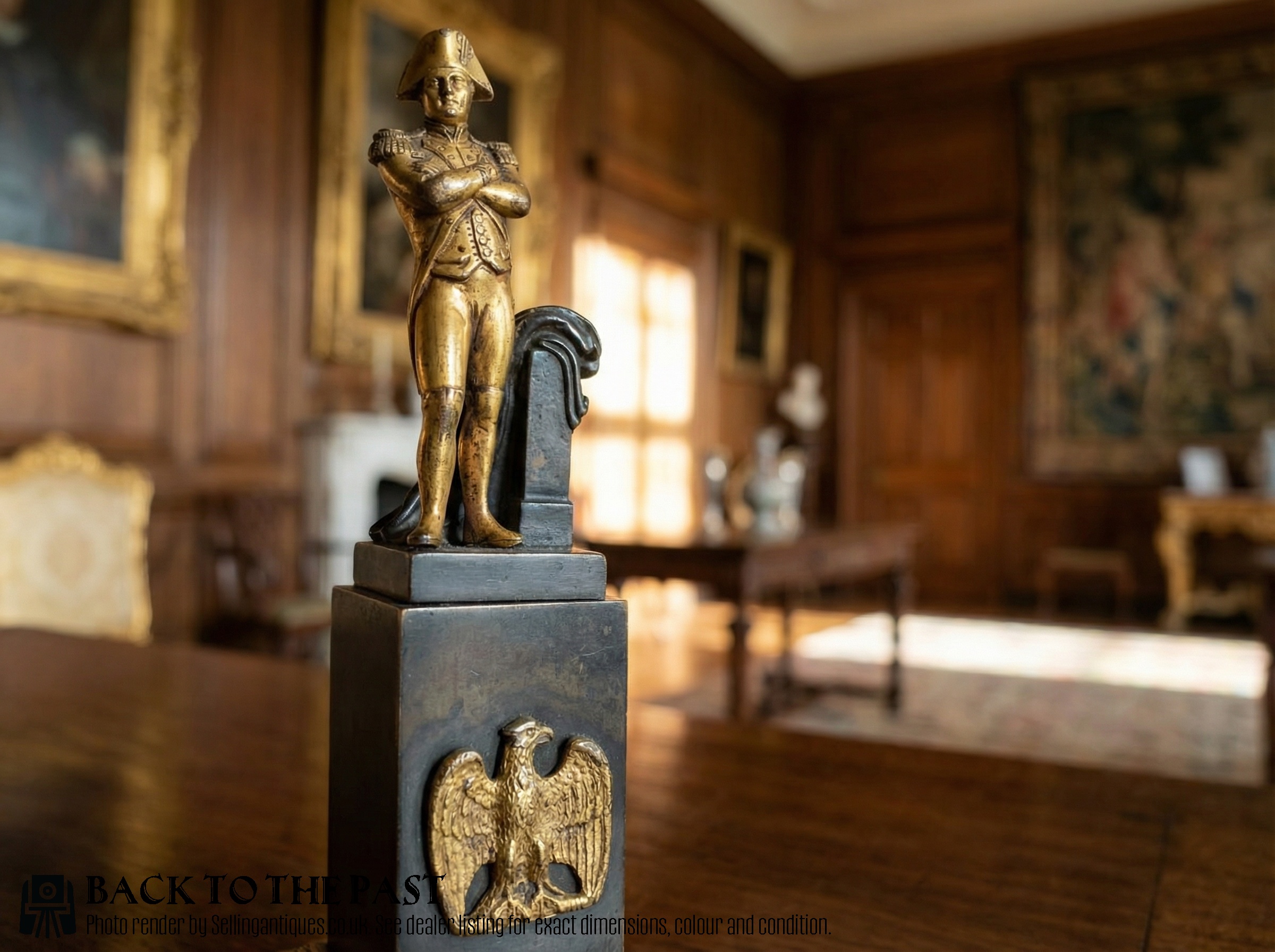
Antique Napoleon Statue
When searching for an antique napoleon statue, collectors encounter a diverse range of representations spanning the nineteenth century, from intimate portrait busts to grand equestrian sculptures. These figures immortalise the French leader in various guises, reflecting shifting political sentiments and artistic revivals across decades.
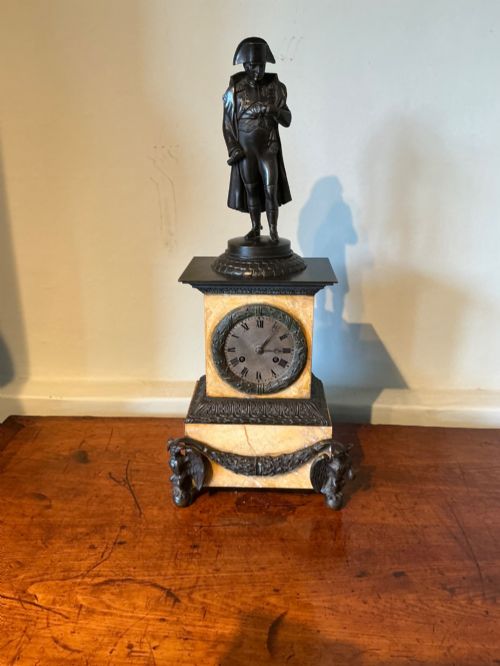
The objects on this page include French mantle clocks incorporating miniature figures, Staffordshire pottery portrait groups, and patinated bronze castings. French Empire and Victorian styles dominate the selection, appearing alongside neoclassical interpretations and rococo revival details.
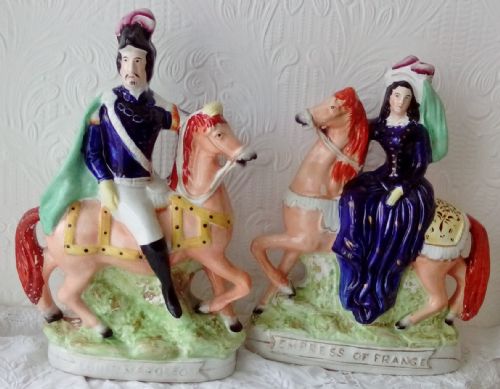
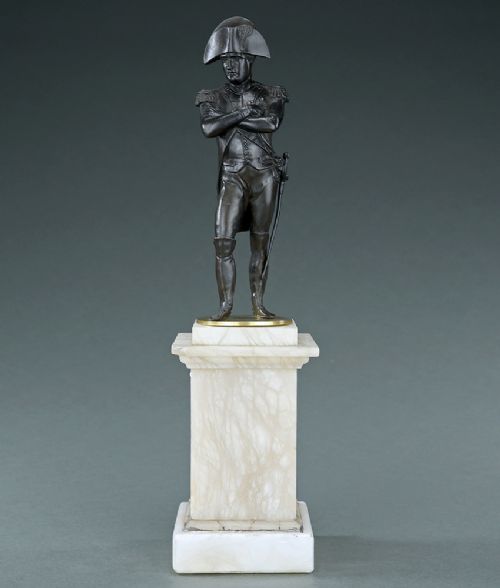
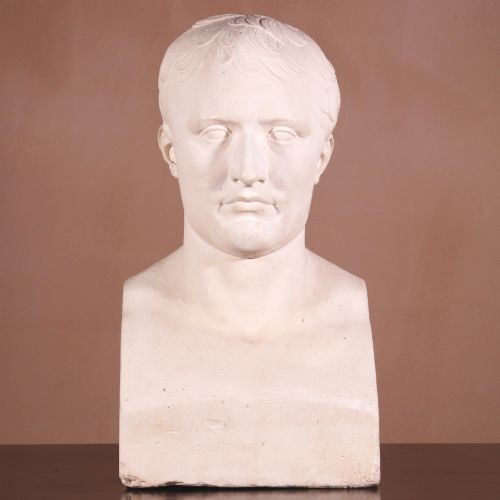
Busts mounted on marble plinths sit alongside larger porcelain figurines and earthenware figures of Louis Napoleon. Each piece demonstrates how makers adapted the iconic silhouette for libraries, mantels, and display cabinets throughout the nineteenth and early twentieth centuries.
Materials and Methods
Ceramic works rely on earthenware, parian porcelain, and hand-painted French porcelain bodies. Staffordshire potteries shaped lead-glazed clay into portrait groups, whilst manufactories like Sèvres employed parian porcelain to achieve the matte, marble-like finish seen on portrait busts.
Staffordshire potters cheerfully rendered the imperial family in cheerful lead glaze, ensuring even humble hearths could host an emperor.
Assessing Quality and Execution
Material selection significantly influences the tier of the object, particularly in the quality of the marble pedestals and the precision of hand-painted enamel elements on porcelain. Heavier, well-balanced metal castings and carefully articulated equestrian groupings command greater artistic recognition.
Emile Guillemin
The Antique Napoleon Statue Glossary
- Patinated bronze
- Bronze treated with chemical solutions to produce a specific surface colour, usually dark brown or green. This finish protects the metal and highlights sculptural contours.
- Parian porcelain
- A fine-grained, unglazed porcelain resembling white marble. It was frequently utilised in the nineteenth century for portrait busts.
- Staffordshire pottery
- Earthenware figures and groups produced in the English potteries during the Victorian era. They often depict notable historical and political figures.
- French Empire style
- A neoclassical design movement spanning the early nineteenth century. It draws heavily on ancient Roman motifs and military symbolism.
Antique Napoleon Statue: Frequently Asked Questions
What periods do these pieces date from?
The selection spans the nineteenth century up to the early twentieth century, encompassing the Victorian era and the French Empire revival periods.
Most items reflect the nineteenth-century fascination with Napoleonic history, ranging from the early 1800s through to later commemorative pieces.
How were these statues displayed originally?
Smaller busts and figures frequently occupied libraries and studies on desk tops or bookshelves. Larger bronzes and mantle clocks served as centrepieces for drawing room mantelpieces.
Staffordshire pottery figures typically adorned cottage mantelpieces as decorative portrait groups.
Are these pieces cast from solid metal?
Many bronze sculptures are cast using the hollow method to manage weight and material cost. They are frequently mounted onto solid marble bases for stability and aesthetic contrast.
Heavier elements like equestrian groups combine hollow-cast figures with substantial mounting plinths.
How do I distinguish French and English pieces?
French pieces predominantly utilise bronze, marble, and fine porcelain, reflecting academic casting traditions and neoclassical styles. Their subjects often focus directly on Napoleon Bonaparte in military uniform.
English examples are typically earthenware Staffordshire pottery figures, often featuring naive modelling and hand-painted details depicting various family members.