




Gilded Brass Wall Mirror
A gilded brass wall mirror brings depth and reflected light to a room, catching the eye through polished metalwork and period form.
Gilded Brass Wall Mirror
A gilded brass wall mirror combines reflective glass with decorative metal frames, often enriched with gilt finishes that enhance the overall visual weight. When exploring a gilded brass wall mirror, buyers encounter various historical expressions ranging from the Regency period through to Victorian and later revivals.
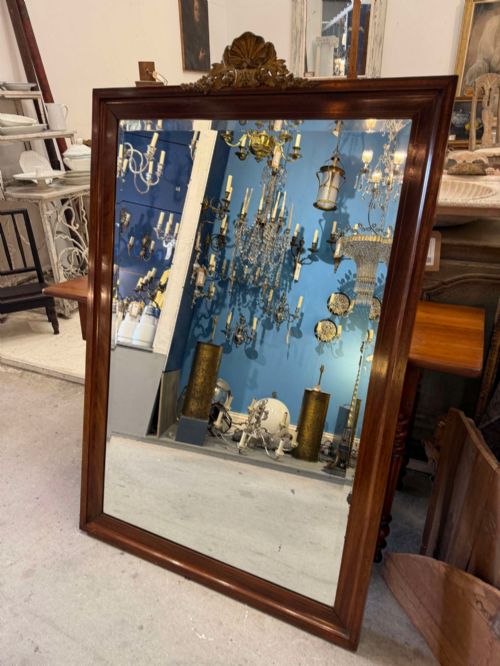
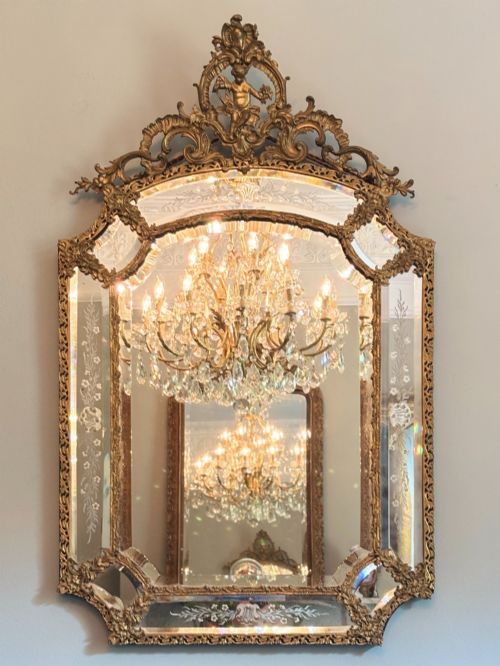
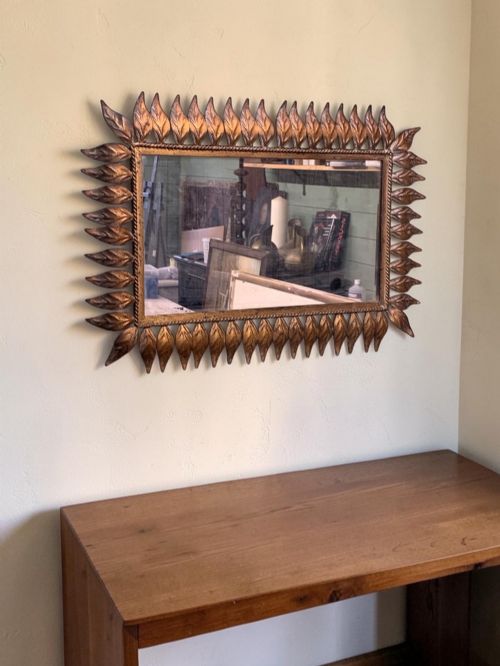
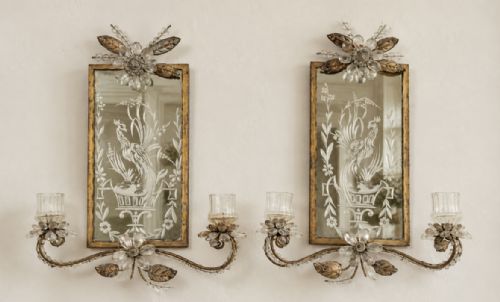
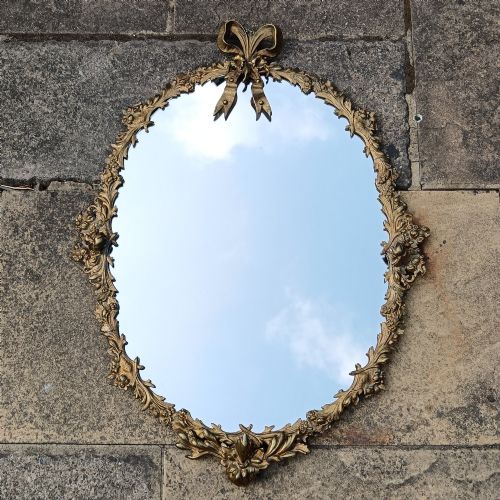
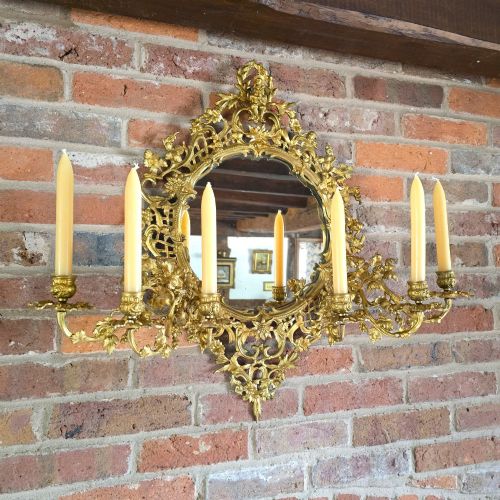
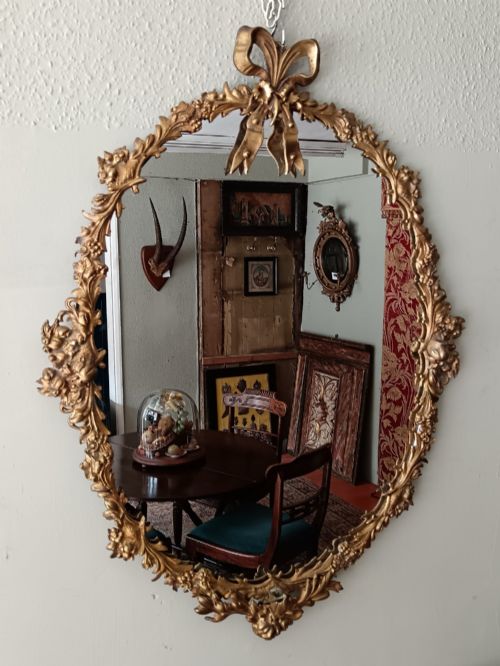
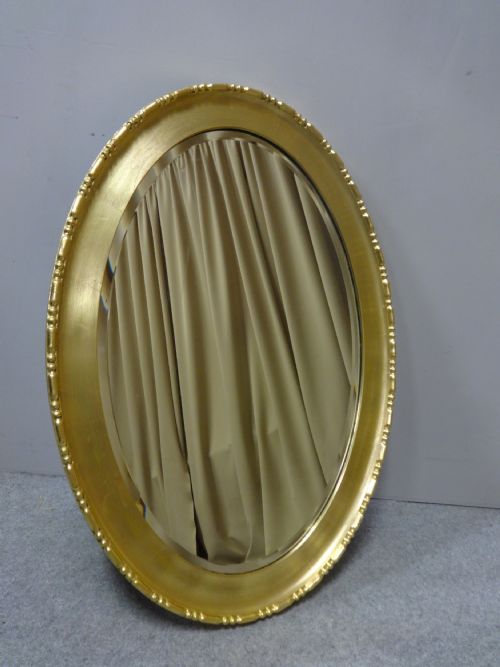
The selection includes oval shapes, cushion frames, and pairs of girandoles featuring integrated candle branches. French Louis XVI revival and Rococo styles appear frequently among the pieces, demonstrating elaborate crests and chased metal mounts.
Most examples date from the nineteenth century, spanning decades such as eighteen eighty up to nineteen twenty. These items served both practical and decorative functions in period interiors, reflecting light into darker corners of reception rooms and parlours.
Materials and construction
Makers utilised brass and gilt bronze for the primary metal components, sometimes combining them with wood, gesso, or ebonised elements to construct sturdy frames. Ormolu finishes and applied gilding provided a bright surface layer over the base metal or prepared wooden backing.
Glass plates were silvered and set within rebated frames, secured by metal mounts or backing panels. Structural integrity relied on cast or wrought metal components joined to wooden carcases, particularly in larger cushion and girandole mirrors.
Gilded Brass Wall Mirror Retail Price Guide 2026
Typical asking prices for gilded brass wall mirror among the pieces listed under this phrase on Sellingantiques today, from the lower quarter to the upper quarter. They describe what is for sale here now, not the wider market.
Listings feature brass, gilt bronze, and gilt metal alongside wood and gesso across nineteenth and early twentieth-century periods.
Assessing craftsmanship and condition
Quality reveals itself in the crispness of the casting and the depth of the chasing on the brass or bronze mounts. Finer examples display meticulous detailing along the frame edges and crests, whereas simpler pieces show softer contours and less ornate decoration.
The preservation of the original gilding and the clarity of the mirror plate significantly influence the character of each piece. Frames retaining their original structural fastenings and uncompromised metal surfaces demonstrate superior historical integrity.
The Gilded Brass Wall Mirror Glossary
- Girandole
- A wall mirror featuring attached candle branches that reflect additional light into the room. These fixtures combine illumination with decorative glass.
- Ormolu
- Gilt bronze ornamentation applied to furniture and decorative objects. This technique involves creating a finely chased bronze base finished with a gold amalgam.
- Gesso
- A plaster-based material applied to wooden frames to create a smooth surface for gilding. It allows for intricate moulding and relief decoration before metal leaf is laid.
- Cushion mirror
- A frame profile featuring a rounded, convex slope towards the outer edges. This style creates a pronounced three-dimensional effect on the wall.
- Neoclassical revival
- A design style drawing inspiration from classical Greek and Roman architecture. It utilises symmetry, urn motifs, and restrained floral ornamentation.
Gilded Brass Wall Mirror: Frequently Asked Questions
Where should I hang a wall mirror?
These pieces suit placement above mantels, sideboards, or console tables where they can reflect ambient light and anchor the wall space.
Ensure the wall construction supports the weight of the metal frame and glass plate safely before installation.
How do I clean brass and gilt frames?
Dust the surface gently with a soft, dry cloth to remove everyday particles without disturbing the finish.
Avoid commercial metal polishes, as abrasive chemicals can strip the historical gilding or damage the underlying metal.
What is a girandole mirror?
A girandole is a specialised wall mirror that incorporates one or more candle arms branching out from the frame.
In period interiors, these branches held candles to multiply the illumination available in evening settings.
How do I date an antique mirror?
Examine the construction methods of the frame, the backing materials, and the style of any cast metal mounts.
Stylistic cues such as Louis XVI revival motifs or Victorian cast brass work help place pieces within specific nineteenth or early twentieth-century decades.