





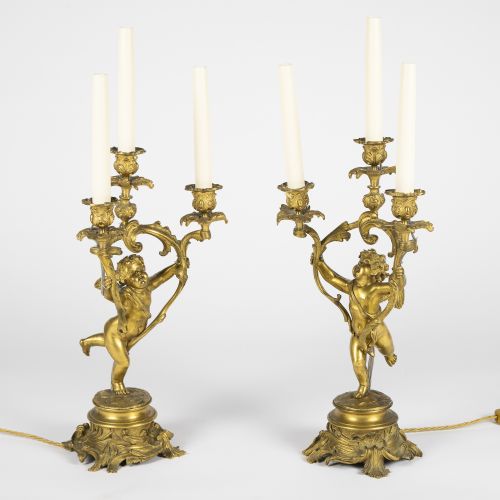


Gilded Brass Table Candelabra
Gilded brass table candelabra bring genuine nineteenth century weight and golden warmth to a room.
Gilded Brass Table Candelabra
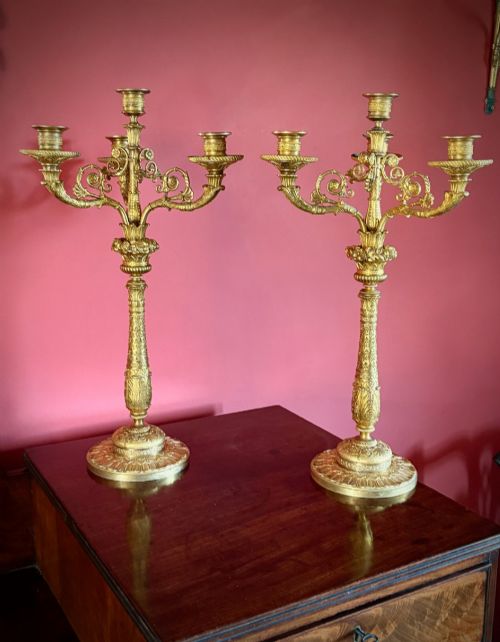
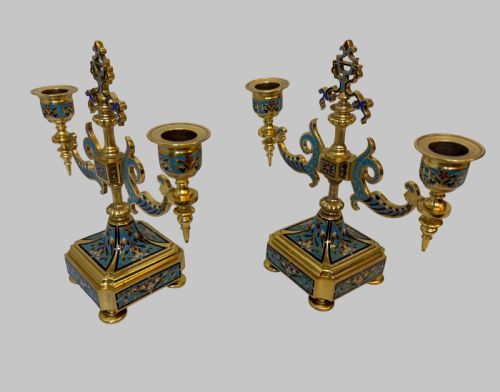
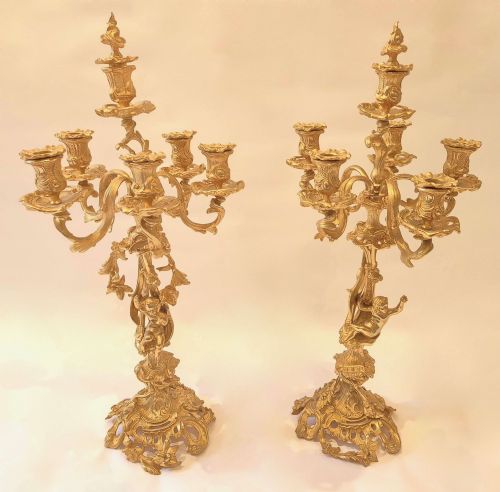
Gilded brass table candelabra are substantial multi-branch lighting pieces designed for dining tables, sideboards and mantelpieces during the nineteenth century. When you search for gilded brass table candelabra, you encounter pieces that often pair gilded brass or ormolu with marble, patinated bronze, champleve enamel and crystal. The versions most commonly met here span the Victorian era, the French Empire, and French Rococo Revival styles.
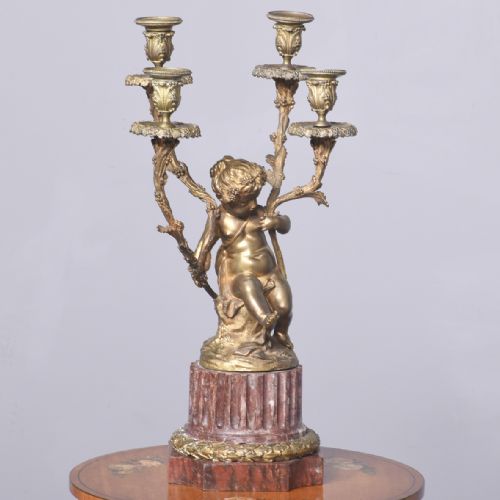
These items frequently appear as matched pairs, though single examples and clock sets also occur. Formats range from four-light and five-light candelabra to elaborate table lamps and altar candelabra. Makers and designers utilised varied branch configurations, incorporating putti, cherubs and classical architectural motifs.
How they were made
The construction of these pieces relies on cast brass, gilt bronze and ormolu, often combined with contrasting patinated bronze or white marble bases. Artisans applied mercurial gilding or electroplating to achieve the characteristic golden surface finish that defines nineteenth century examples.
Complex pieces integrated champleve enamel detailing, cut crystal drops and hand-carved fabric elements. Founders and metalworkers assembled separate cast components with threaded pins and nuts, allowing for intricate multi-branch structures.
Gilded Brass Table Candelabra Retail Price Guide 2026
Typical asking prices for gilded brass table candelabra among the pieces listed under this phrase on Sellingantiques today, from the lower quarter to the upper quarter. They describe what is for sale here now, not the wider market.
Cast bronze cherubs and putti frequently peer out from beneath candle branches, keeping a watchful metallic eye on the dining table.
What varies in quality
The precision of the original metal chasing dictates how sharply defined the acanthus leaves, cherubs and scrollwork appear. Higher quality examples retain crisp surface details and deep, even gilding across every recessed channel.
The choice of secondary materials separates standard production from superior pieces. The inclusion of genuine statuary marble bases, heavy cast ormolu rather than lightweight stamped brass, and intact champleve enamel elevates the overall calibre.
Deniere Paris
The Gilded Brass Table Candelabra Glossary
- Ormolu
- Finely chopped high-zinc brass applied to objects via mercury gilding or modern electroplating. This technique imparts a rich, golden lustre characteristic of French and Victorian decorative metalwork.
- Champleve
- An enamelling technique where troughs or cells are hollowed out of the metal surface and filled with vitreous enamel paste before firing. It appears on nineteenth century decorative candelabra and garniture sets.
- Garniture
- A set of three or more matching ornamental objects, typically comprising a central clock flanked by matching candelabra or vases. These arrangements anchored nineteenth century mantelpiece displays.
- Patinated bronze
- Darkened or chemically treated bronze used to create visual contrast against bright gilded brass and ormolu. This dual-tone metalwork typifies French Empire and Victorian designs.
- Altar candelabra
- Ecclesiastical lighting pieces adapted for domestic devotional or decorative use during the nineteenth century. They share the heavy metal construction and multi-branch format of secular table candelabra.
Gilded Brass Table Candelabra: Frequently Asked Questions
How do I clean gilded brass candelabra?
Dust gently with a soft, dry brush to prevent accumulation in the crevices of cast ornament. Avoid chemical polishes, abrasive cloths and water, which strip the delicate gold gilding from the brass substrate.
Preserving the original surface finish maintains the historical integrity of nineteenth century ormolu and gilt bronze. Professional conservation is advisable if deeper cleaning becomes necessary.
Were these originally wired for electricity?
Nineteenth century candelabra were manufactured exclusively for wax candles or oil before being converted to electricity decades later. Many examples retain their original candle sockets alongside later wiring modifications.
Buyers frequently choose to preserve the candle-only format or utilise discreet internal wiring. Consulting a qualified electrician ensures safe operation within modern domestic settings.
What is the difference between ormolu and brass?
Ormolu refers specifically to gilded bronze or high-zinc brass where a gold layer is bonded to the base metal. Standard brass displays a uniform yellow alloy colour throughout its composition.
True ormolu exhibits a warmer, deeper golden tone that resists dulling compared to untreated brass. Nineteenth century French pieces relied heavily on this mercurial gilding process.
How can I date a nineteenth century candelabrum?
Dating relies on stylistic indicators such as French Empire symmetry, Victorian ornamentation, or Rococo Revival asymmetry. Construction methods, including the type of fasteners and casting seams, offer further chronological clues.
Comparing the object's materials, such as the inclusion of champleve enamel or specific marble types, narrows the manufacturing window. Makers marks, where present, provide definitive historical context.