
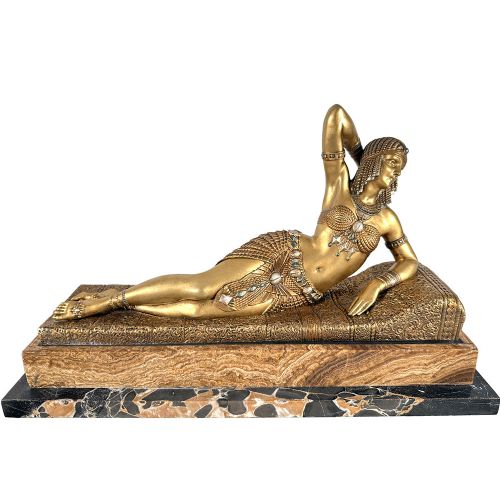


Gilded Base Figurines
Gilded base figurines bring together metalwork and mineral plinths to catch the light in any room.
Gilded Base Figurines
When you search for gilded base figurines, you encounter sculptural objects elevated by contrasting or metallic plinths. The selection spans 19th Century and early 20th Century eras, moving from Regency and Victorian novelty pieces into Art Nouveau and Art Deco designs.
You are most likely to meet figures cast in bronze, patinated metal, spelter, or modelled in porcelain and majolica. These subjects range from classical dancers and Egyptian revival shabtis to animals and allegorical maidens.
The mounting varies from simple marble and portoro bases to elaborate ormolu and onyx plinths. This grounding anchors the sculptural work above and provides a distinct architectural proportion.
Materials and construction methods
Foundry methods for the metal figures involve casting bronze or spelter, often applying gilt, gold leaf, or patination by hand. Porcelain and ceramic examples rely on detailed modelling, enamel painting, and glaze firing.
The heavy bases utilise natural stone, marble, onyx, or portoro, shaped and polished to support the figures securely. Ormolu mounts and cast metal elements are then fitted to complete the composite sculpture.
The site listings feature works spanning the 19th Century, Regency period, Art Nouveau, and 1930s Art Deco.
Assessing quality and execution
The selection of the plinth material also dictates standard, with solid carved marble or portoro standing above simpler substitutes. Cohesion between the sculptural subject and its gilded mount defines the top tier of these works.
Demetre Chiparus·Bruno Zach·Claire Colinet·Jean Jacques Pradier·Charlotte Monginot
The Gilded Base Figurines Glossary
- Ormolu
- Gilt bronze ornamentation applied to furniture, clocks, and bases. The technique involves a mercury gilding process popular in French decorative arts.
- Spelter
- A zinc alloy used as an economical alternative to bronze for sculptural castings. It is frequently painted or patinated to mimic heavier metals.
- Portoro
- A black Italian marble featuring prominent gold veins. It provides a dramatic and heavy foundation for luxury figurines.
- Shabti
- A small funerary figure placed in ancient Egyptian tombs. Later revival pieces incorporate these forms onto stone plinths.
- Enamel
- A glassy substance fused to metal or ceramic surfaces through firing. It adds vibrant and lasting colour to porcelain figures.
Gilded Base Figurines: Frequently Asked Questions
What materials make up these figurines?
The pieces combine cast metals like bronze and spelter with ceramic bodies such as porcelain and majolica. Bases are constructed from marble, onyx, and portoro.
Surface finishes include gold leaf, gilding, enamel, and hand-applied patination.
How do I date a gilded base figurine?
Dating relies on stylistic markers ranging from Regency and Victorian periods to Art Nouveau fluidity and Art Deco geometry. Maker signatures and foundry marks also help establish the era.
Materials provide further clues, as onyx and portoro bases frequently align with later 19th Century and 1930s works.
How should I display them at home?
Place them on stable surfaces where natural light can catch the metallic gilding and the polished marble plinths. Ensure they sit away from direct heat sources to protect painted enamels and stone.
Their varied scale allows them to sit comfortably on mantelpieces, desks, or dedicated display tables.
What is the difference between bronze and spelter?
Bronze is a durable copper alloy that takes sharp foundry details and holds fine patination over centuries. Spelter is a softer, lighter zinc-based metal used extensively for decorative figures during the Art Deco period.
Weight and surface resonance usually distinguish the two metals upon closer inspection.