


Georgian Yew Chair
These georgian yew chair selections are robust vernacular seats prized for their rich timber and traditional construction.
Georgian Yew Chair
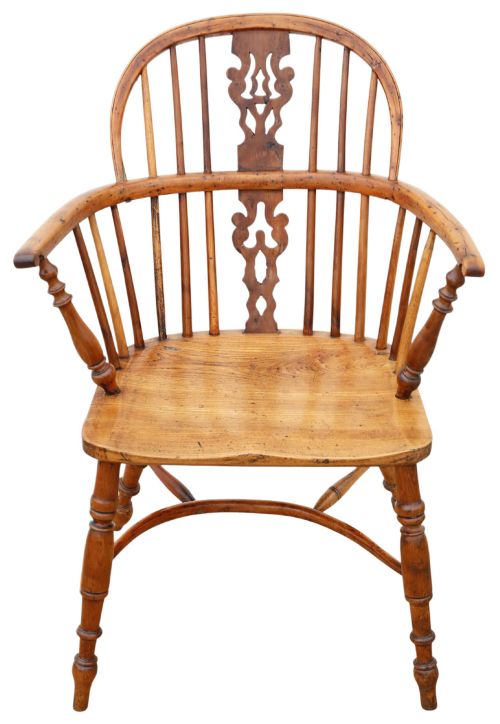
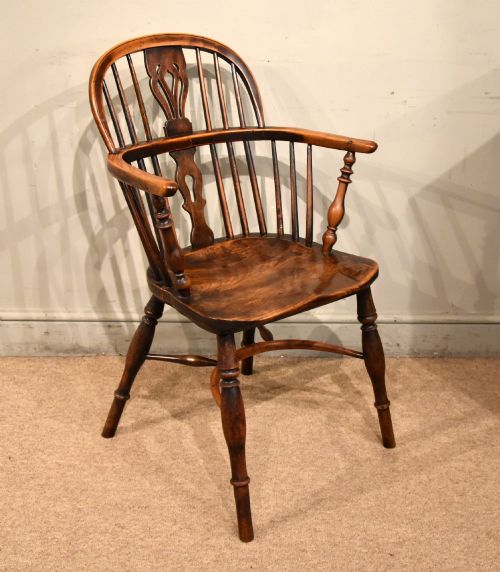
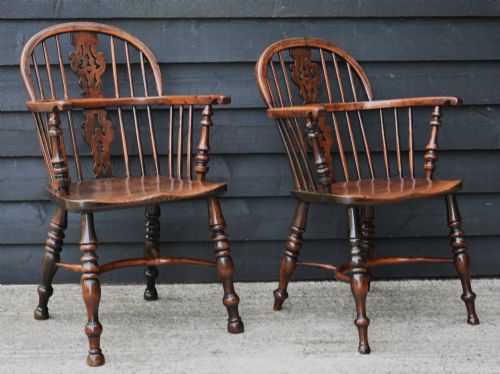
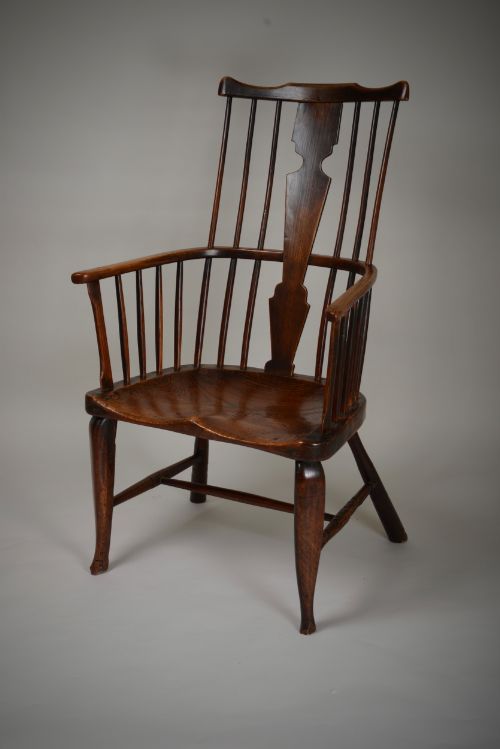
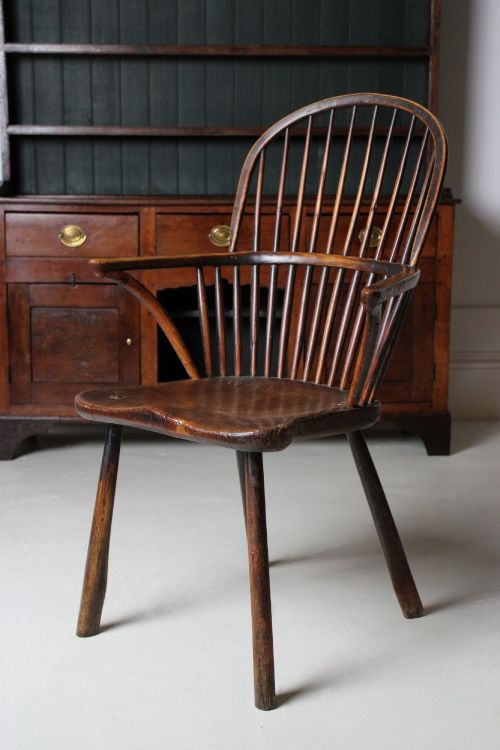
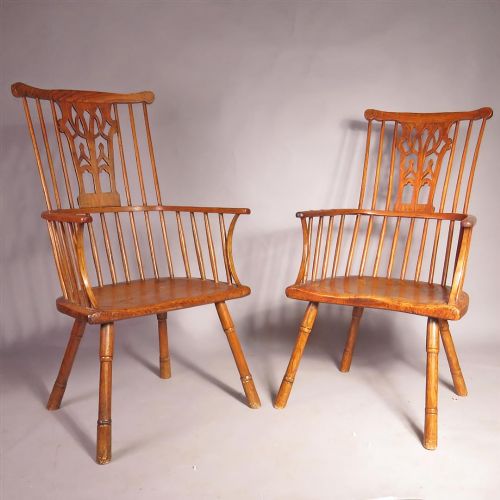
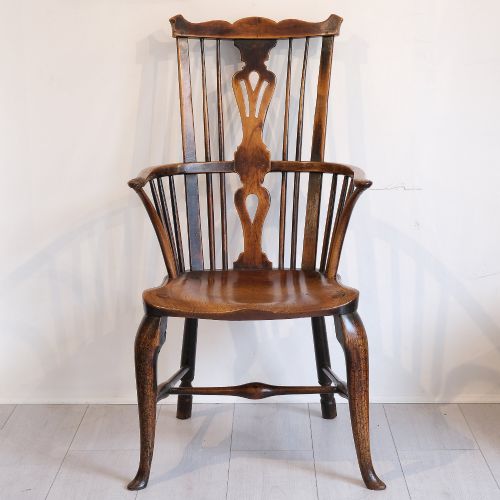
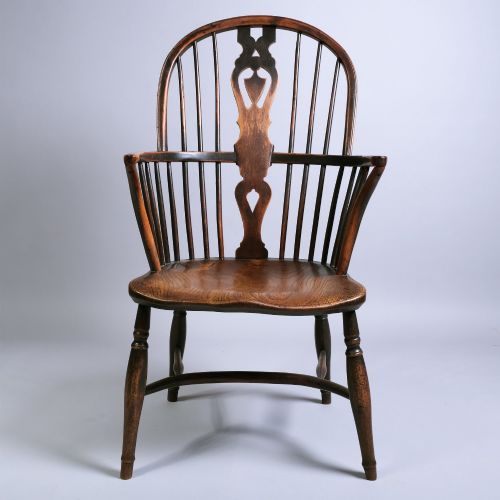
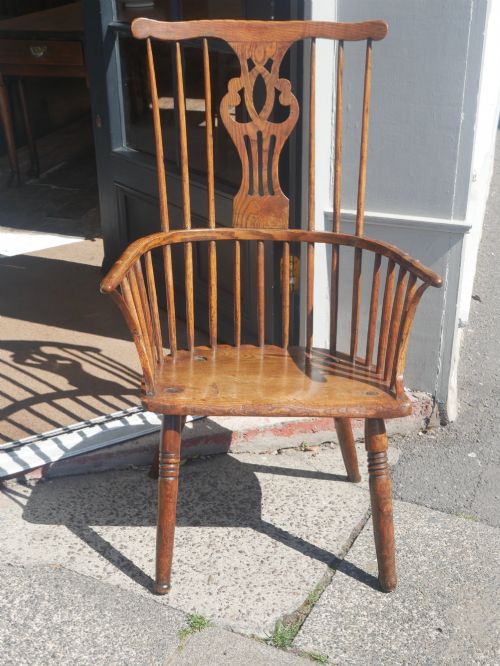
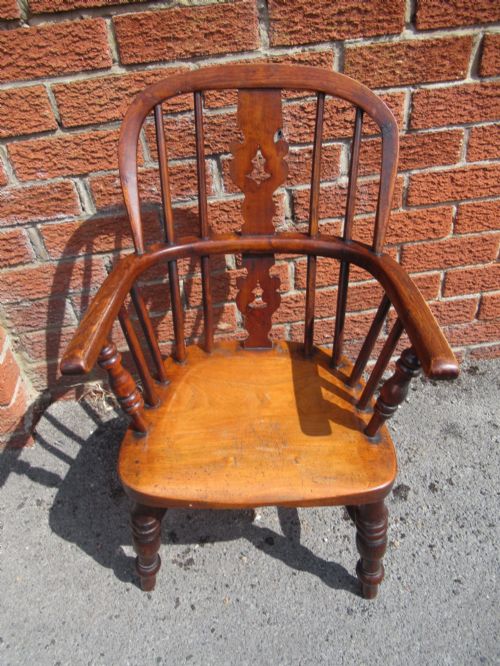
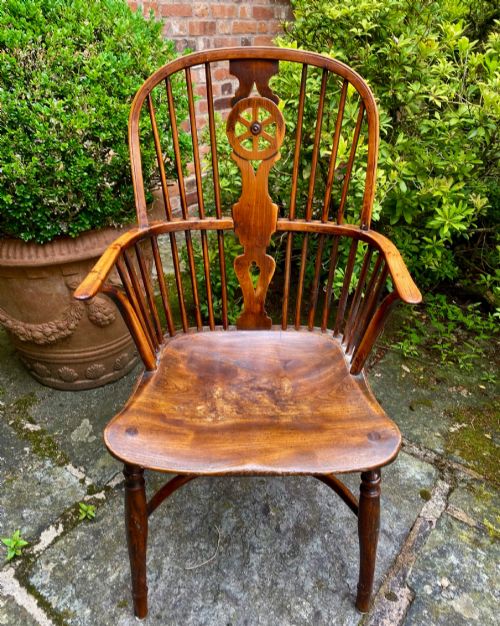
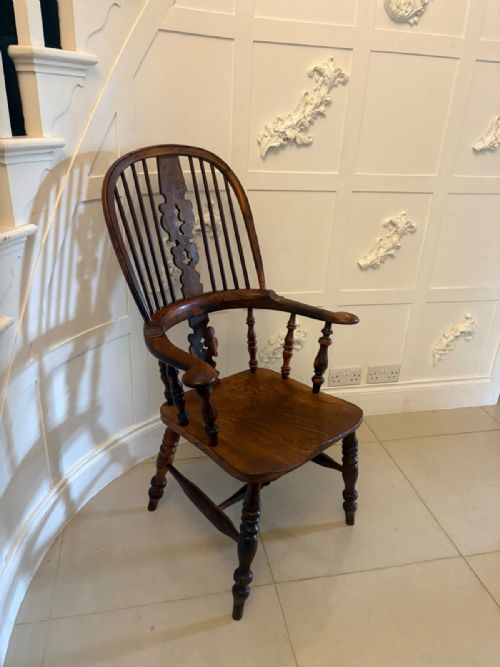
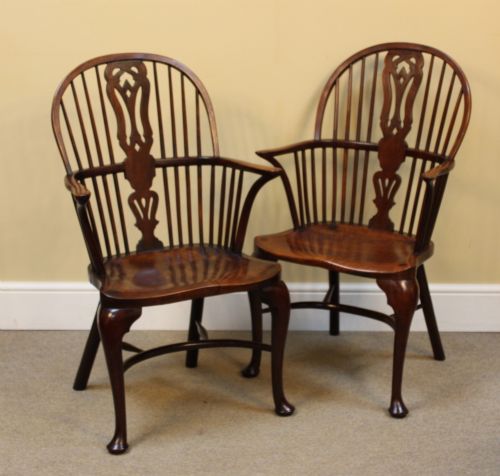
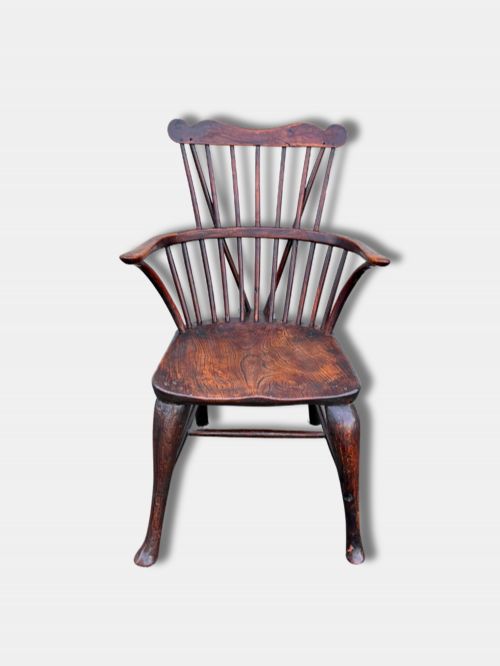
A georgian yew chair typically takes the form of a Windsor armchair or carver, shaped for domestic utility in country settings. The listings show examples spanning the eighteenth and nineteenth centuries, often categorised under English country vernacular styles.
Makers utilised native hardwoods to build these seats, pairing yew wood frames with elm seats or ash spindles. Buyers will frequently encounter comb back, hoop back, and low back designs originating from regional workshops.
Materials and construction
Craftsmen built these chairs by boring holes directly into solid wooden seats to receive the legs and back spindles. This stick-built technique required thorough knowledge of timber shrinkage and grain direction.
The combination of yew wood for its decorative figuring, elm for a split-resistant seat, and ash or beech for the bentwood bows created a resilient hybrid structure. Underframing often featured crinoline stretchers to brace the legs against outward pressure.
Child-sized Windsor chairs appear among the full-scale seating, offering miniature craftsmanship for the youngest eighteenth-century household members.
Judging quality in vernacular seating
Quality rests in the expressiveness of the timber grain, particularly the rich figuring found in burr yew wood panels and armbows. Finer examples display harmonious proportions in the turning of the legs and the graceful rake of the back.
Structural integrity and original component parts separate standard vernacular pieces from superior specimens. Excessive wear around the spindle joints or replaced underframes alter the balance of an authentic survivor.
John Brand of Sleaford·Rockley Maker
The Georgian Yew Chair Glossary
- Windsor chair
- A wooden chair constructed with a solid shaped seat into which the legs and back are tenoned directly. They developed distinct regional variations across English counties.
- Comb back
- A Windsor chair design where the vertical spindles of the back rise to a horizontal headpiece resembling a decorative comb. This style appears frequently in eighteenth-century examples.
- Crinoline stretcher
- An arched wooden brace connecting the legs of a chair to provide rigidity. The shape resembles the stiffened petticoats worn during the period.
- Carver
- An armchair designed to match a set of dining chairs, usually positioned at the head of a table. These often feature generous elbow rests.
- Burr yew
- A growth deformity on a yew tree that produces highly swirled, knotty wood grain prized for decorative panels. Cabinet makers utilised this timber for prominent splats and seats.
Georgian Yew Chair: Frequently Asked Questions
What is a georgian yew chair?
A georgian yew chair is a traditional wooden seat, most commonly built as a Windsor armchair utilising native British timber. These pieces reflect regional country craftsmanship from the eighteenth and nineteenth centuries.
The combination of dense yew wood and carved elm seats gave these chairs enduring strength for everyday domestic use. Their distinctive stick-back construction remains central to English vernacular furniture history.
How were these chairs constructed?
Cabinet makers bored holes straight into thick wooden seats to insert turned legs and back spindles. This method anchored each component securely without relying on metal fixings.
Bending green ash or yew wood around steam forms created the characteristic hoop or comb backs. Stretchers were then fitted between the legs to absorb daily weight and movement.
How do I identify periods?
Early pieces from the eighteenth century often feature comb backs, crinoline stretchers, and primitive Thames Valley forms. Nineteenth-century variants frequently introduce wheel backs or broader arm rests.
Material choices also guide dating, as older examples lean heavily on solid burr yew and figured elm combinations. Tool marks and construction wear help confirm the age of individual joints.
Where were these chairs made?
Regional workshops across the English countryside produced these vernacular seats, with particular concentrations in the Thames Valley and Yorkshire. Local timber availability dictated whether makers used yew, elm, ash, or beech.
Makers worked independently in rural hubs, supplying local farmhouses, cottages, and country houses. Specific regional turning styles often reveal the geographic origin of a piece.
How should I live with one?
Position your chair away from direct heat sources and sudden temperature shifts to protect the historical timber. Consistent indoor humidity prevents the dry wood from splitting or warping.
Clean the surface gently using soft cloths and traditional beeswax to nourish the timeworn patina. Avoid harsh modern chemical polishes that strip away the aged finish.